Chen Si, Knight Walter E, Yan Chen
Aab Cardiovascular Research Institute, Department of Medicine, University of Rochester School of Medicine and Dentistry, Rochester, NY 14641, USA.
Department of Pharmacology and Physiology, University of Rochester School of Medicine and Dentistry, Rochester, NY 14641, USA.
J Cardiovasc Dev Dis. 2018 Apr 23;5(2):22. doi: 10.3390/jcdd5020022.
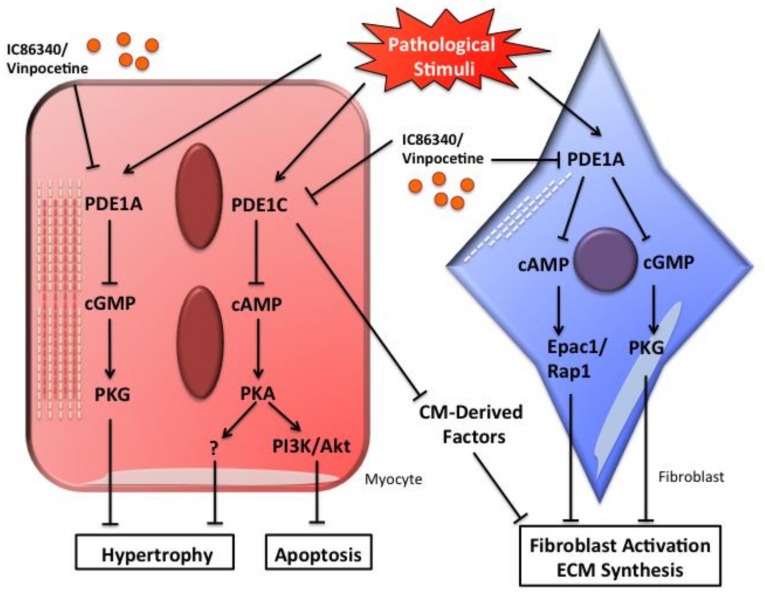
Pathological cardiac hypertrophy and dysfunction is a response to various stress stimuli and can result in reduced cardiac output and heart failure. Cyclic nucleotide signaling regulates several cardiac functions including contractility, remodeling, and fibrosis. Cyclic nucleotide phosphodiesterases (PDEs), by catalyzing the hydrolysis of cyclic nucleotides, are critical in the homeostasis of intracellular cyclic nucleotide signaling and hold great therapeutic potential as drug targets. Recent studies have revealed that the inhibition of the PDE family member PDE1 plays a protective role in pathological cardiac remodeling and dysfunction by the modulation of distinct cyclic nucleotide signaling pathways. This review summarizes recent key findings regarding the roles of PDE1 in the cardiac system that can lead to a better understanding of its therapeutic potential.
病理性心脏肥大和功能障碍是对各种应激刺激的一种反应,可导致心输出量减少和心力衰竭。环核苷酸信号传导调节多种心脏功能,包括收缩性、重塑和纤维化。环核苷酸磷酸二酯酶(PDEs)通过催化环核苷酸的水解,在细胞内环核苷酸信号传导的稳态中起关键作用,作为药物靶点具有巨大的治疗潜力。最近的研究表明,抑制PDE家族成员PDE1通过调节不同的环核苷酸信号通路,在病理性心脏重塑和功能障碍中发挥保护作用。本综述总结了关于PDE1在心脏系统中的作用的近期关键发现,这有助于更好地理解其治疗潜力。