Department of Internal Medicine, Division of Rheumatology, The Third Affiliated Hospital of Sun Yat-sen University, Guangzhou, China.
Department of Internal Medicine, Division of Rheumatology, The Affiliated Hospital of Shenzhen University, Shenzhen, China.
Front Immunol. 2018 Apr 10;9:702. doi: 10.3389/fimmu.2018.00702. eCollection 2018.
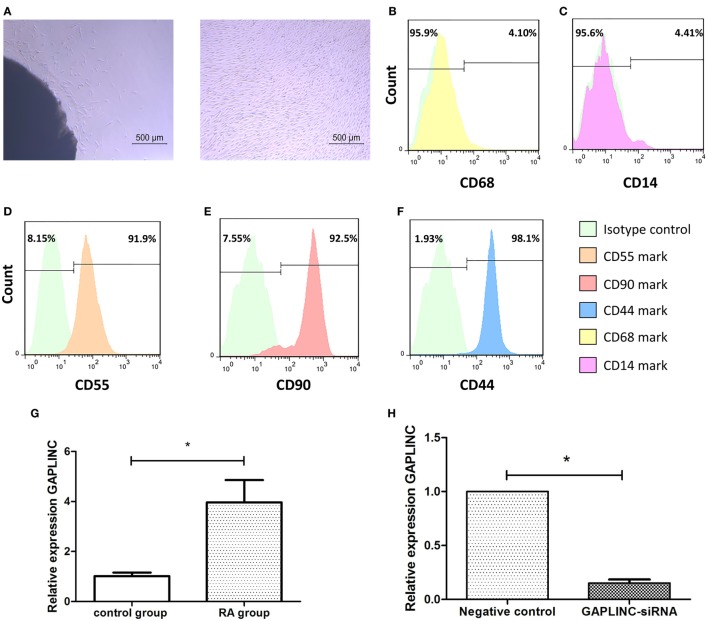
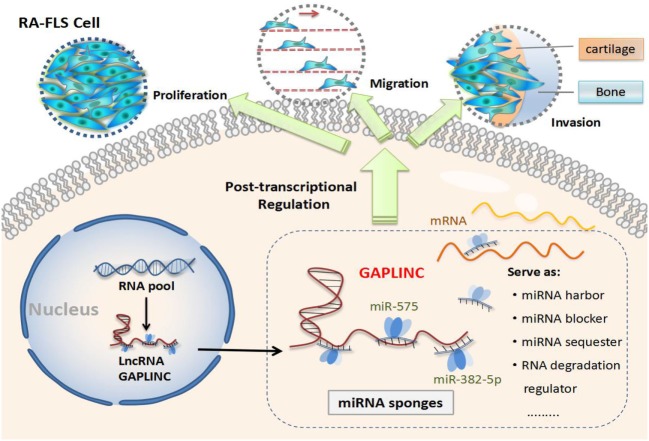
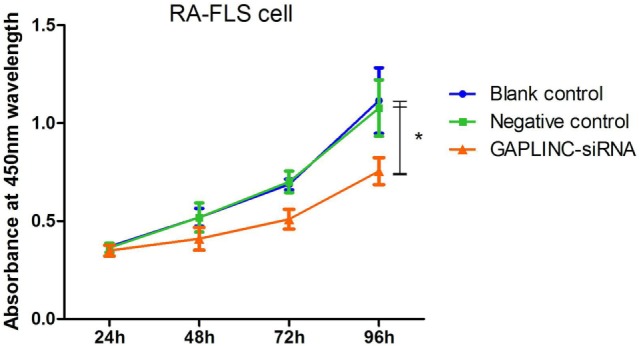
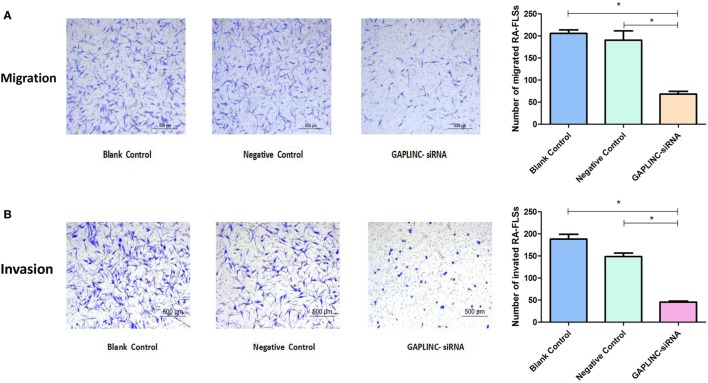
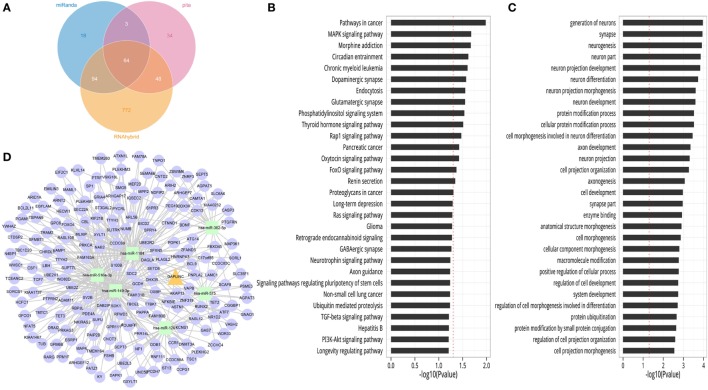
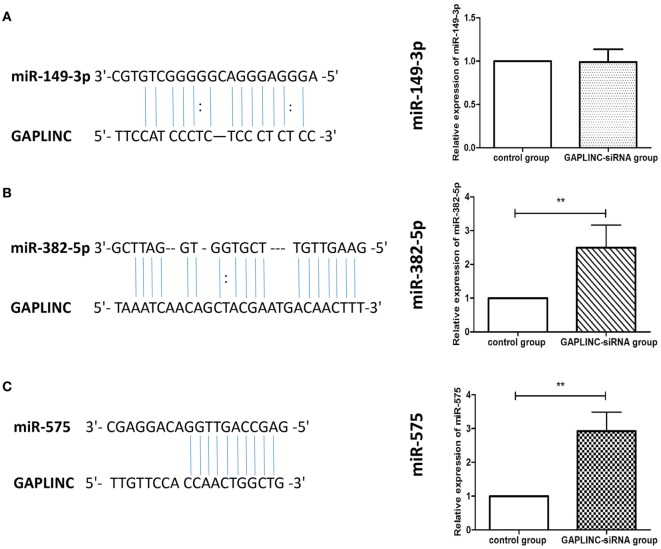
Rapidly accumulating evidence has now suggested that the long non-coding RNAs (LncRNAs), a large and diverse class of non-coding transcribed RNA molecules with diverse functional roles and mechanisms, play a major role in the pathogenesis of many human inflammatory diseases. Although some LncRNAs are overexpressed in plasma, T cell, and synovial tissues of patients with rheumatoid arthritis (RA), there is a dearth of knowledge in what role these transcripts play in fibroblast-like synoviocytes (FLSs) of these patients. Here, our studies showed that GAPLINC, a newly identified functional LncRNA in oncology, displayed a greater degree of expression in FLSs from RA than in patients with traumatic injury. GAPLINC suppression in RA-FLS cells revealed significant alterations in cell proliferation, invasion, migration, and proinflammatory cytokines production. Additionally, we performed a preliminary bioinformatics analysis of GAPLINC gene sequence in order to find its target molecules, using miRanda, PITA, RNAhybrid algorithms, Kyoto encyclopedia of genes and genomes, and gene ontology analysis. Since the results predicted that some of microRNAs and mRNA may interact with GAPLINC, we simulated a gene co-action network model based on a competitive endogenous RNA theory. Further verification of this model demonstrated that silencing of GAPLINC increased miR-382-5p and miR-575 expression. The results of this study suggest that GAPLINC may function as a novel microRNAs sponging agent affecting the biological characteristics of RA-FLSs. Additionally, GAPLINC may also promote RA-FLS tumor-like behaviors in a miR-382-5p-dependent and miR-575-dependent manner. Based upon these findings, LncRNA GAPLINC may provide a novel valuable therapeutic target for RA patients.
越来越多的证据表明,长非编码 RNA(lncRNA)是一类具有多种功能和机制的非编码转录 RNA 分子,在许多人类炎症性疾病的发病机制中起着重要作用。虽然一些 lncRNA 在类风湿关节炎(RA)患者的血浆、T 细胞和滑膜组织中过度表达,但对于这些转录本在这些患者的成纤维样滑膜细胞(FLS)中发挥的作用,人们知之甚少。在这里,我们的研究表明,GAPLINC 是一种新发现的肿瘤功能 lncRNA,在 RA 的 FLS 中的表达程度比创伤性损伤患者更高。在 RA-FLS 细胞中抑制 GAPLINC 会导致细胞增殖、侵袭、迁移和促炎细胞因子产生的显著改变。此外,我们还对 GAPLINC 基因序列进行了初步的生物信息学分析,以寻找其靶分子,使用了 miRanda、PITA、RNAhybrid 算法、京都基因与基因组百科全书和基因本体分析。由于预测结果表明,一些 microRNAs 和 mRNA 可能与 GAPLINC 相互作用,我们基于竞争内源性 RNA 理论模拟了一个基因共作用网络模型。进一步验证该模型表明,沉默 GAPLINC 可增加 miR-382-5p 和 miR-575 的表达。本研究结果表明,GAPLINC 可能作为一种新型的 microRNAs 海绵分子,影响 RA-FLS 的生物学特性。此外,GAPLINC 可能还以 miR-382-5p 依赖和 miR-575 依赖的方式促进 RA-FLS 的肿瘤样行为。基于这些发现,LncRNA GAPLINC 可能为 RA 患者提供一个新的有价值的治疗靶点。