Department of Rheumatology and Clinical Immunology, Faculty of Medicine, School of Health Sciences, University of Thessaly, 40500 Larissa, Greece.
Division of Liver Transplantation and Mucosal Biology, King's College London School of Medicine, Denmark Hill Campus, London SE5 9RS, UK.
J Immunol Res. 2018 Mar 5;2018:9324357. doi: 10.1155/2018/9324357. eCollection 2018.
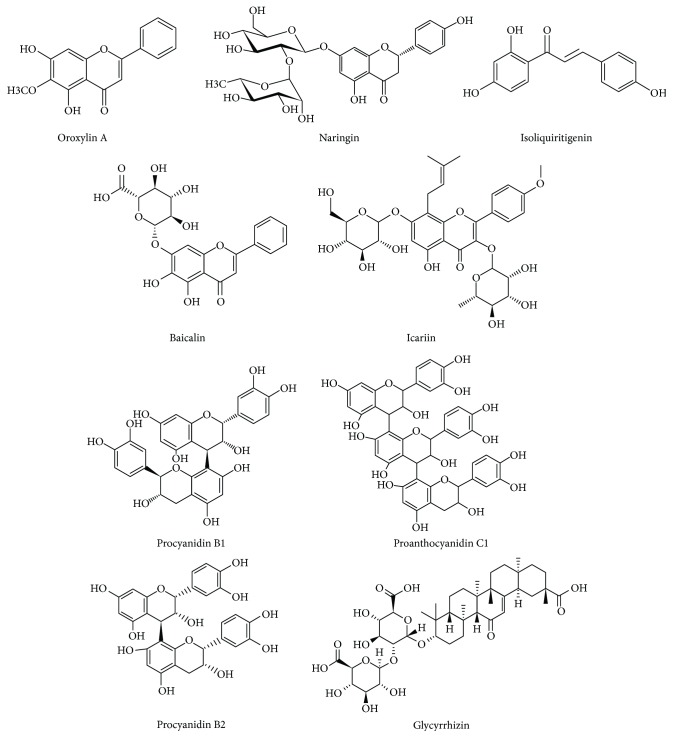
Flavonoids have been considered powerful anti-inflammatory agents, and their exact immunomodulatory action as therapeutic agents in autoimmune diseases has started to emerge. Their role in the manipulation of immunoregulation is less understood. Several studies attempted to investigate the role of various flavonoids mainly in experimental models of autoimmune diseases, especially in the context of their potential effect on the increase of regulatory T cells (Tregs) and their ability to stimulate an overexpression of anti-inflammatory cytokines, in particular that of IL-10. The emergence of IL-17, a cytokine largely produced by Th17 cells, as a powerful proinflammatory stimulus which attenuates the induction of Tregs has prompted a series of studies investigating the role of flavonoids on Th17 cells in experimental models as well as human autoimmune diseases. This review thoroughly discusses accumulated data on the role of flavonoids on Th17 in rheumatoid arthritis and experimental autoimmune arthritis.
类黄酮被认为是强大的抗炎剂,其作为自身免疫性疾病治疗剂的确切免疫调节作用开始显现。它们在免疫调节中的作用还不太清楚。一些研究试图调查各种类黄酮的作用,主要是在自身免疫性疾病的实验模型中,特别是在它们对调节性 T 细胞(Tregs)增加的潜在影响及其刺激抗炎细胞因子过度表达的能力,特别是白细胞介素-10(IL-10)方面。白细胞介素-17(IL-17)的出现,一种主要由 Th17 细胞产生的细胞因子,作为一种强大的促炎刺激物,削弱了 Tregs 的诱导,这促使一系列研究调查了类黄酮在实验模型和人类自身免疫性疾病中对 Th17 细胞的作用。这篇综述全面讨论了类黄酮在类风湿关节炎和实验性自身免疫性关节炎中对 Th17 的作用的累积数据。