Tea Research Institute, Nanjing Agricultural University, Nanjing, 210095, China.
Tea Research Institute, Fujian Academy of Agricultural Sciences, Ningde, 355015, China.
BMC Genomics. 2018 Apr 25;19(1):289. doi: 10.1186/s12864-018-4674-1.
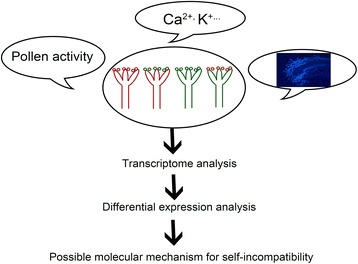
Self-incompatibility (SI) is a major barrier that obstructs the breeding process in most horticultural plants including tea plants (Camellia sinensis). The aim of this study was to elucidate the molecular mechanism of SI in tea plants through a high throughput transcriptome analysis.
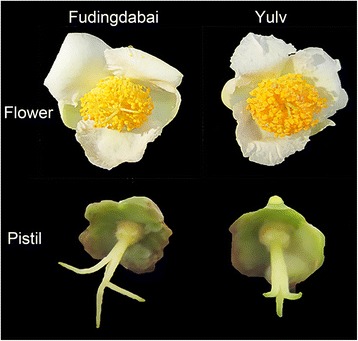
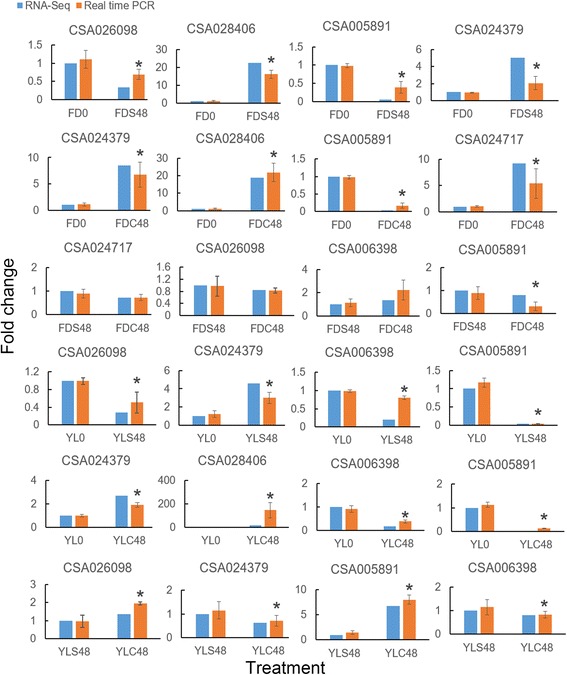
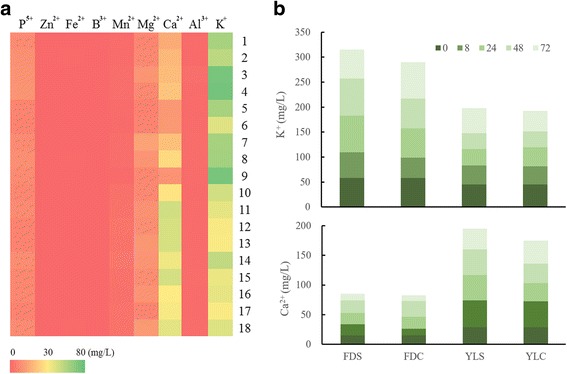
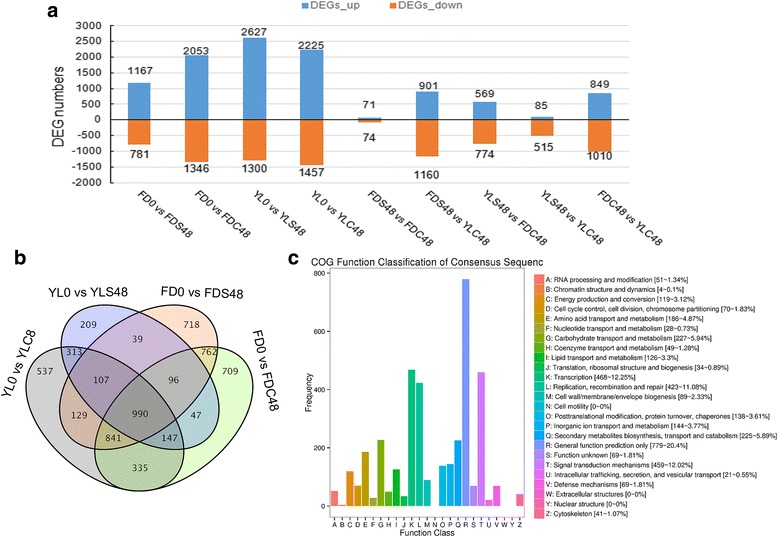
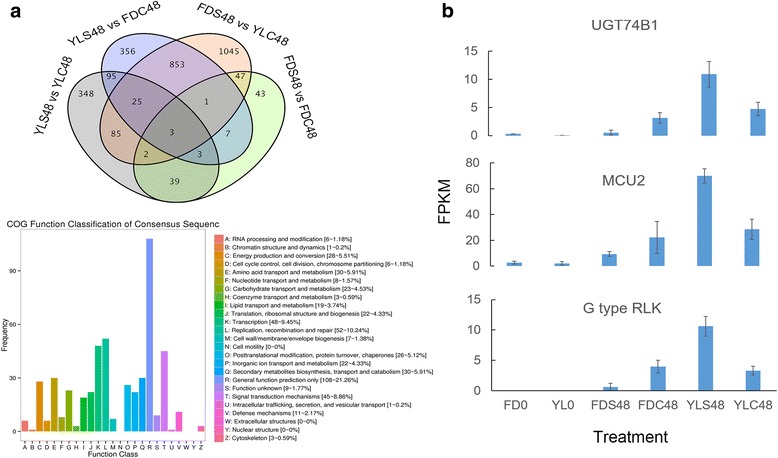
In this study, the transcriptomes of self- and cross-pollinated pistils of two tea cultivars 'Fudingdabai' and 'Yulv' were compared to elucidate the SI mechanism of tea plants. In addition, the ion components and pollen tube growth in self- and cross-pollinated pistils were investigated. Our results revealed that both cultivars had similar pollen activities and cross-pollination could promote the pollen tube growth. In tea pistils, the highest ion content was potassium (K), followed by calcium (Ca), magnesium (Mg) and phosphorus (P). Ca content increased after self-pollination but decreased after cross-pollination, while K showed reverse trend with Ca. A total of 990 and 3 common differentially expressed genes (DEGs) were identified in un-pollinated vs. pollinated pistils and self- vs. cross-pollinated groups after 48 h, respectively. Function annotation indicated that three genes encoding UDP-glycosyltransferase 74B1 (UGT74B1), Mitochondrial calcium uniporter protein 2 (MCU2) and G-type lectin S-receptor-like serine/threonine-protein kinase (G-type RLK) might play important roles during SI process in tea plants.
Ca and K are important signal for SI in tea plants, and three genes including UGT74B1, MCU2 and G-type RLK play essential roles during SI signal transduction.
自交不亲和(SI)是大多数园艺植物(包括茶树(Camellia sinensis))繁殖过程中的主要障碍。本研究旨在通过高通量转录组分析阐明茶树 SI 的分子机制。
本研究比较了两个茶树品种“福鼎大白”和“雨露”自交和杂交授粉后雌蕊的转录组,以阐明茶树的 SI 机制。此外,还研究了自交和杂交授粉雌蕊中的离子成分和花粉管生长。我们的结果表明,两个品种的花粉活力相似,异交可促进花粉管生长。在茶树雌蕊中,钾(K)的含量最高,其次是钙(Ca)、镁(Mg)和磷(P)。自交后 Ca 含量增加,而杂交后 Ca 含量降低,而 K 则与 Ca 呈相反趋势。授粉后 48 小时,未授粉与授粉雌蕊之间以及自交与杂交授粉组之间分别鉴定出 990 个和 3 个共同差异表达基因(DEG)。功能注释表明,三个基因编码 UDP-糖基转移酶 74B1(UGT74B1)、线粒体钙单向转运蛋白 2(MCU2)和 G 型凝集素 S 受体样丝氨酸/苏氨酸蛋白激酶(G 型 RLK)可能在茶树 SI 过程中发挥重要作用。
Ca 和 K 是茶树 SI 的重要信号,UGT74B1、MCU2 和 G 型 RLK 三个基因在 SI 信号转导过程中起重要作用。