Wang Chongyang, Huang Yong, Zhang Zuotao, Wang Hui
State Key Joint Laboratory of Environment Simulation and Pollution Control, School of Environment, Tsinghua University, Beijing, 100084, China.
AMB Express. 2018 Apr 25;8(1):67. doi: 10.1186/s13568-018-0594-3.
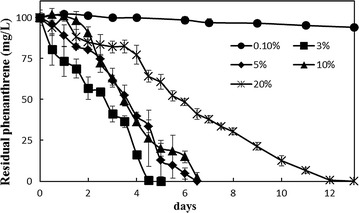
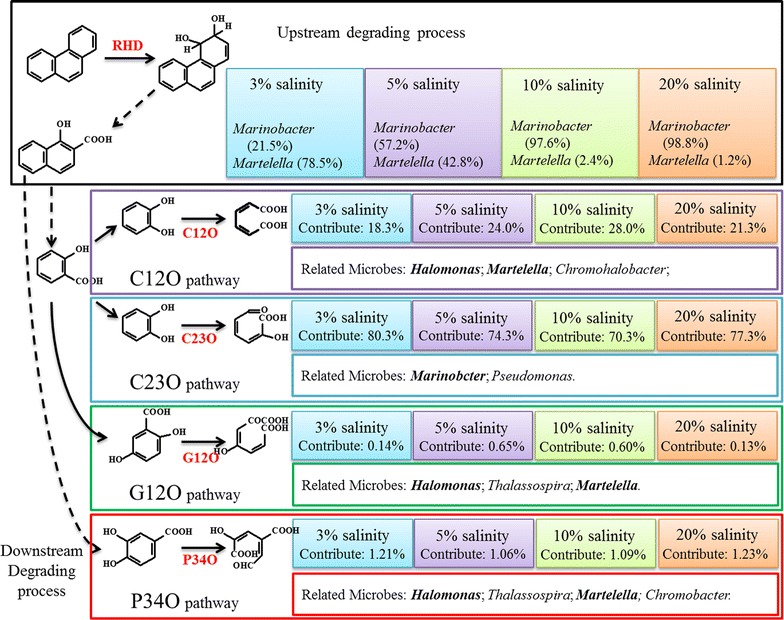
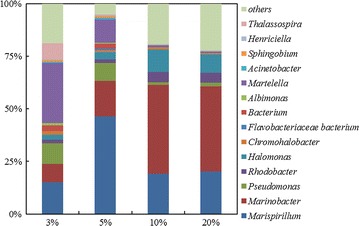
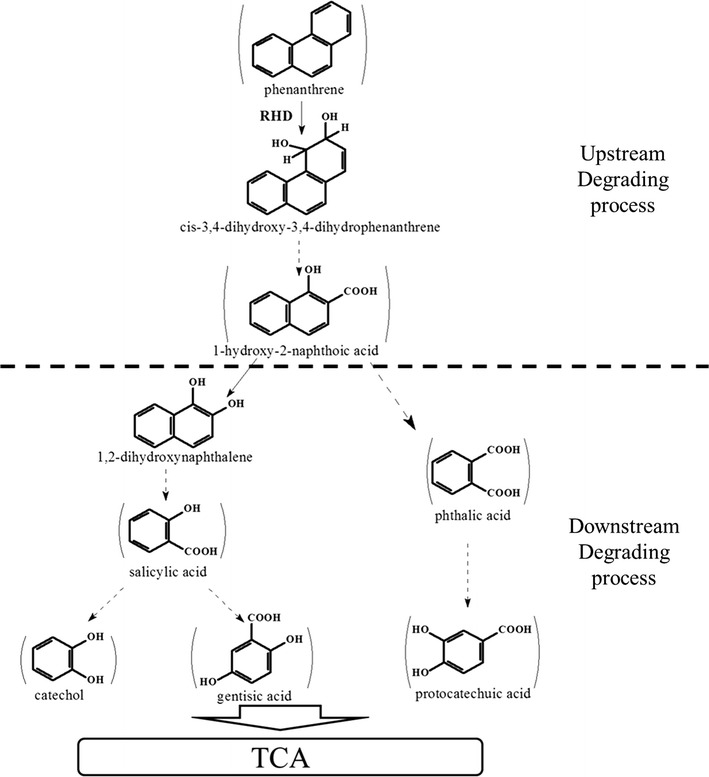
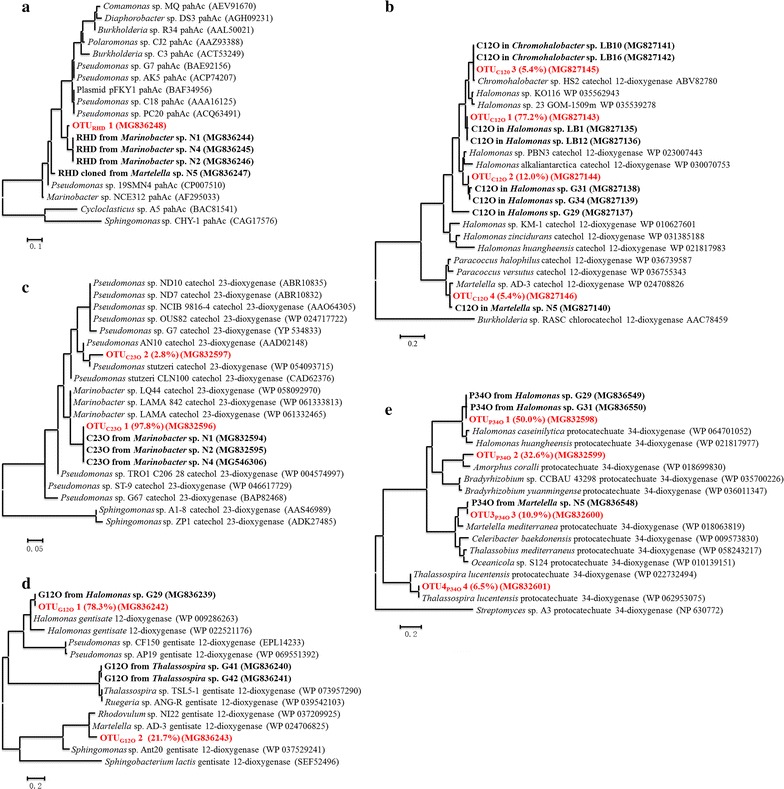
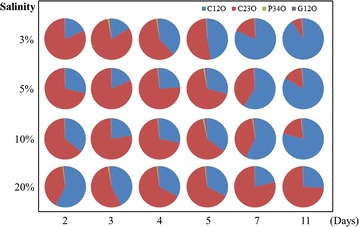
With the close relationship between saline environments and industry, polycyclic aromatic hydrocarbons (PAHs) accumulate in saline/hypersaline environments. Therefore, PAHs degradation by halotolerant/halophilic bacteria has received increasing attention. In this study, the metabolic pathway of phenanthrene degradation by halophilic consortium CY-1 was first studied which showed a single upstream pathway initiated by dioxygenation at the C1 and C2 positions, and at several downstream pathways, including the catechol pathway, gentisic acid pathway and protocatechuic acid pathway. The effects of salinity on the community structure and expression of catabolic genes were further studied by a combination of high-throughput sequencing, catabolic gene clone library and real-time PCR. Pure cultures were also isolated from consortium CY-1 to investigate the contribution made by different microbes in the PAH-degrading process. Marinobacter is the dominant genus that contributed to the upstream degradation of phenanthrene especially in high salt content. Genus Halomonas made a great contribution in transforming intermediates in the subsequent degradation of catechol by using catechol 1,2-dioxygenase (C12O). Other microbes were predicted to be mediating bacteria that were able to utilize intermediates via different downstream pathways. Salinity was investigated to have negative effects on both microbial diversity and activity of consortium CY-1 and consortium CY-1 was found with a high degree of functional redundancy in saline environments.
由于盐环境与工业之间的密切关系,多环芳烃(PAHs)在盐/高盐环境中积累。因此,耐盐/嗜盐细菌对PAHs的降解受到了越来越多的关注。在本研究中,首先研究了嗜盐菌群CY-1降解菲的代谢途径,该途径显示出一条由C1和C2位双加氧作用起始的单一上游途径,以及几条下游途径,包括邻苯二酚途径、龙胆酸途径和原儿茶酸途径。通过高通量测序、分解代谢基因克隆文库和实时PCR相结合的方法,进一步研究了盐度对群落结构和分解代谢基因表达的影响。还从菌群CY-1中分离出纯培养物,以研究不同微生物在PAH降解过程中的作用。海杆菌属是对菲上游降解有贡献的优势属,尤其是在高盐含量环境中。嗜盐单胞菌属通过使用邻苯二酚1,2-双加氧酶(C12O)在邻苯二酚后续降解过程中转化中间产物方面发挥了重要作用。预计其他微生物是介导细菌,能够通过不同的下游途径利用中间产物。研究发现盐度对菌群CY-1的微生物多样性和活性均有负面影响,并且菌群CY-1在盐环境中具有高度的功能冗余性。