Yu Qi, Xue Yixue, Liu Jing, Xi Zhuo, Li Zhen, Liu Yunhui
Department of Neurosurgery, Shengjing Hospital of China Medical University, Shenyang, China.
Liaoning Clinical Medical Research Center in Nervous System Disease, Shenyang, China.
Front Mol Neurosci. 2018 Apr 13;11:130. doi: 10.3389/fnmol.2018.00130. eCollection 2018.
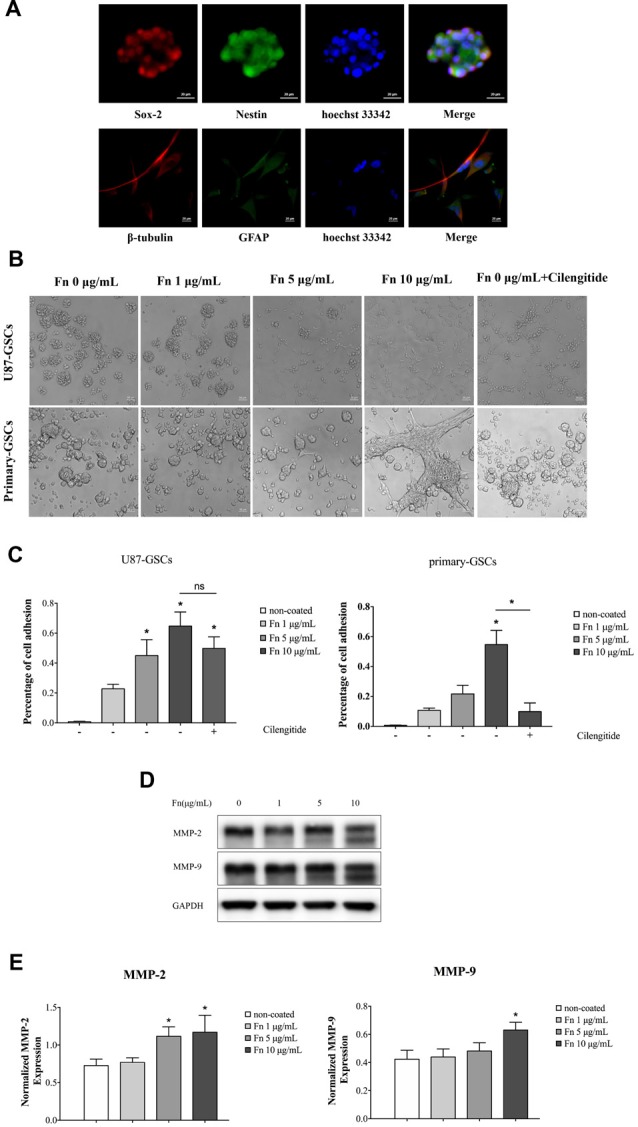
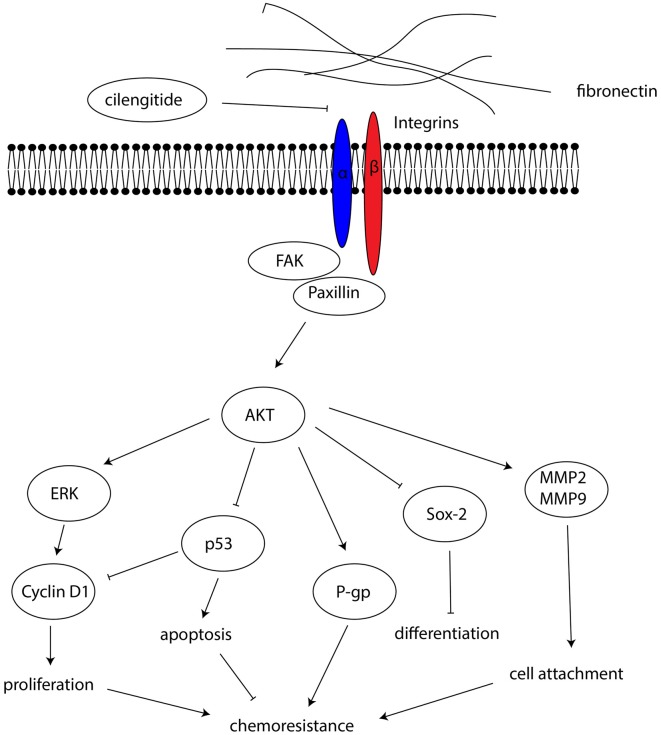
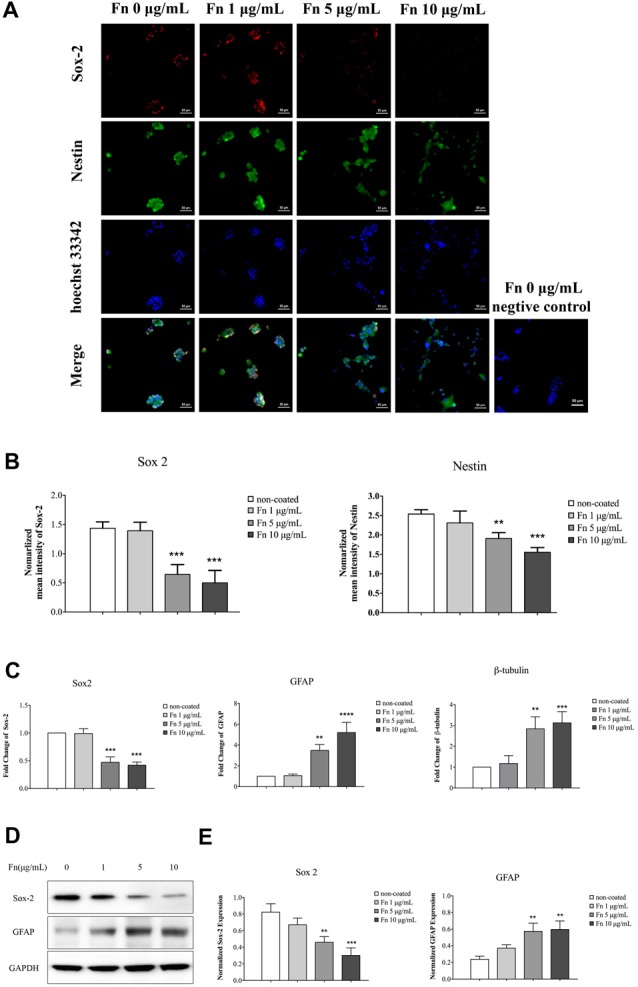
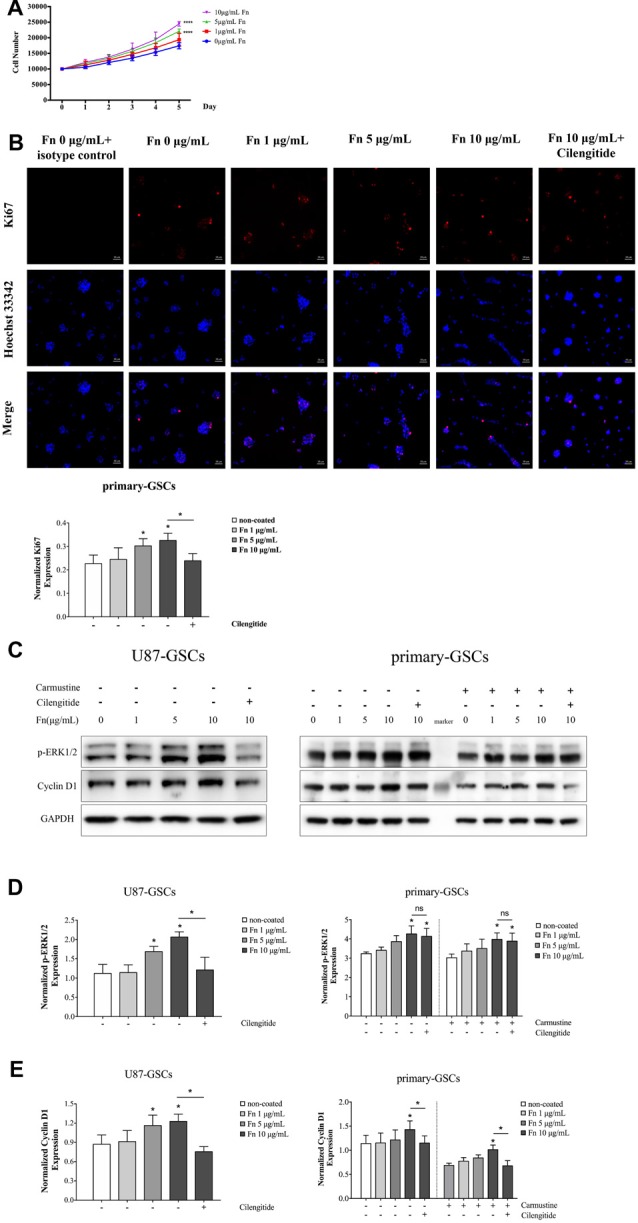
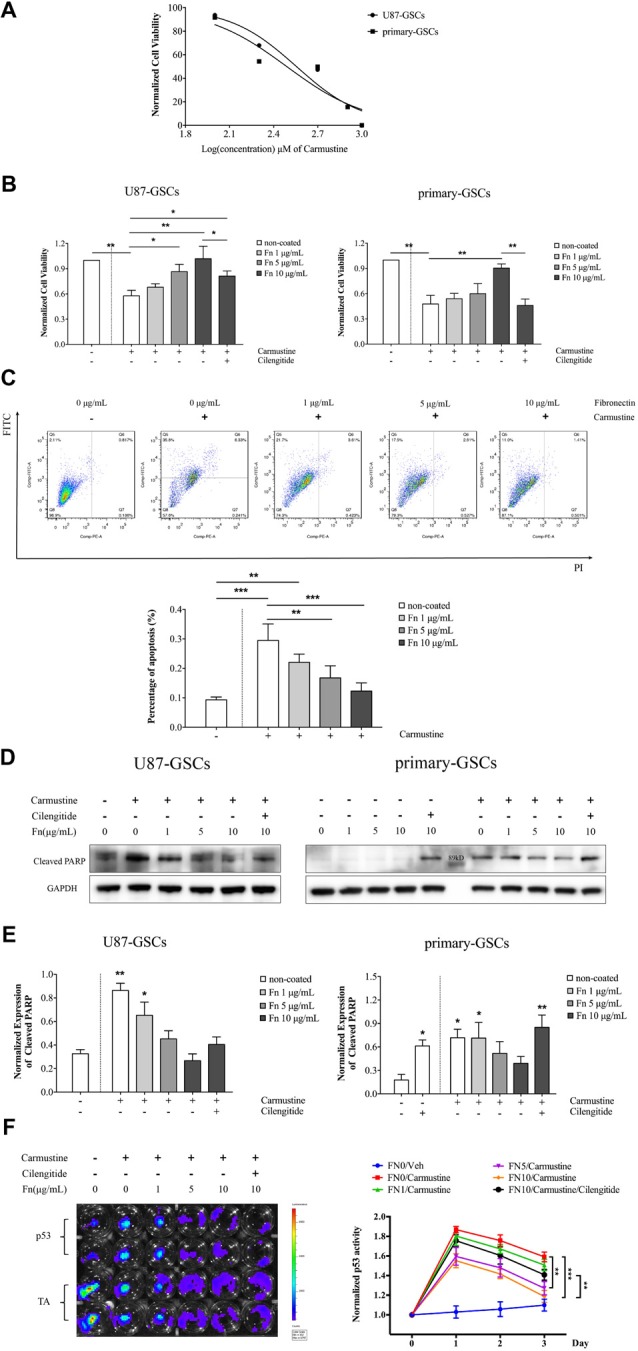
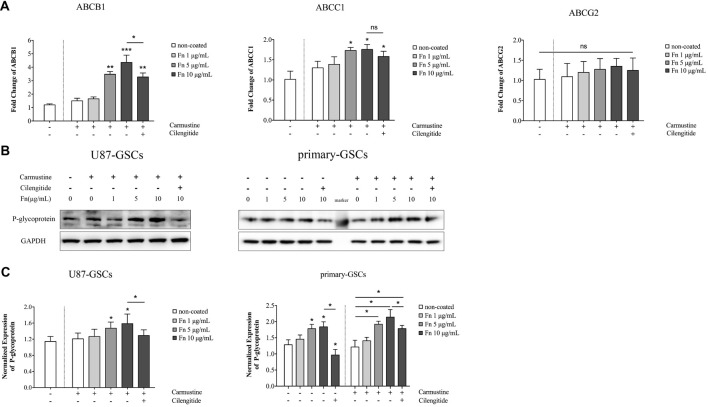
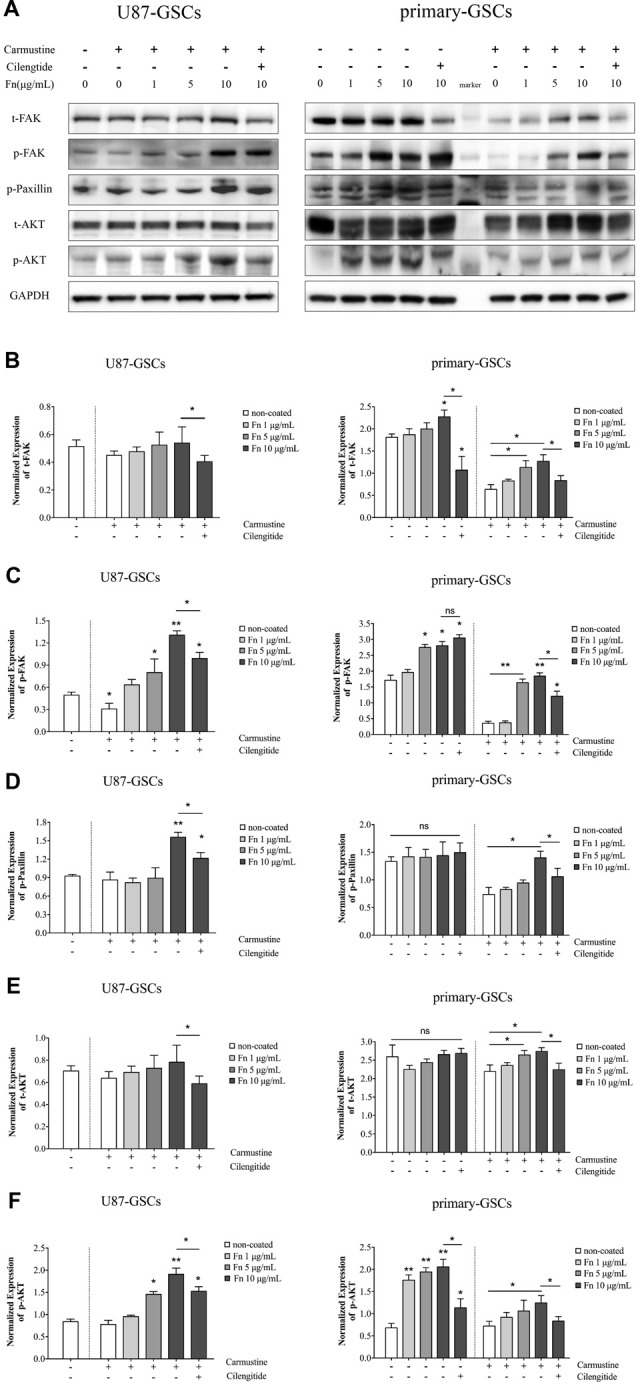
Glioma stem-like cells (GSCs) are regarded as the sources of oncogenesis, recurrence, invasion and chemoresistance in malignant gliomas. Growing evidence suggests that the microenvironment surrounding GSCs interacts with tumor cells to influence biological behavior; however, the functional mechanisms involved are still unclear. In the present study, we investigated the modulation of GSCs triggered by fibronectin (FN), a main component of the extracellular matrix (ECM), in terms of cell adhesion, differentiation, proliferation and chemoresistance. We demonstrated that pre-coated FN prompted increased adherence by GSCs, with increased matrix metallopeptidases (MMPs)-2 and -9 expression, in a concentration-dependent manner. Decreases in sox-2 and nestin levels, and increased levels of glial fibrillary acidic protein (GFAP) and β-tubulin were also found in GSCs, indicating cell differentiation driven by FN. Further investigation revealed that FN promoted cell growth, as demonstrated by the elevation of Ki-67, with the activation of p-ERK1/2 and cyclin D1 also evident. In addition, FN suppressed p53-mediated apoptosis and upregulated P-glycoprotein expression, making GSCs more chemoresistant to alkylating agents such as carmustine. In contrast, this effect was reversed by an integrin inhibitor, cilengitide. Activation of the focal adhesion kinase/paxillin/AKT signaling pathway was involved in the modulation of GSCs by FN. Focusing on the interactions between tumor cells and the ECM may be an encouraging aspect of research on novel chemotherapeutic therapies in future.
胶质瘤干细胞(GSCs)被认为是恶性胶质瘤发生、复发、侵袭和化疗耐药的根源。越来越多的证据表明,GSCs周围的微环境与肿瘤细胞相互作用以影响生物学行为;然而,其中涉及的功能机制仍不清楚。在本研究中,我们从细胞黏附、分化、增殖和化疗耐药性方面研究了细胞外基质(ECM)的主要成分纤连蛋白(FN)对GSCs的调节作用。我们证明,预包被的FN以浓度依赖的方式促使GSCs的黏附增加,同时基质金属蛋白酶(MMPs)-2和-9的表达增加。在GSCs中还发现sox-2和巢蛋白水平降低,胶质纤维酸性蛋白(GFAP)和β-微管蛋白水平升高,表明FN驱动细胞分化。进一步研究表明,FN促进细胞生长,如Ki-67升高所示,同时p-ERK1/2和细胞周期蛋白D1的激活也很明显。此外,FN抑制p53介导的凋亡并上调P-糖蛋白表达,使GSCs对卡莫司汀等烷化剂更具化疗耐药性。相反,整合素抑制剂西仑吉肽可逆转这种作用。黏着斑激酶/桩蛋白/AKT信号通路的激活参与了FN对GSCs的调节。关注肿瘤细胞与ECM之间的相互作用可能是未来新型化疗疗法研究中一个令人鼓舞的方面。