Viral Immunobiology, Institute of Experimental Immunology, University of Zürich, Zürich, Switzerland.
Genomics and Immunity, NIAMS, National Institutes of Health, Bethesda, MD, United States of America.
PLoS Pathog. 2018 Apr 30;14(4):e1007039. doi: 10.1371/journal.ppat.1007039. eCollection 2018 Apr.
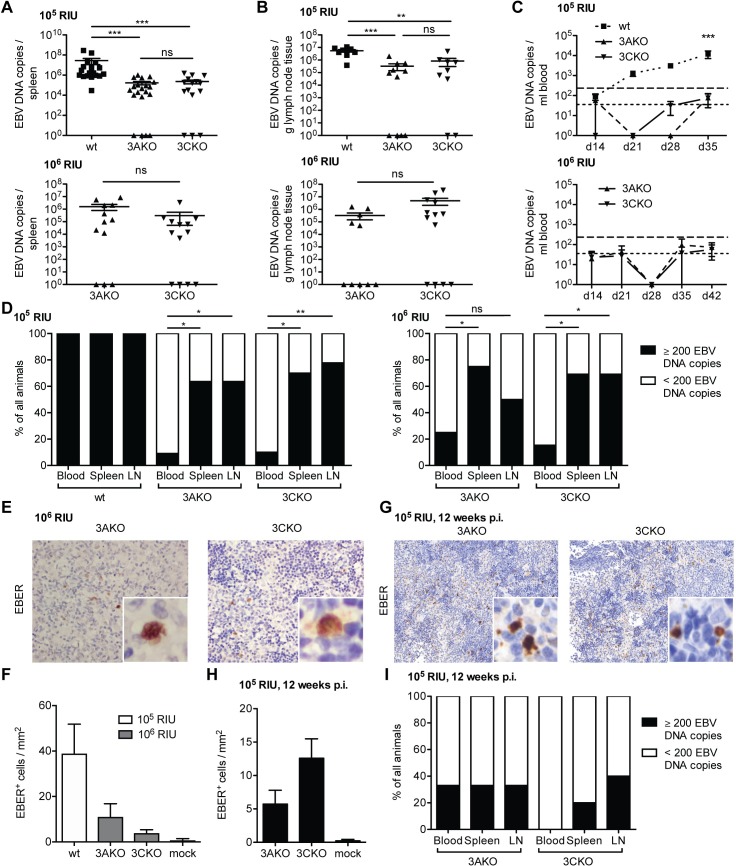
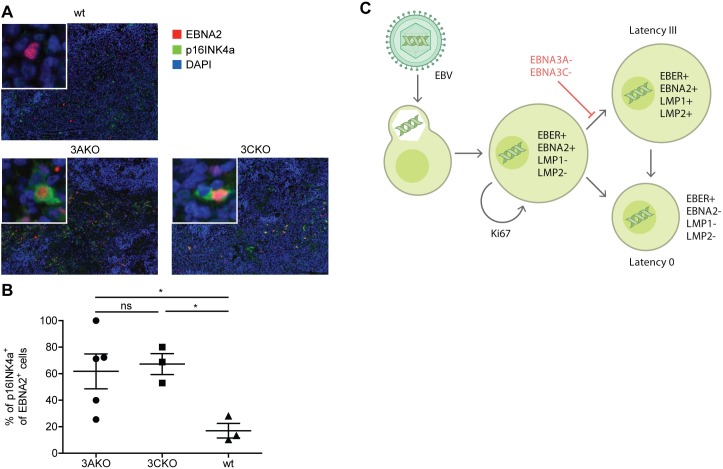
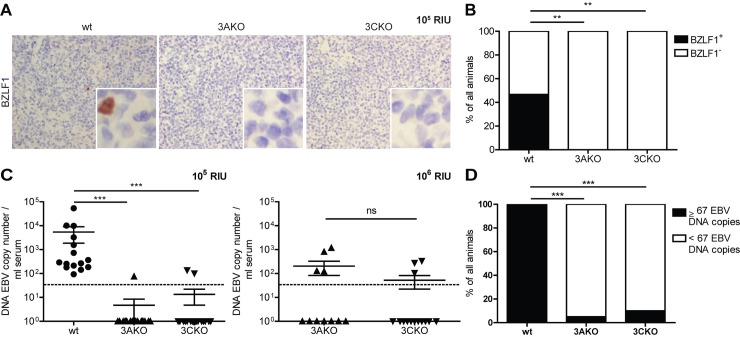
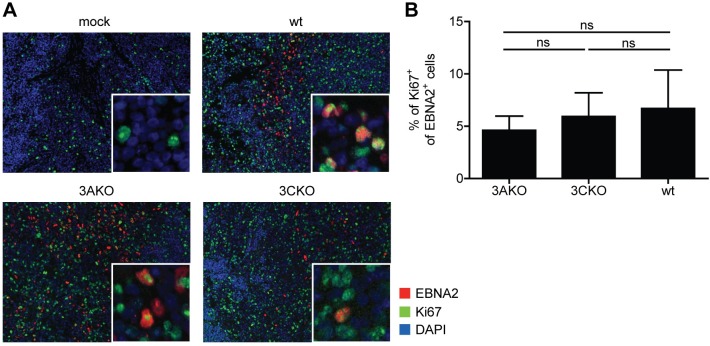
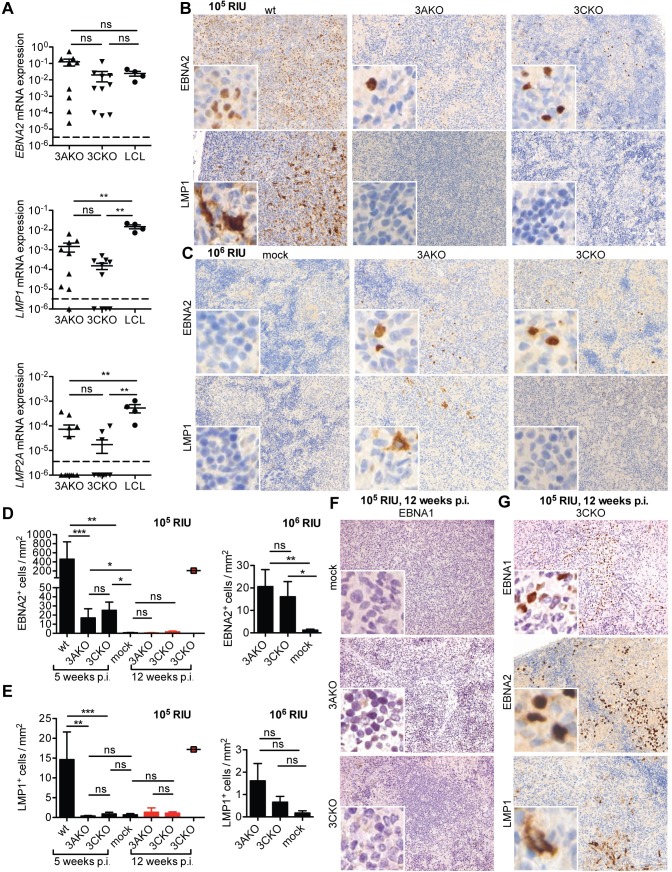
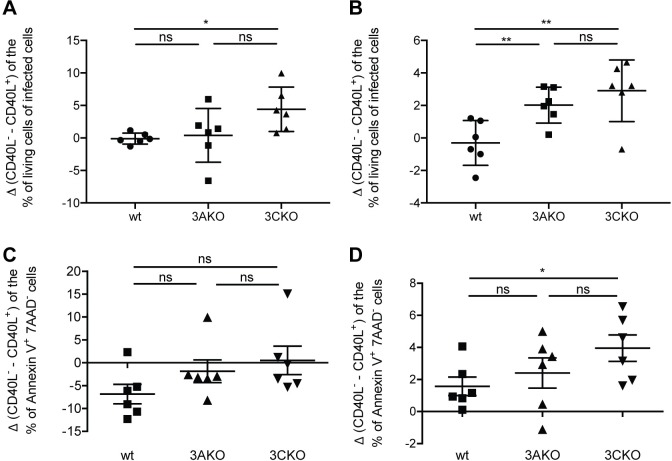
The oncogenic Epstein Barr virus (EBV) infects the majority of the human population and usually persists within its host for life without symptoms. The EBV oncoproteins nuclear antigen 3A (EBNA3A) and 3C (EBNA3C) are required for B cell transformation in vitro and are expressed in EBV associated immunoblastic lymphomas in vivo. In order to address the necessity of EBNA3A and EBNA3C for persistent EBV infection in vivo, we infected NOD-scid γcnull mice with reconstituted human immune system components (huNSG mice) with recombinant EBV mutants devoid of EBNA3A or EBNA3C expression. These EBV mutants established latent infection in secondary lymphoid organs of infected huNSG mice for at least 3 months, but did not cause tumor formation. Low level viral persistence in the absence of EBNA3A or EBNA3C seemed to be supported primarily by proliferation with the expression of early latent EBV gene products transitioning into absent viral protein expression without elevated lytic replication. In vitro, EBNA3A and EBNA3C deficient EBV infected B cells could be rescued from apoptosis through CD40 stimulation, mimicking T cell help in secondary lymphoid tissues. Thus, even in the absence of the oncogenes EBNA3A and 3C, EBV can access a latent gene expression pattern that is reminiscent of EBV persistence in healthy virus carriers without prior expression of its whole growth transforming program.
致癌的 Epstein Barr 病毒 (EBV) 感染了大多数人类人口,通常在没有症状的情况下在其宿主内终身持续存在。EBV 癌蛋白核抗原 3A (EBNA3A) 和 3C (EBNA3C) 在体外转化 B 细胞是必需的,并且在体内 EBV 相关免疫母细胞性淋巴瘤中表达。为了确定 EBNA3A 和 EBNA3C 在体内 EBV 持续感染中的必要性,我们用缺乏 EBNA3A 或 EBNA3C 表达的重组 EBV 突变体感染了具有重建人类免疫系统成分的 NOD-scid γcnull 小鼠 (huNSG 小鼠)。这些 EBV 突变体在感染的 huNSG 小鼠的次级淋巴器官中建立了潜伏感染,至少持续了 3 个月,但没有引起肿瘤形成。在缺乏 EBNA3A 或 EBNA3C 的情况下,低水平的病毒持续存在似乎主要是通过增殖来支持的,早期潜伏 EBV 基因产物的表达过渡到没有病毒蛋白表达的缺失,而没有裂解复制的增加。在体外,EBNA3A 和 EBNA3C 缺陷的 EBV 感染 B 细胞可以通过 CD40 刺激从凋亡中挽救出来,模拟次级淋巴组织中 T 细胞的帮助。因此,即使在缺乏癌基因 EBNA3A 和 3C 的情况下,EBV 也可以进入一种潜伏基因表达模式,这种模式让人联想到健康病毒携带者中 EBV 的持续存在,而无需表达其整个生长转化程序。