Department of Mechanical Engineering, Columbia University, New York, NY, USA.
Center for Nanoscale Materials, Argonne National Laboratory, Argonne, IL, USA.
Nat Nanotechnol. 2018 Jul;13(7):610-617. doi: 10.1038/s41565-018-0113-3. Epub 2018 Apr 30.
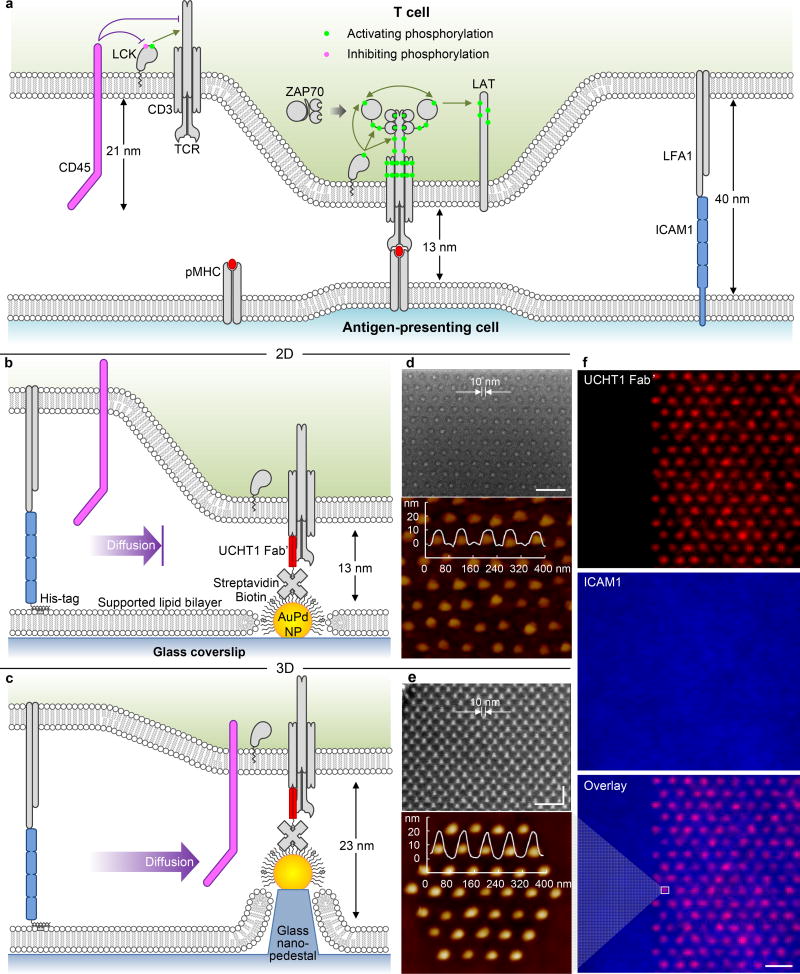
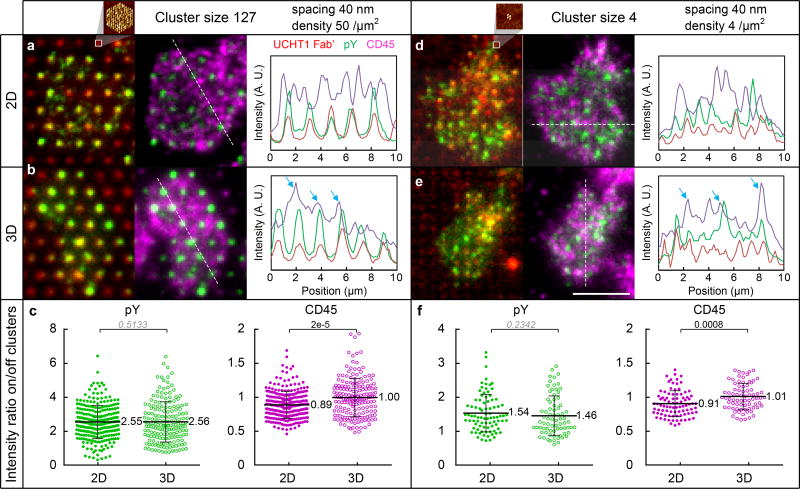
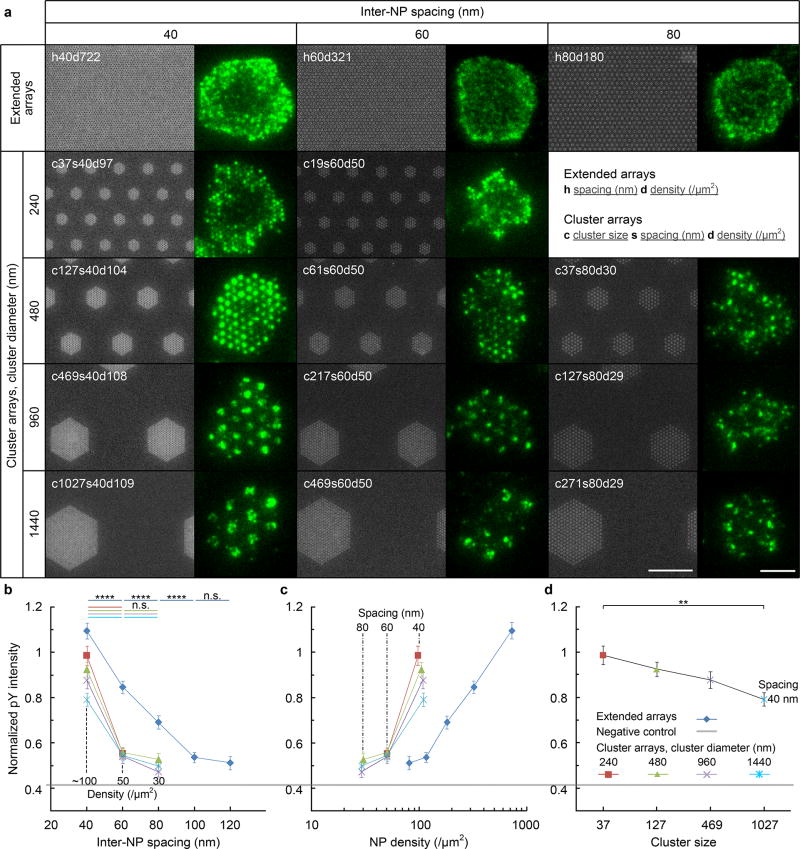
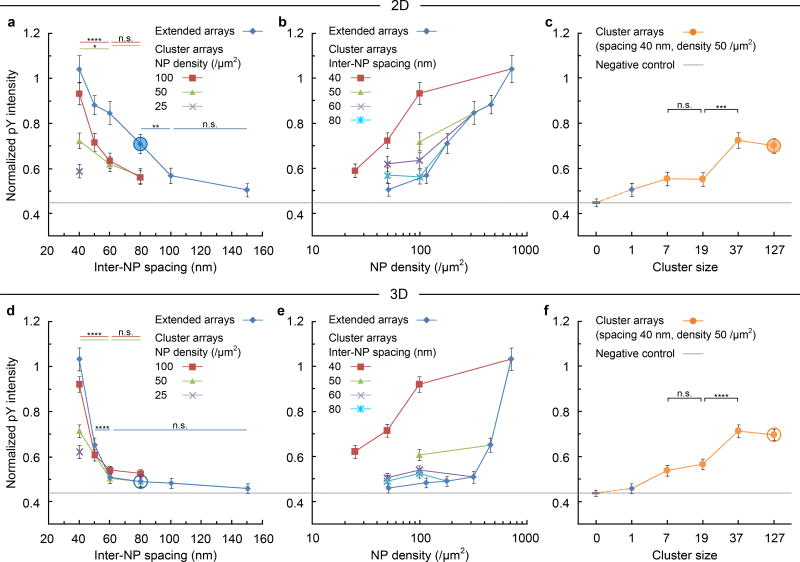
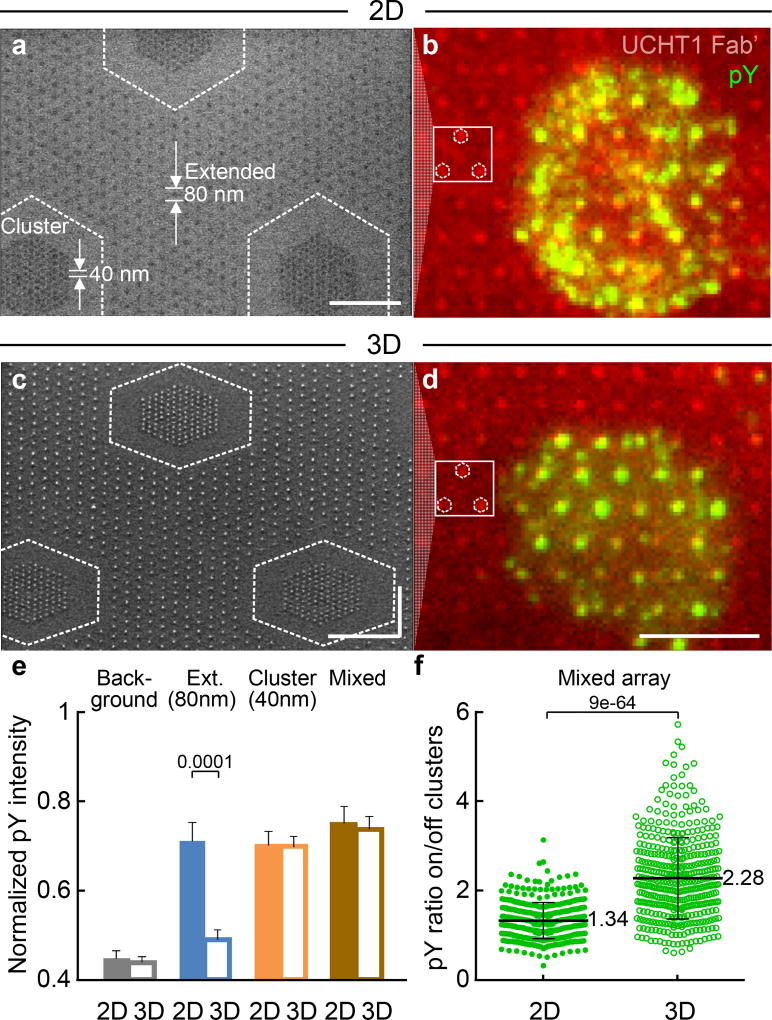
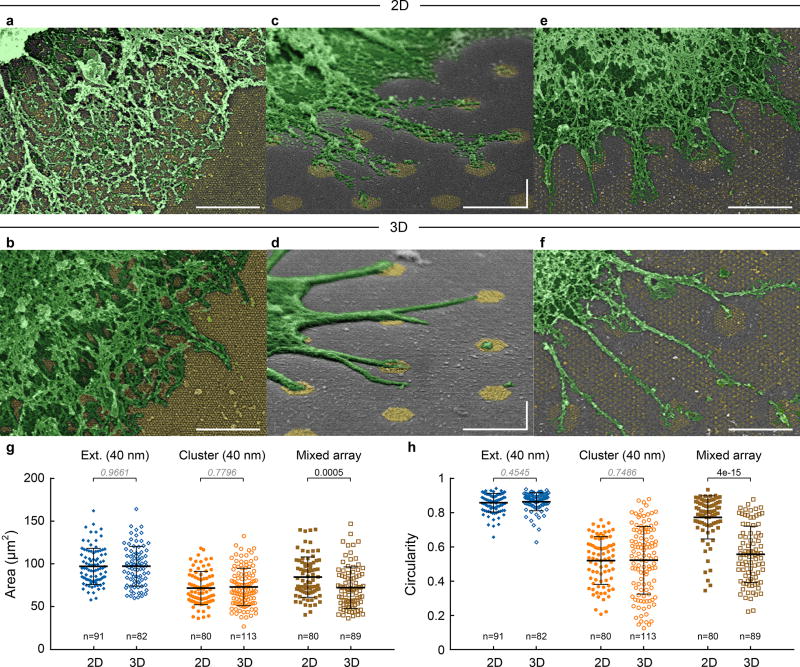
Elucidating the rules for receptor triggering in cell-cell and cell-matrix contacts requires precise control of ligand positioning in three dimensions. Here, we use the T cell receptor (TCR) as a model and subject T cells to different geometric arrangements of ligands, using a nanofabricated single-molecule array platform. This comprises monovalent TCR ligands anchored to lithographically patterned nanoparticle clusters surrounded by mobile adhesion molecules on a supported lipid bilayer. The TCR ligand could be co-planar with the supported lipid bilayer (2D), excluding the CD45 transmembrane tyrosine phosphatase, or elevated by 10 nm on solid nanopedestals (3D), allowing closer access of CD45 to engaged TCR. The two configurations resulted in different T cell responses, depending on the lateral spacing between the ligands. These results identify the important contributions of lateral and axial components of ligand positioning and create a more complete foundation for receptor engineering for immunotherapy.
阐明细胞-细胞和细胞-基质接触中受体触发的规则需要精确控制配体在三维空间中的定位。在这里,我们使用 T 细胞受体 (TCR) 作为模型,并使用纳米制造的单分子阵列平台使 T 细胞受到不同的配体几何排列的影响。该平台由锚定在光刻图案化纳米颗粒簇上的单价 TCR 配体组成,这些纳米颗粒簇被支持脂质双层上的可移动粘附分子包围。TCR 配体可以与支持脂质双层共面(2D),排除跨膜酪氨酸磷酸酶 CD45,或者在固体纳米支架上升高 10nm(3D),允许 CD45 更接近与 TCR 结合。这两种构象导致了不同的 T 细胞反应,这取决于配体之间的横向间距。这些结果确定了配体定位的横向和轴向分量的重要贡献,并为免疫疗法的受体工程创造了更完整的基础。