Shanghai 10th People's Hospital, School of Life Sciences and Technology, Tongji University, Shanghai, 200092, China.
Shanghai Public Health Clinical Center & Institutes of Biomedical Sciences, Shanghai Medical School, Fudan University, Shanghai, 200032, China.
Nat Commun. 2018 May 2;9(1):1772. doi: 10.1038/s41467-018-04171-2.
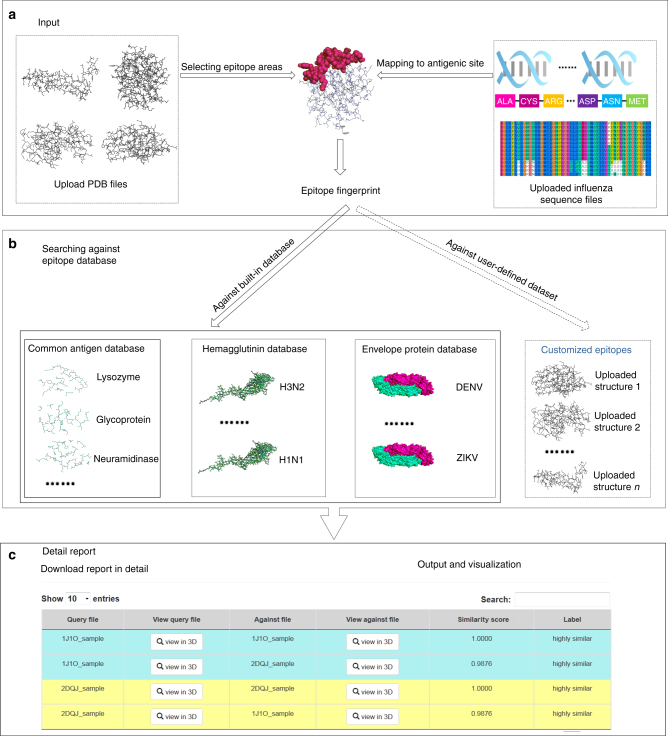
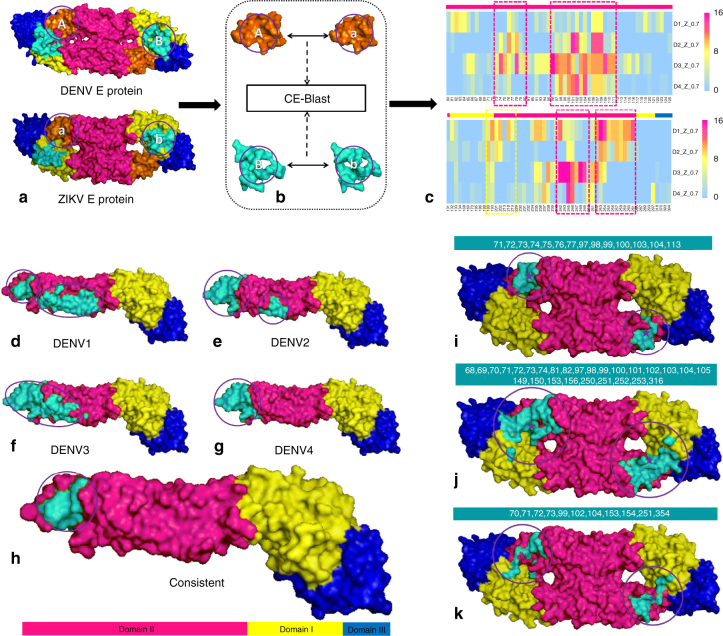
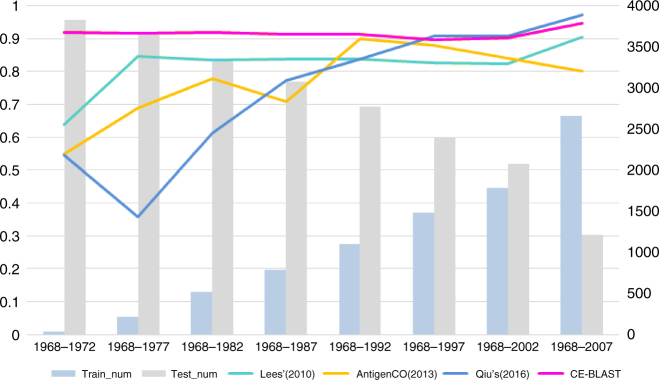
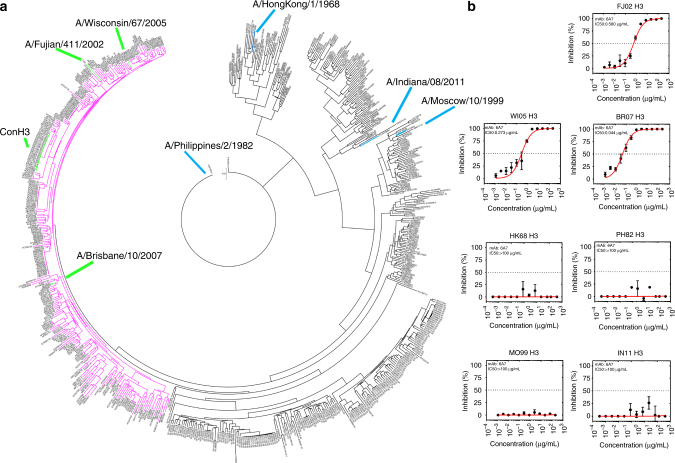
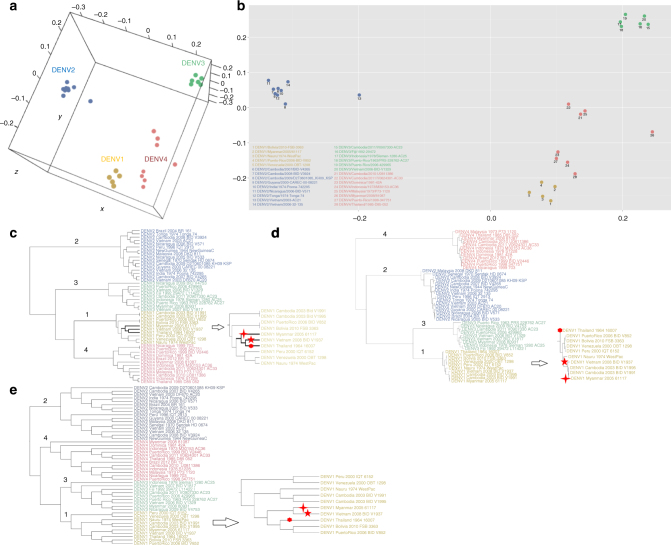
Major challenges in vaccine development include rapidly selecting or designing immunogens for raising cross-protective immunity against different intra- or inter-subtypic pathogens, especially for the newly emerging varieties. Here we propose a computational method, Conformational Epitope (CE)-BLAST, for calculating the antigenic similarity among different pathogens with stable and high performance, which is independent of the prior binding-assay information, unlike the currently available models that heavily rely on the historical experimental data. Tool validation incorporates influenza-related experimental data sufficient for stability and reliability determination. Application to dengue-related data demonstrates high harmonization between the computed clusters and the experimental serological data, undetectable by classical grouping. CE-BLAST identifies the potential cross-reactive epitope between the recent zika pathogen and the dengue virus, precisely corroborated by experimental data. The high performance of the pathogens without the experimental binding data suggests the potential utility of CE-BLAST to rapidly design cross-protective vaccines or promptly determine the efficacy of the currently marketed vaccine against emerging pathogens, which are the critical factors for containing emerging disease outbreaks.
疫苗开发的主要挑战包括快速选择或设计针对不同的同种或异型病原体产生交叉保护免疫的免疫原,特别是对于新出现的变异株。在这里,我们提出了一种计算方法,构象表位(CE)-BLAST,用于计算不同病原体之间的抗原相似性,具有稳定和高性能,这与目前依赖于历史实验数据的模型不同,后者严重依赖于历史实验数据。该工具的验证包含了足够的流感相关实验数据,以确定其稳定性和可靠性。应用于登革热相关数据的结果表明,计算出的聚类与实验血清学数据高度一致,而经典分组方法无法检测到这种一致性。CE-BLAST 确定了最近的寨卡病毒病原体和登革热病毒之间潜在的交叉反应表位,这与实验数据精确吻合。对于没有实验结合数据的病原体,该方法的高性能表明,CE-BLAST 具有快速设计交叉保护疫苗或迅速确定现有市场疫苗对新出现病原体的功效的潜力,这是控制新出现疾病爆发的关键因素。