Key Laboratory of Drug Targeting and Drug Delivery Systems, Ministry of Education, West China School of Pharmacy, Sichuan University, No.17, Block 3, Southern Renmin Road, Chengdu, 610041, P. R. China.
Theranostics. 2018 Mar 8;8(8):2229-2241. doi: 10.7150/thno.24073. eCollection 2018.
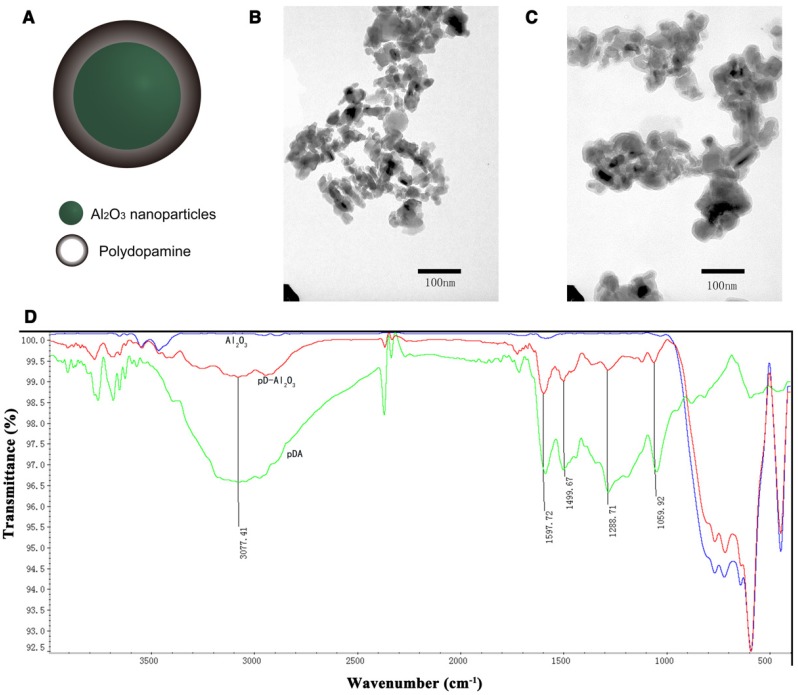
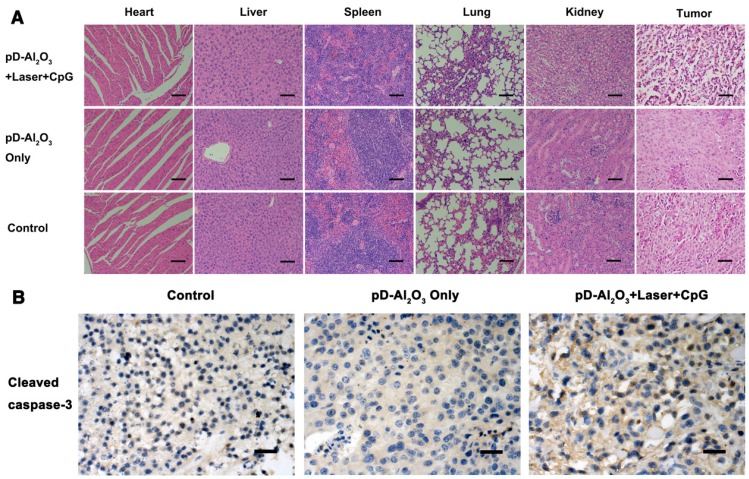
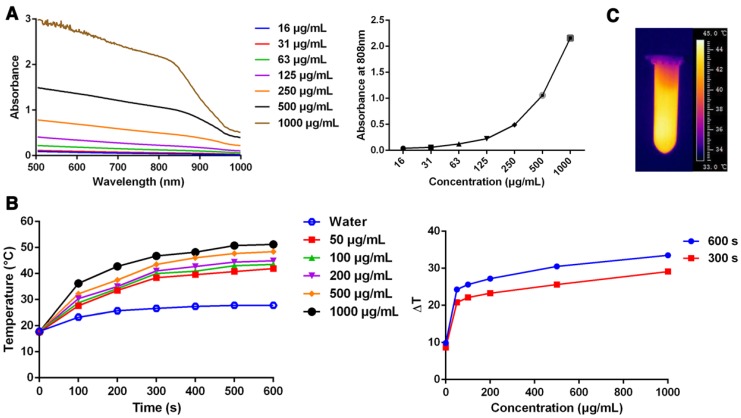
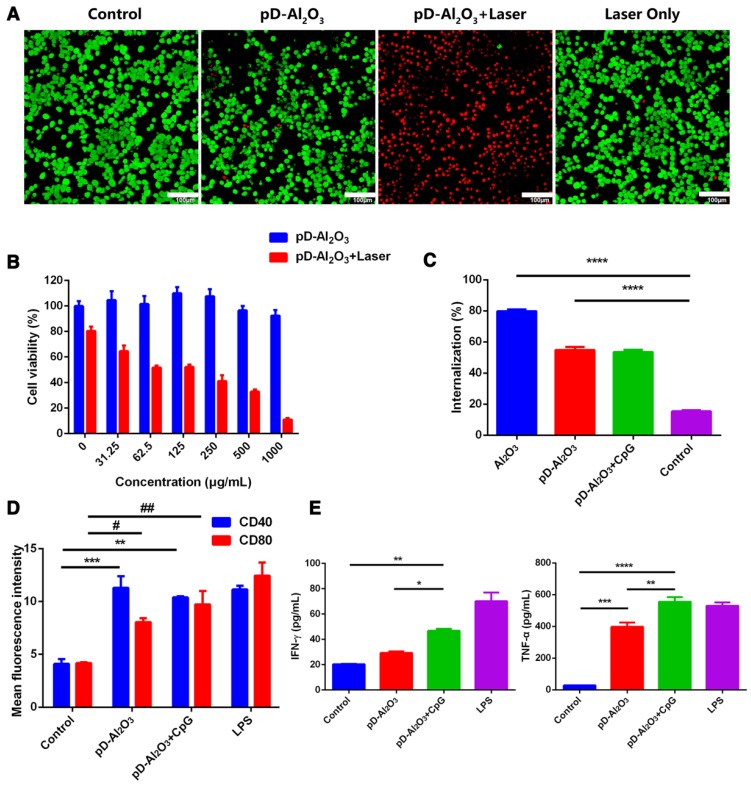
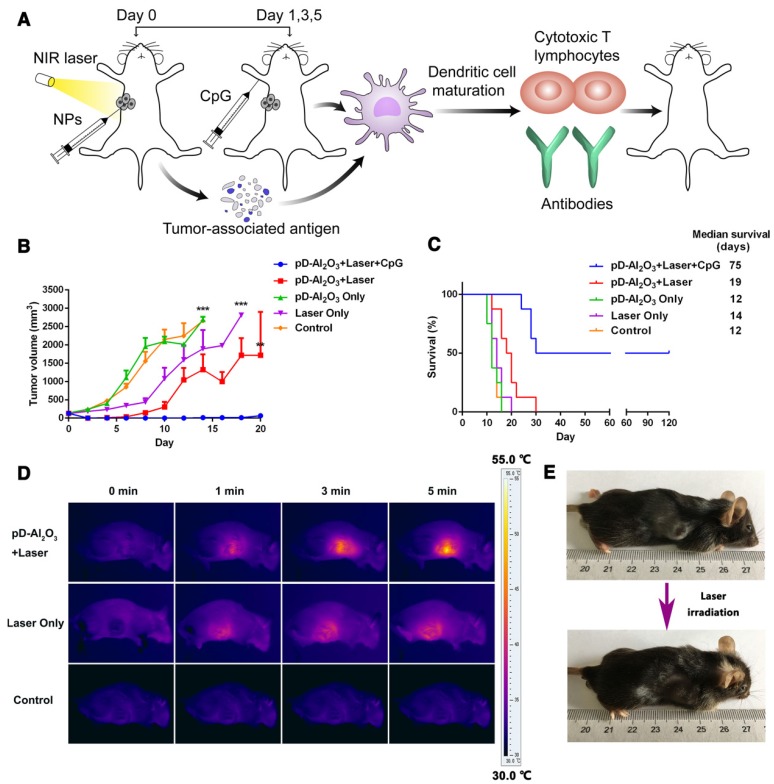
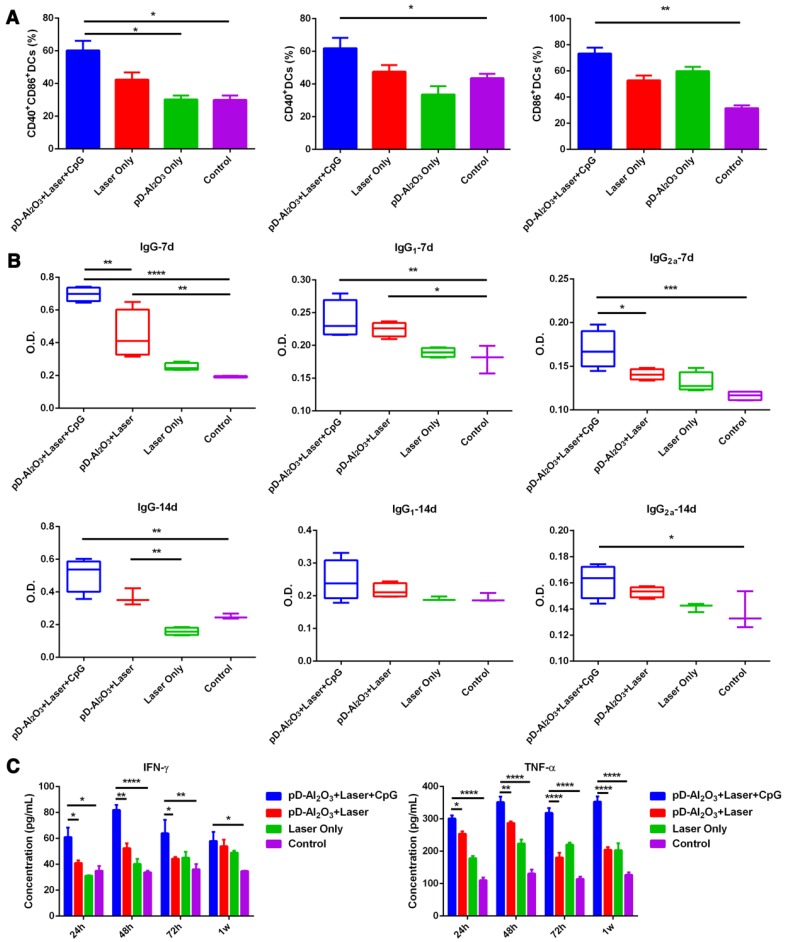
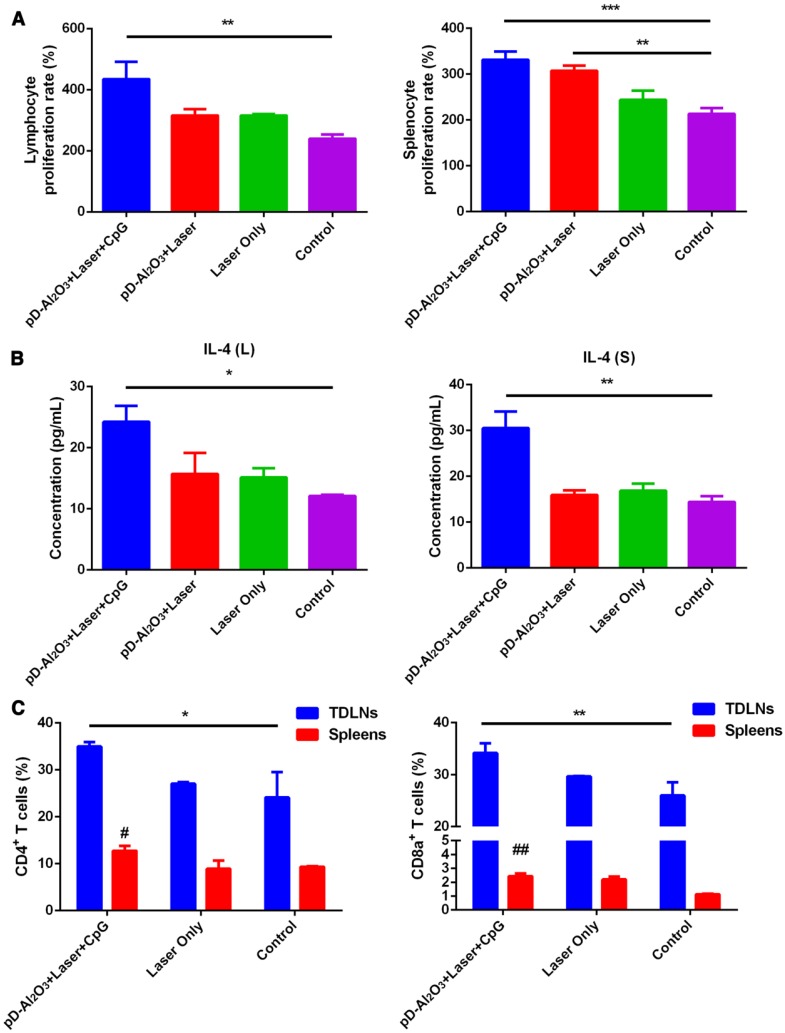
Photothermal therapy (PTT) can be an effective antitumor therapy, but it may not completely eliminate tumor cells, leading to the risk of recurrence or metastasis. Here we describe nanocarriers that allow combination therapy involving PTT and immunotherapy. Nanocarriers are prepared by coating AlO nanoparticles with non-toxic, biodegradable polydopamine, which shows high photothermal efficiency. A near-infrared laser irradiation can kill the majority of tumor tissues, resulting in the release of tumor-associated antigens. The AlO within the nanoparticles, together with CpG, acts as an adjuvant to trigger robust cell-mediated immune responses that can help eliminate the residual tumor cells and reduce the risk of tumor recurrence. The characteristics and photothermal performance of polydopamine-coated AlO nanoparticles were examined after one-step preparation. Then we studied their internalization, photothermal toxicity and immunostimulatory activity . For experiments, these nanocarriers were injected directly into B16F10 melanoma allografts in mice to ensure specific localization. After photothermal irradiation on day 0, mice were subcutaneously injected with CpG adjuvant on day 1, 3 and 5. Tumor volumes and number of living mice were recorded every two days. Moreover, various immune responses induced by our combined therapy were tested for mechanism research. 50% of mice after our combined treatment successfully achieved the goal of tumor eradication, and survived for 120 days, which was the end point of the experiment. Mechanism studies demonstrated the combined therapy efficiently led to dendritic cell maturation, resulting in the secretion of antibodies and cytokines as well as the proliferation of splenocytes and lymphocytes for anti-tumor immunotherapy. Taken together, these results demonstrated the promise of our combined photothermal therapy and immunotherapy for tumor shrinkage, which merited further research.
光热疗法(PTT)可以是一种有效的抗肿瘤治疗方法,但它可能无法完全消除肿瘤细胞,导致复发或转移的风险。在这里,我们描述了一种纳米载体,它允许结合光热疗法和免疫疗法的治疗。纳米载体是通过用无毒、可生物降解的聚多巴胺包覆 AlO 纳米粒子来制备的,聚多巴胺显示出高的光热效率。近红外激光照射可以杀死大部分肿瘤组织,导致释放肿瘤相关抗原。纳米粒子内的 AlO 与 CpG 一起作为佐剂,引发强烈的细胞介导的免疫反应,有助于消除残留的肿瘤细胞,降低肿瘤复发的风险。 研究了一步法制备的聚多巴胺包覆 AlO 纳米粒子的特性和光热性能。然后我们研究了它们的内化、光热毒性和免疫刺激活性。 为了实验,这些纳米载体被直接注射到小鼠的 B16F10 黑色素瘤同种异体移植物中,以确保特异性定位。在第 0 天进行光热照射后,在第 1、3 和 5 天给小鼠皮下注射 CpG 佐剂。每隔两天记录肿瘤体积和存活小鼠的数量。此外,还测试了我们联合治疗诱导的各种免疫反应,以进行机制研究。 我们的联合治疗后有 50%的小鼠成功实现了肿瘤消除的目标,存活了 120 天,这是实验的终点。机制研究表明,联合治疗有效地导致树突状细胞成熟,导致抗体和细胞因子的分泌,以及脾细胞和淋巴细胞的增殖,从而实现抗肿瘤免疫治疗。 综上所述,这些结果表明,我们的联合光热疗法和免疫疗法在缩小肿瘤方面具有很大的潜力,值得进一步研究。