Lumkul Lalita, Sawaswong Vorthon, Simpalipan Phumin, Kaewthamasorn Morakot, Harnyuttanakorn Pongchai, Pattaradilokrat Sittiporn
Department of Biology, Faculty of Science, Chulalongkorn University, Bangkok 10330, Thailand.
Veterinary Parasitology Research Group, Department of Pathology, Faculty of Veterinary Science, Chulalongkorn University, Bangkok 10330, Thailand.
Korean J Parasitol. 2018 Apr;56(2):153-165. doi: 10.3347/kjp.2018.56.2.153. Epub 2018 Apr 30.
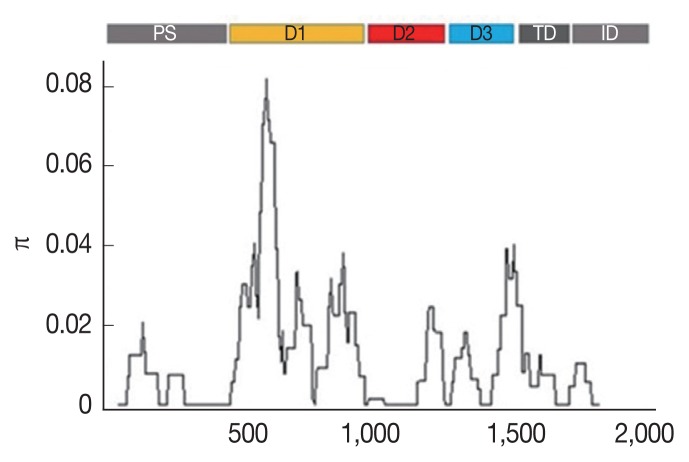
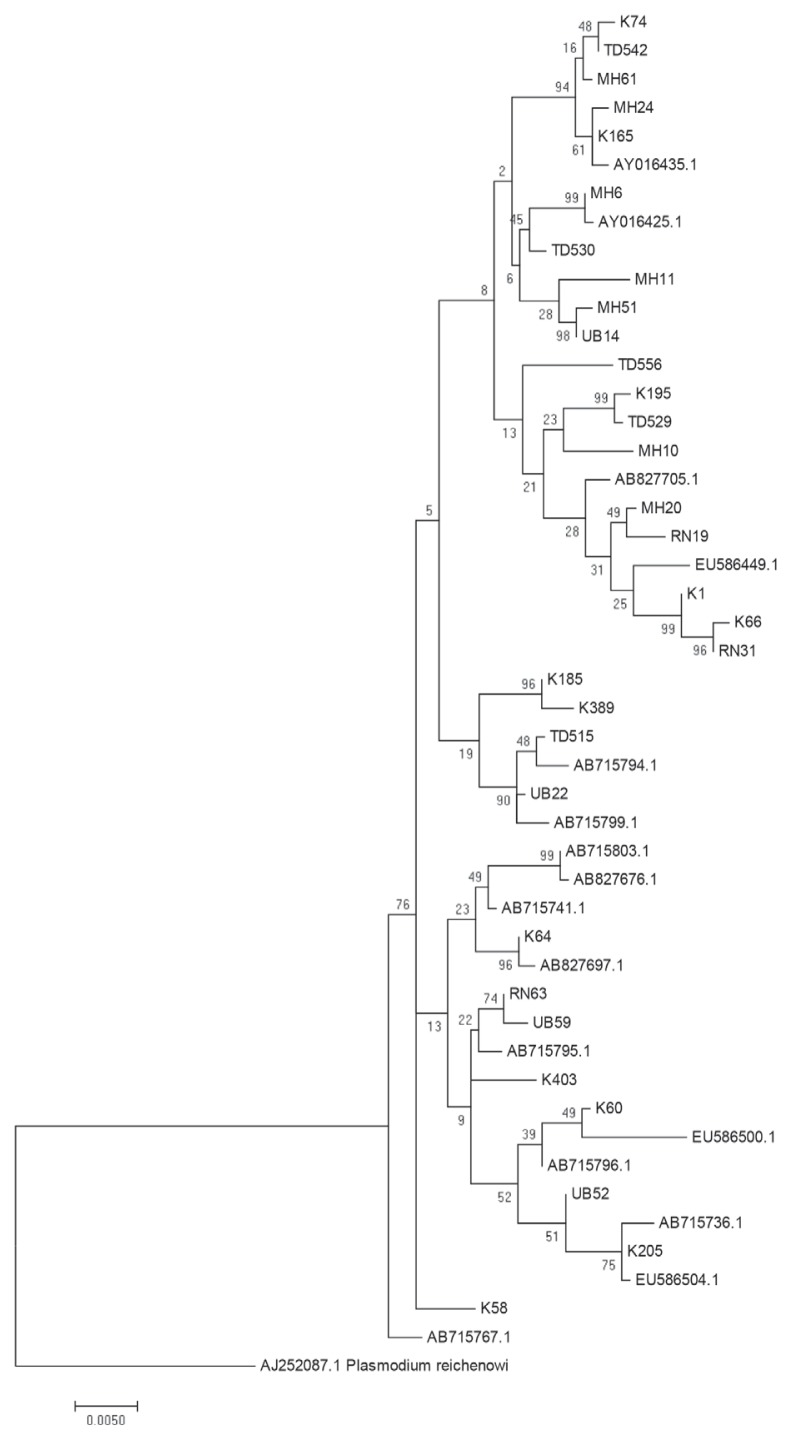
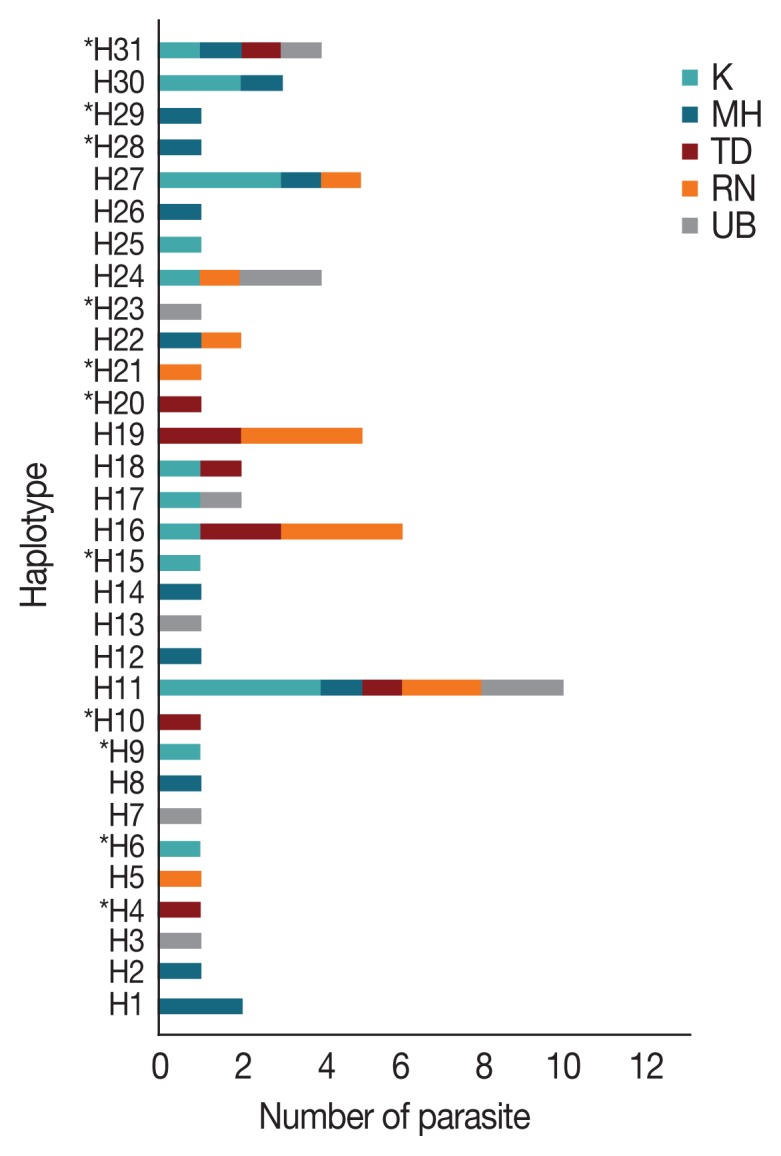
Development of an effective vaccine is critically needed for the prevention of malaria. One of the key antigens for malaria vaccines is the apical membrane antigen 1 (-1) of the human malaria parasite , the surface protein for erythrocyte invasion of the parasite. The gene encoding -1 has been sequenced from populations of worldwide, but the haplotype diversity of the gene in populations in the Greater Mekong Subregion (GMS), including Thailand, remains to be characterized. In the present study, the -1 gene was PCR amplified and sequenced from the genomic DNA of 65 isolates from 5 endemic areas in Thailand. The nearly full-length 1,848 nucleotide sequence of -1 was subjected to molecular analyses, including nucleotide sequence diversity, haplotype diversity and deduced amino acid sequence diversity and neutrality tests. Phylogenetic analysis and pairwise population differentiation ( indices) were performed to infer the population structure. The analyses identified 60 single nucleotide polymorphic loci, predominately located in domain I of -1. A total of 31 unique -1 haplotypes were identified, which included 11 novel ones. The phylogenetic tree of the -1 haplotypes revealed multiple clades of -1, each of which contained parasites of multiple geographical origins, consistent with the indices indicating genetic homogeneity or gene flow among geographically distinct populations of in Thailand's borders with Myanmar, Laos and Cambodia. In summary, the study revealed novel haplotypes and population structure needed for the further advancement of -1-based malaria vaccines in the GMS.
预防疟疾迫切需要开发一种有效的疫苗。疟疾疫苗的关键抗原之一是人类疟原虫的顶端膜抗原1(AMA1),它是疟原虫侵入红细胞的表面蛋白。编码AMA1的基因已在全球范围内的人群中进行了测序,但在包括泰国在内的大湄公河次区域(GMS)人群中该基因的单倍型多样性仍有待确定。在本研究中,从泰国5个流行地区的65株疟原虫分离株的基因组DNA中PCR扩增并测序AMA1基因。对AMA1近全长1848个核苷酸序列进行了分子分析,包括核苷酸序列多样性、单倍型多样性、推导的氨基酸序列多样性和中性检验。进行了系统发育分析和成对群体分化(FST指数)以推断群体结构。分析确定了60个单核苷酸多态性位点,主要位于AMA1的结构域I中。共鉴定出31种独特的AMA1单倍型,其中包括11种新的单倍型。AMA1单倍型的系统发育树显示AMA1有多个分支,每个分支都包含多个地理来源的疟原虫,这与FST指数表明泰国与缅甸、老挝和柬埔寨接壤地区地理上不同的AMA1群体之间的遗传同质性或基因流动一致。总之,该研究揭示了GMS中基于AMA1的疟疾疫苗进一步发展所需的新单倍型和群体结构。