Hidese Shinsuke, Matsuo Junko, Ishida Ikki, Hiraishi Moeko, Teraishi Toshiya, Ota Miho, Hattori Kotaro, Kunugi Hiroshi
Department of Mental Disorder Research, National Center of Neurology and Psychiatry, National Institute of Neuroscience, Tokyo, Japan.
Division of Cognitive and Behavioral Medicine, Department of National Center of Neurology and Psychiatry Brain Physiology and Pathology, Graduate School of Medical and Dental Sciences, Tokyo Medical and Dental University, Tokyo, Japan.
Front Psychiatry. 2018 Apr 25;9:156. doi: 10.3389/fpsyt.2018.00156. eCollection 2018.
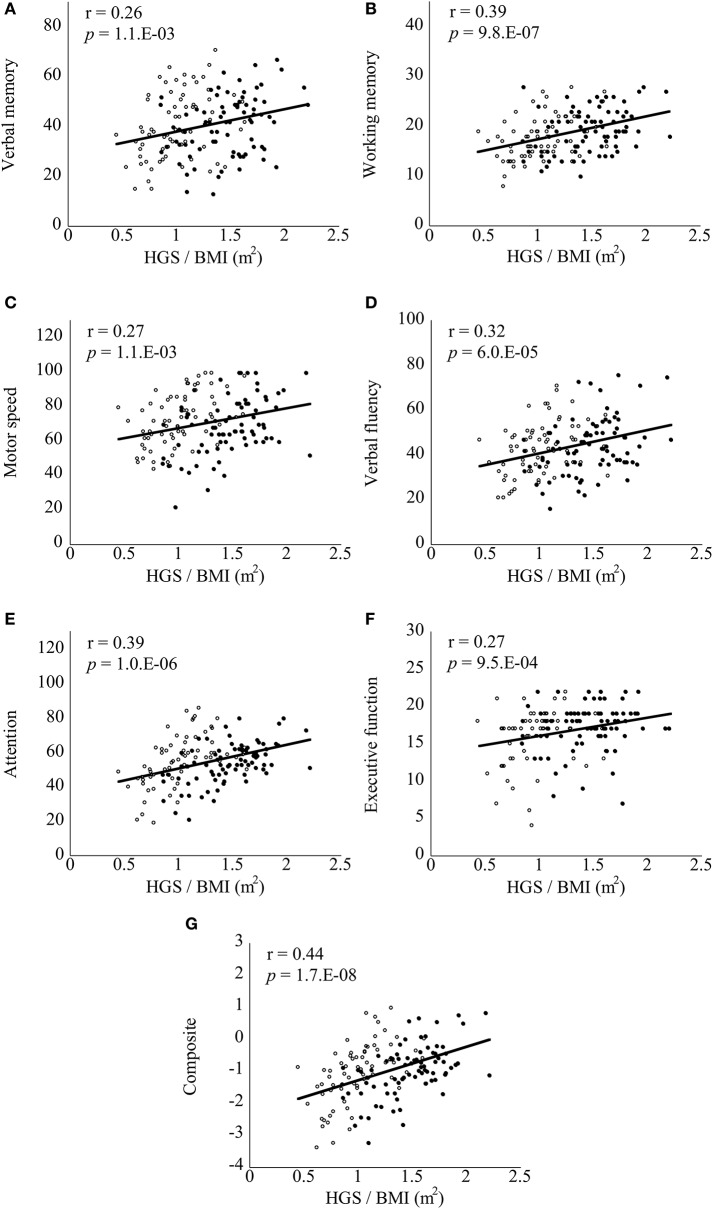
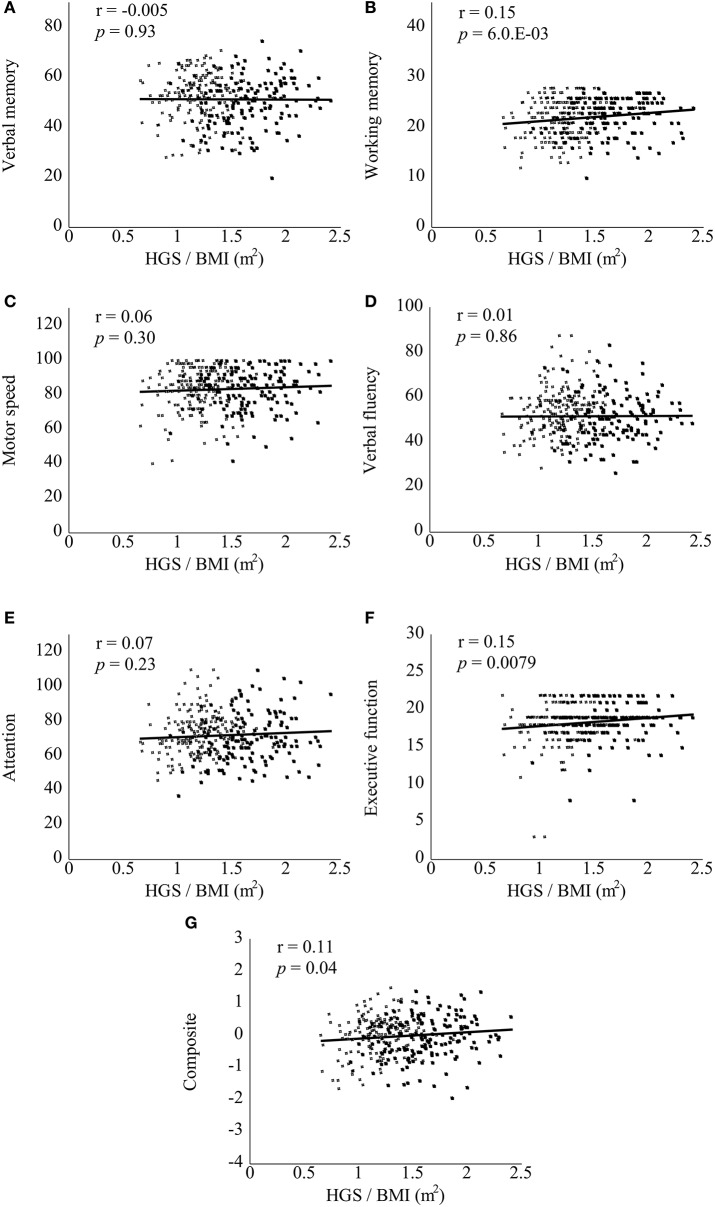
The relationship between muscle strength and cognition in schizophrenia has not been well studied. We investigated the potential relationship of handgrip strength (HGS) score and body mass index (BMI) with cognitive function in patients with schizophrenia. Participants included 153 patients with schizophrenia (age: 36.9 ± 9.4 years; 82 males) and 328 healthy controls (age: 36.4 ± 10.7 years; 150 males), matched for age, sex, and ethnicity (Japanese). HGS was measured using a digital handgrip dynamometer. Cognitive function was evaluated using the Brief Assessment of Cognition in Schizophrenia (BACS) test. A two-way multivariate analysis of covariance was used to compare HGS scores between the patient and control groups. Multiple regression analyses of BACS scores were performed in the patient and control groups using HGS and BMI scores as independent variables. In the intergroup comparison, significantly lower HGS scores were observed in patients with schizophrenia than in healthy controls ( < 0.05, corrected). In the patient group, there was a significantly positive correlation between HGS scores and BACS composite score (male, = 0.0014; female, = 0.0051). However, BMI scores were significantly negatively correlated with the BACS composite score (male, = 0.0022; female, = 0.018). Furthermore, the ratio of HGS/BMI was significantly positively correlated with the BACS composite score in the patient group ( = 0.00000018). Cognitive function in patients with schizophrenia is correlated positively with HGS and negatively with BMI. HGS/BMI may thus be a good index for cognitive performance in schizophrenia.
精神分裂症患者肌肉力量与认知之间的关系尚未得到充分研究。我们调查了握力(HGS)得分和体重指数(BMI)与精神分裂症患者认知功能之间的潜在关系。研究参与者包括153例精神分裂症患者(年龄:36.9±9.4岁;男性82例)和328名健康对照者(年龄:36.4±10.7岁;男性150例),两组在年龄、性别和种族(日本人)方面相匹配。使用数字握力计测量HGS。使用精神分裂症认知简短评估(BACS)测试评估认知功能。采用双向多变量协方差分析比较患者组和对照组之间的HGS得分。以HGS和BMI得分作为自变量,对患者组和对照组进行BACS得分的多元回归分析。在组间比较中,观察到精神分裂症患者的HGS得分显著低于健康对照者(<0.05,校正后)。在患者组中,HGS得分与BACS综合得分之间存在显著正相关(男性,=0.0014;女性,=0.0051)。然而,BMI得分与BACS综合得分显著负相关(男性,=0.0022;女性,=0.018)。此外,患者组中HGS/BMI比值与BACS综合得分显著正相关(=0.00000018)。精神分裂症患者的认知功能与HGS呈正相关,与BMI呈负相关。因此,HGS/BMI可能是精神分裂症认知表现的一个良好指标。