Department of Human and Animal Cell Lines, Leibniz-Institute DSMZ-German Collection of Microorganisms and Cell Cultures, Braunschweig, Germany.
PLoS One. 2018 May 10;13(5):e0197194. doi: 10.1371/journal.pone.0197194. eCollection 2018.
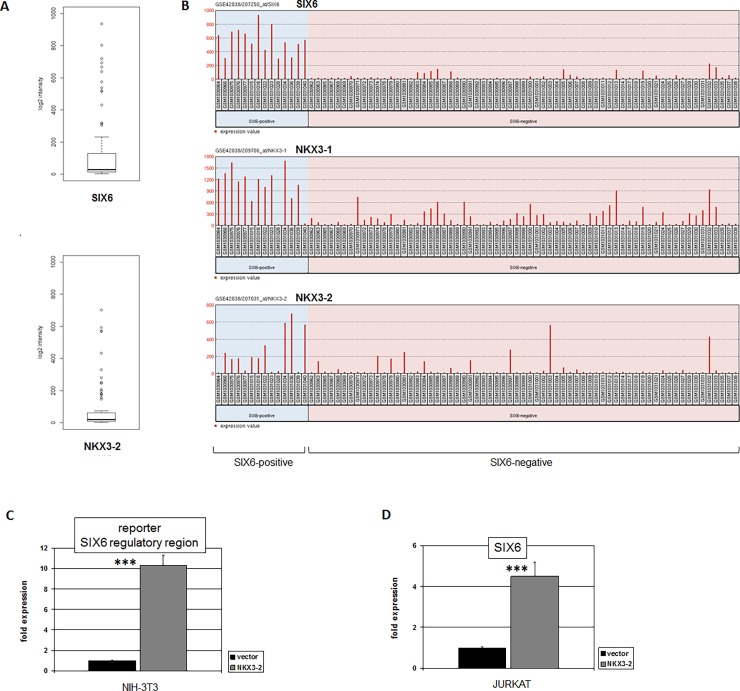
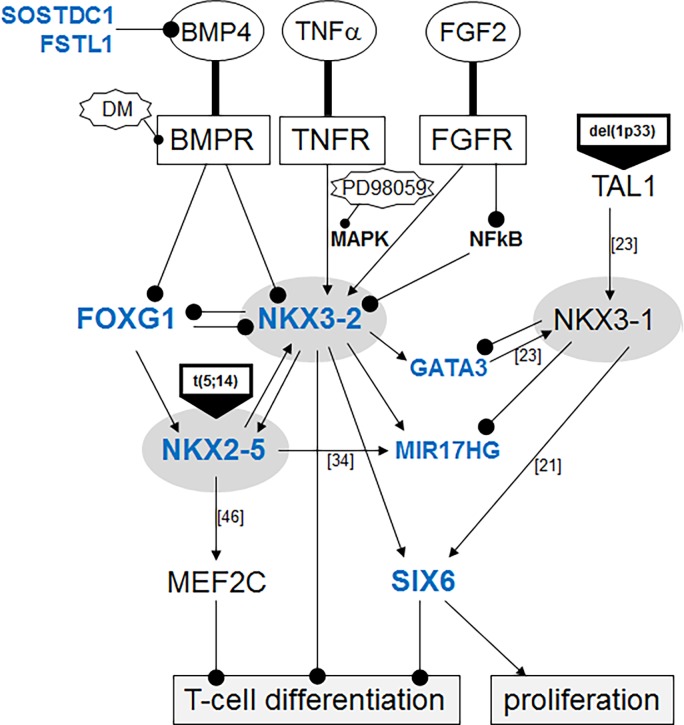
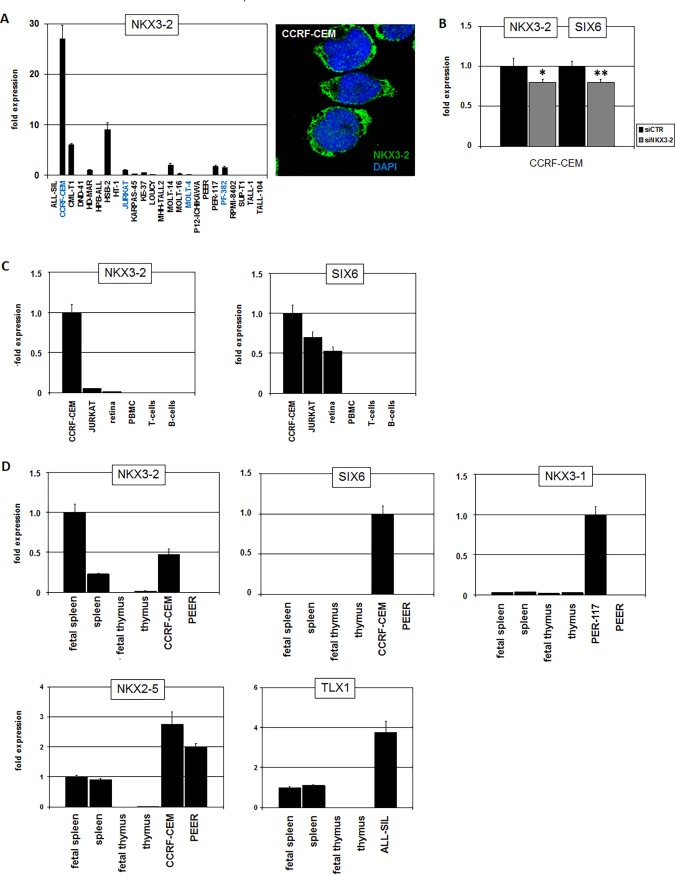
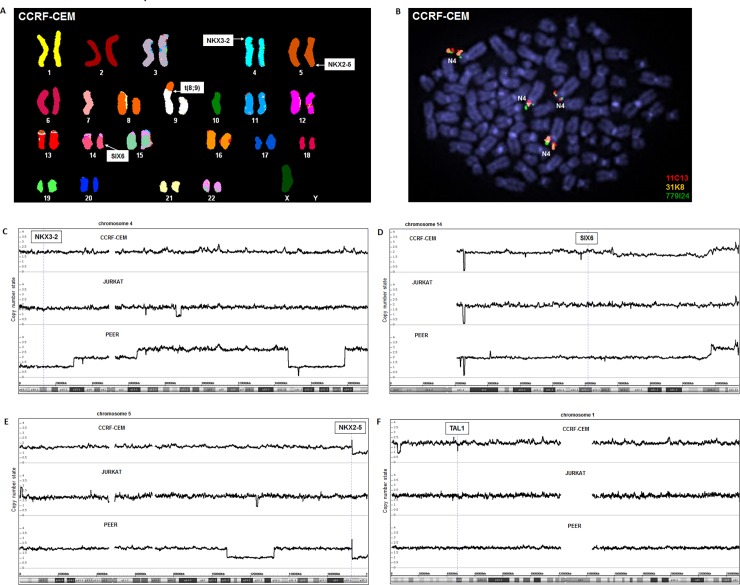
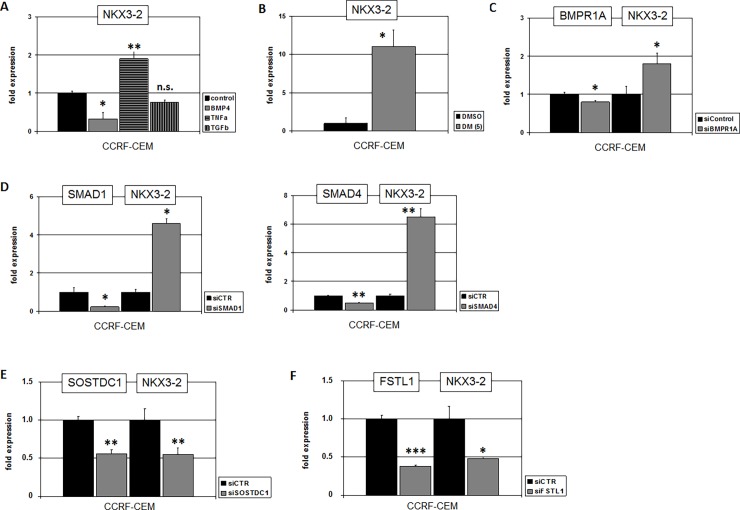
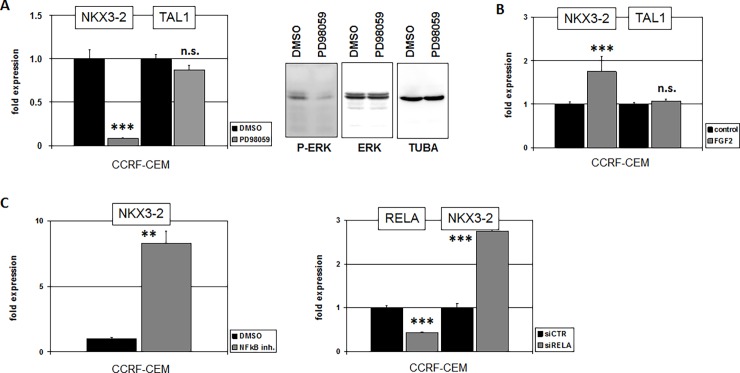
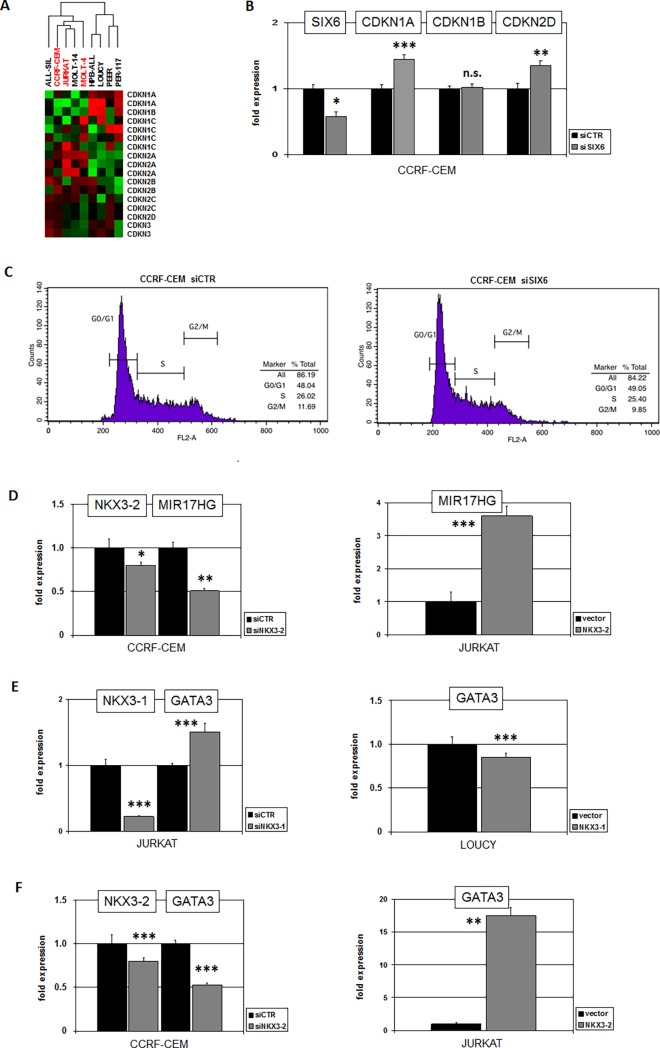
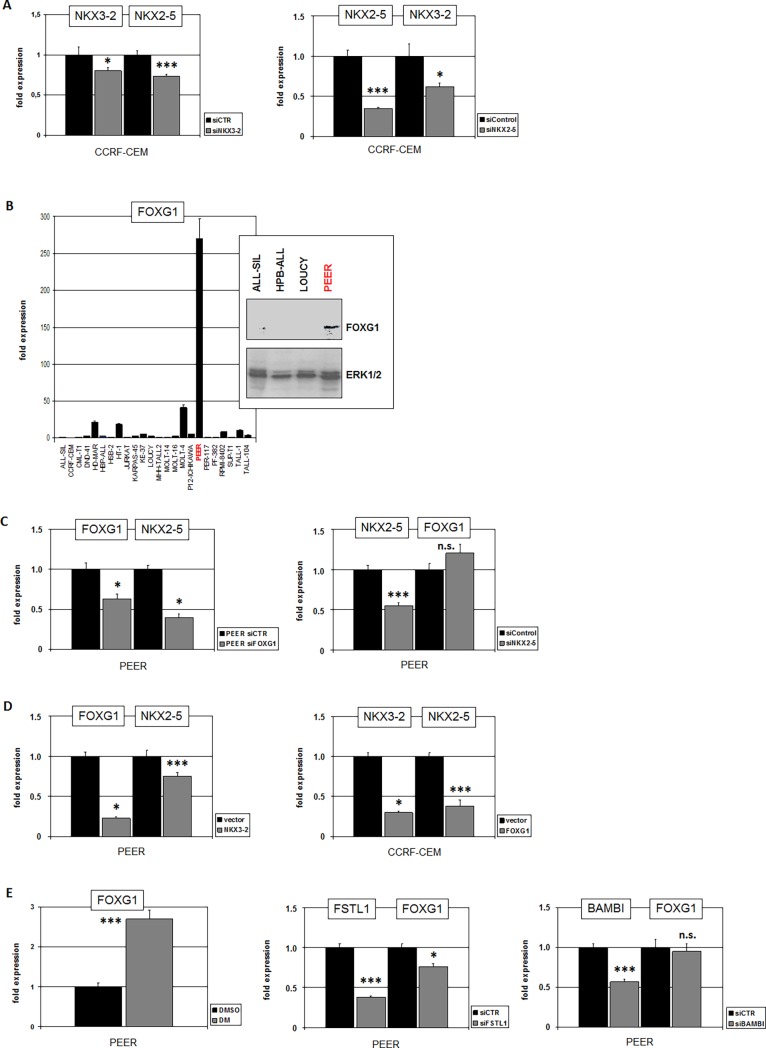
T-cell acute lymphoblastic leukemia (T-ALL) is a hematopoietic malignancy originating from T-cell progenitors in which differentiation is blocked at early stages. Physiological expression of specific NKL homeobox genes obeys a hematopoietic NKL-code implicated in the process of lymphopoiesis while in differentiated T-cells these genes are silenced. We propose that this developmental expression pattern underlies the observation that NKL homeobox genes are the most ubiquitous group of transcription factors deregulated in T-ALL, including TLX1, TLX3, NKX2-5 and NKX3-1. Here, we describe a novel member of the NKL homeobox gene subclass, NKX3-2 (BAPX1), which is aberrantly activated in 18% of pediatric T-ALL patients analyzed while being normally expressed in developing spleen. Identification of NKX3-2 expression in T-ALL cell line CCRF-CEM qualified these cells to model its deregulation and function in a leukemic context. Genomic and chromosomal analyses demonstrated normal configuration of the NKX3-2 locus at chromosome 4p15, thus excluding cytogenetic dysregulation. Comparative expression profiling analysis of NKX3-2 patient data revealed deregulated activity of BMP- and MAPK-signalling. These candidate pathways were experimentally confirmed to mediate aberrant NKX3-2 expression. We also show that homeobox gene SIX6, plus MIR17HG and GATA3 are downstream targets of NKX3-2 and plausibly contribute to the pathogenesis of this malignancy by suppressing T-cell differentiation. Finally, NKL homeobox gene NKX2-5 was activated by NKX3-2 in CCRF-CEM and by FOXG1 in PEER, representing mutually inhibitory activators of this translocated oncogene. Together, our findings reveal a novel oncogenic NKL homeobox gene subclass member which is aberrantly expressed in a large subset of T-ALL patients and participates in a deregulated gene network likely to arise in developing spleen.
T 细胞急性淋巴细胞白血病(T-ALL)是一种起源于 T 细胞前体的造血恶性肿瘤,其中分化在早期阶段受阻。特定 NKL 同源盒基因的生理表达遵循造血 NKL 密码,该密码参与淋巴细胞生成过程,而在分化的 T 细胞中,这些基因被沉默。我们提出,这种发育表达模式是 NKL 同源盒基因在 T-ALL 中最普遍失调的转录因子群的观察结果的基础,包括 TLX1、TLX3、NKX2-5 和 NKX3-1。在这里,我们描述了 NKL 同源盒基因亚类的一个新成员 NKX3-2(BAPX1),它在分析的 18%的儿科 T-ALL 患者中异常激活,而在发育中的脾脏中正常表达。在 T-ALL 细胞系 CCRF-CEM 中鉴定出 NKX3-2 的表达,使这些细胞能够在白血病背景下对其失调和功能进行建模。基因组和染色体分析表明 NKX3-2 基因座在染色体 4p15 上的正常构型,因此排除了细胞遗传学失调。对 NKX3-2 患者数据的比较表达谱分析显示 BMP 和 MAPK 信号通路的活性失调。这些候选途径通过实验证实介导异常 NKX3-2 表达。我们还表明,同源盒基因 SIX6、MIR17HG 和 GATA3 是 NKX3-2 的下游靶标,并且通过抑制 T 细胞分化,可能有助于这种恶性肿瘤的发病机制。最后,NKX3-2 在 CCRF-CEM 中激活 NKX 同源盒基因 NKX2-5,FOXG1 在 PEER 中激活 NKX3-2,这是该易位癌基因的相互抑制激活剂。总之,我们的研究结果揭示了一种新型致癌 NKL 同源盒基因亚类成员,其在很大一部分 T-ALL 患者中异常表达,并参与了可能在发育中的脾脏中产生的失调基因网络。