Li Xuan, Cui Xin-Xin, Chen Ya-Jing, Wu Ting-Ting, Xu Huaxi, Yin Huiyong, Wu Yun-Cheng
Department of Neurology, Shanghai General Hospital, Shanghai Jiao Tong University School of Medicine, Shanghai, China.
Neuroscience Initiative, Sanford Burnham Prebys Medical Discovery Institute, La Jolla, CA, United States.
Front Aging Neurosci. 2018 Apr 27;10:121. doi: 10.3389/fnagi.2018.00121. eCollection 2018.
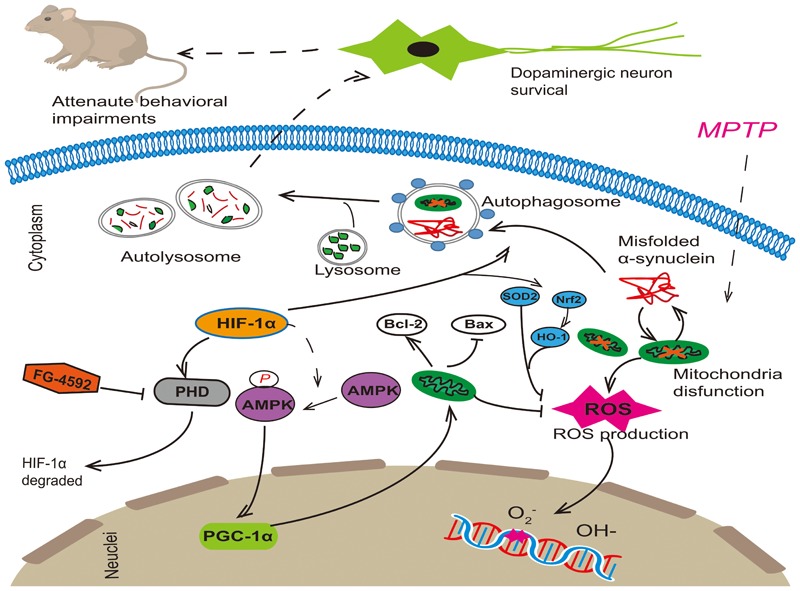
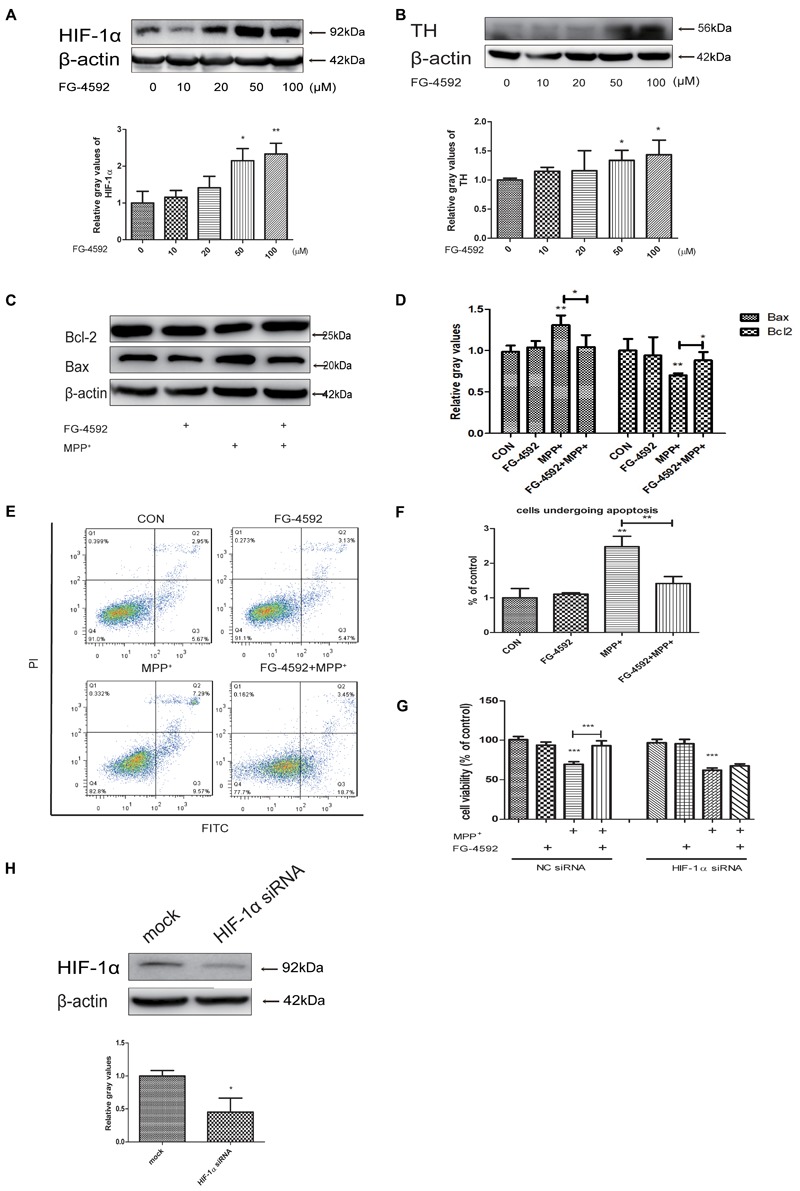
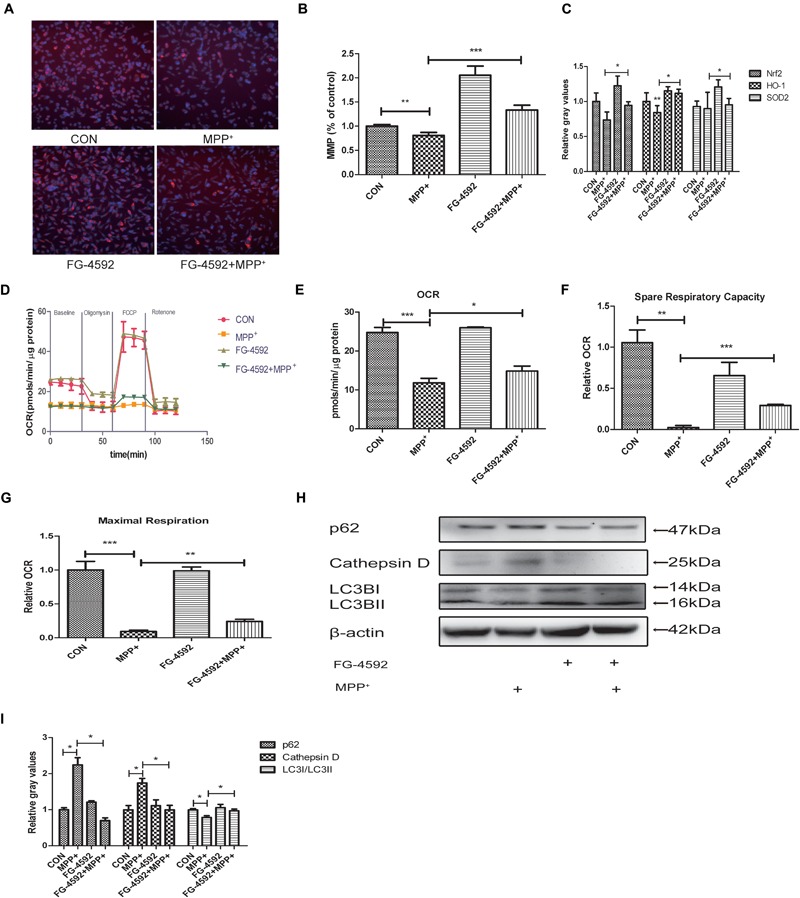
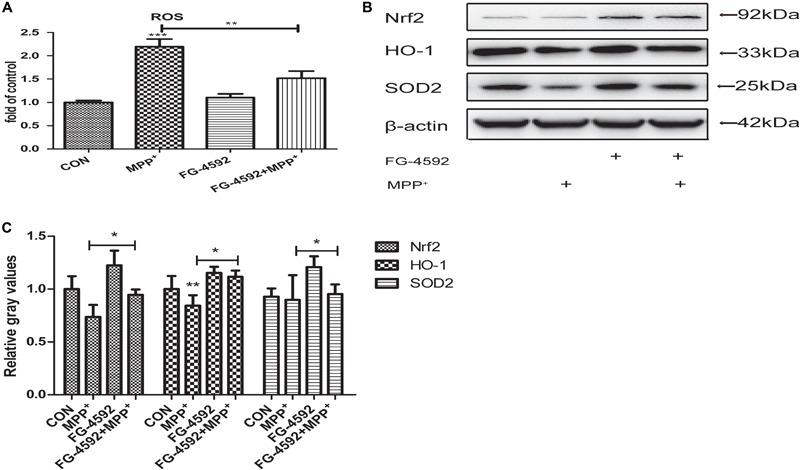
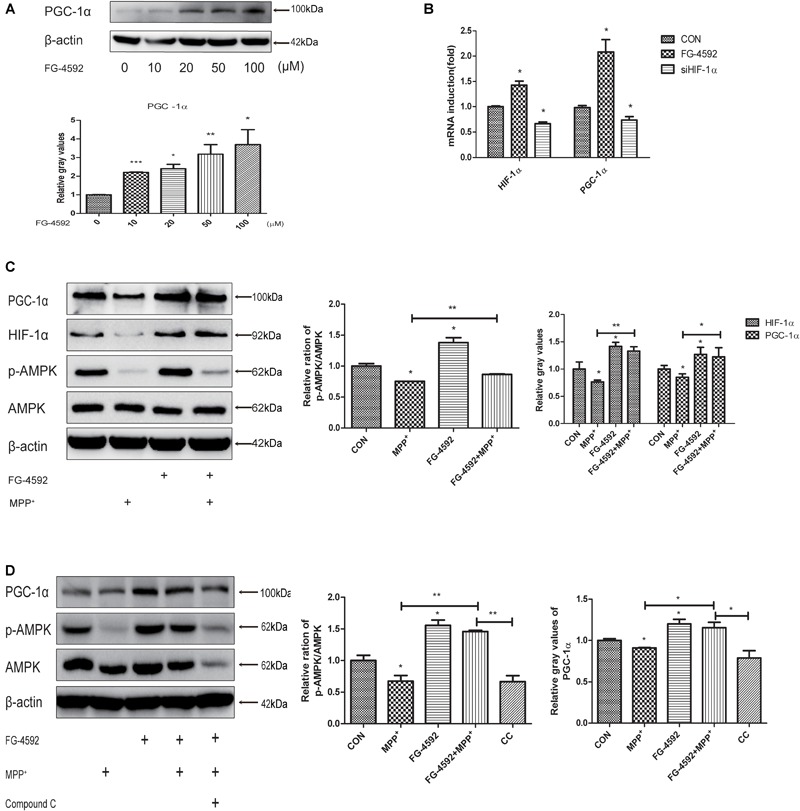
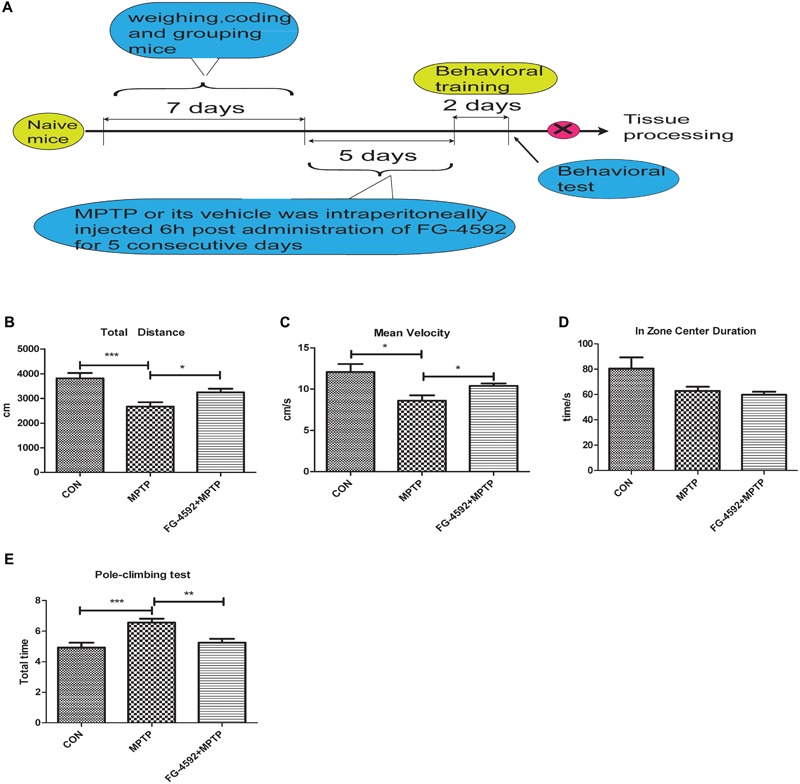
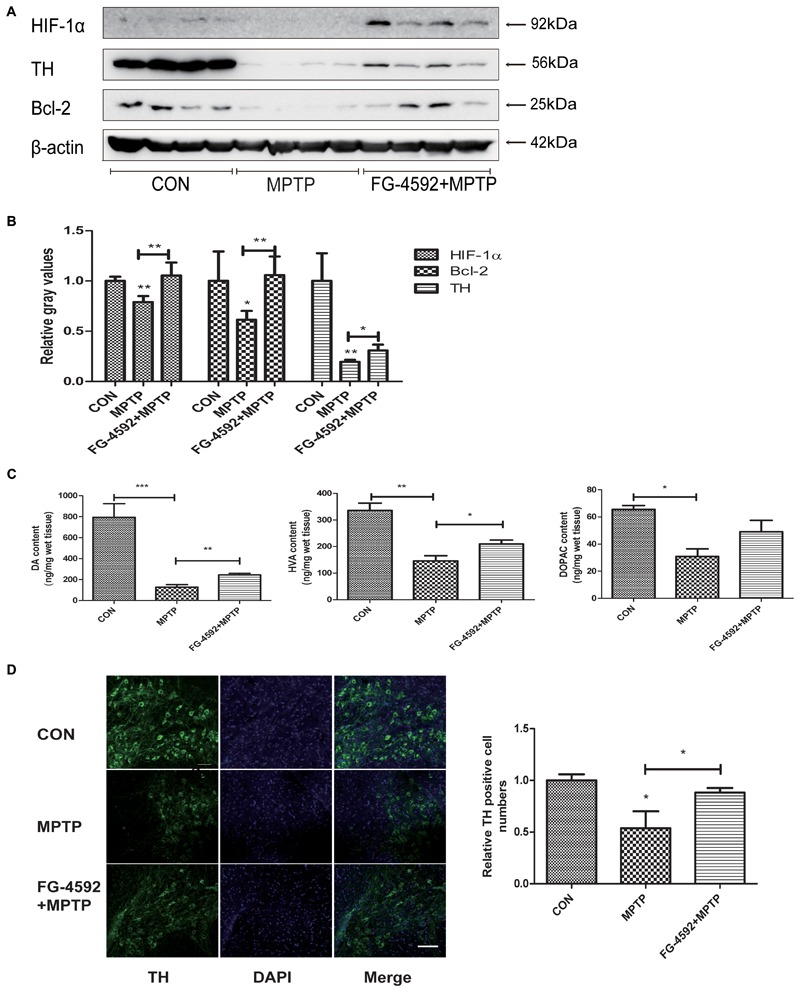
As the main transcription factor that regulates the cellular responses to hypoxia, Hypoxia-inducible factor-1α (HIF-1α) plays an important role in the pathogenesis of Parkinson's disease (PD). HIF-1α is normally degraded through ubiquitination after hydroxylation by prolyl hydroxylases (PHD). Emerging evidence has suggested that HIF PHD inhibitors (HIF-PHI) may have neuroprotective effects on PD through increasing HIF-1α levels. However, the therapeutic benefit of HIF-PHI for PD remains poorly explored due to the lack of proper clinical compounds and understanding of the underlying molecular mechanisms. In this study, we examined the therapeutic benefit of a new HIF-PHI, FG-4592, which is currently in phase 3 clinical trials to treat anemia in patients with chronic kidney diseases (CKD) in PD models. FG-4592 attenuates MPP -induced apoptosis and loss of tyrosine hydroxylase (TH) in SH-SY5Y cells. Pretreatment with FG-4592 mitigates MPP-induced loss of mitochondrial membrane potential (MMP), mitochondrial oxygen consumption rate (OCR), production of reactive oxygen species (ROS) and ATP. Furthermore, FG-4592 counterbalances the oxidative stress through up-regulating nuclear factor erythroid 2 p45-related factor 2 (Nrf-2), heme oxygenase-1 (HO-1) and superoxide dismutase 2 (SOD2). FG-4592 treatment also induces the expression of Peroxisome proliferator-activated receptor-γ coactivator-1α (PGC-1α) through increasing the phosphorylation of AMP-activated protein kinase (AMPK). In MPTP-treated mice, FG-4592 protects against MPTP-induced loss of TH-positive neurons of substantia nigra and attenuates behavioral impairments. Collectively, our study demonstrates that FG-4592 is a promising therapeutic strategy for PD through improving the mitochondrial function under oxidative stress.
作为调节细胞对缺氧反应的主要转录因子,缺氧诱导因子-1α(HIF-1α)在帕金森病(PD)的发病机制中起重要作用。HIF-1α在脯氨酰羟化酶(PHD)羟基化后通常通过泛素化降解。新出现的证据表明,HIF PHD抑制剂(HIF-PHI)可能通过提高HIF-1α水平对PD具有神经保护作用。然而,由于缺乏合适的临床化合物以及对潜在分子机制的了解,HIF-PHI对PD的治疗益处仍未得到充分探索。在本研究中,我们研究了一种新的HIF-PHI,FG-4592的治疗益处,该药物目前正处于治疗慢性肾病(CKD)患者贫血的3期临床试验阶段,我们在PD模型中对其进行了研究。FG-4592可减轻MPP诱导的SH-SY5Y细胞凋亡和酪氨酸羟化酶(TH)的损失。用FG-4592预处理可减轻MPP诱导的线粒体膜电位(MMP)、线粒体氧消耗率(OCR)、活性氧(ROS)产生和ATP的损失。此外,FG-45可通过上调核因子红细胞2 p45相关因子2(Nrf-2)、血红素加氧酶-1(HO-1)和超氧化物歧化酶2(SOD2)来平衡氧化应激。FG-4592治疗还通过增加AMP激活蛋白激酶(AMPK)的磷酸化来诱导过氧化物酶体增殖物激活受体-γ共激活因子-1α(PGC-1α)的表达。在MPTP处理的小鼠中,FG-4592可防止MPTP诱导的黑质TH阳性神经元损失,并减轻行为障碍。总的来说,我们的研究表明,FG-4592通过改善氧化应激下的线粒体功能,是一种有前景的PD治疗策略。