Zito Sarah, Aguilar Glenn, Vigeant Shalsee, Dale Arnja
Animal Welfare Science and Education Department, Royal New Zealand Society for the Prevention of Animal Cruelty, 3047 Great North Road, New Lynn, Auckland 0640, New Zealand.
Environmental and Animal Sciences, Unitec Institute of Technology, Carrington Road, Auckland 1026, New Zealand.
Animals (Basel). 2018 May 13;8(5):73. doi: 10.3390/ani8050073.
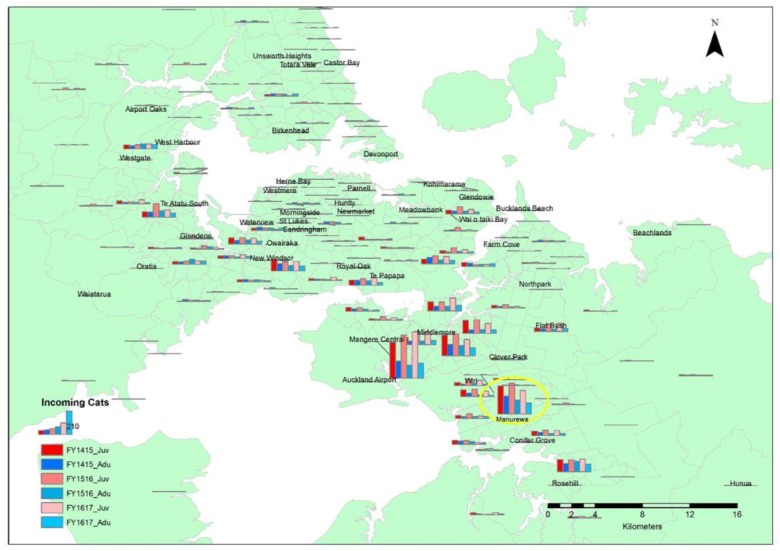
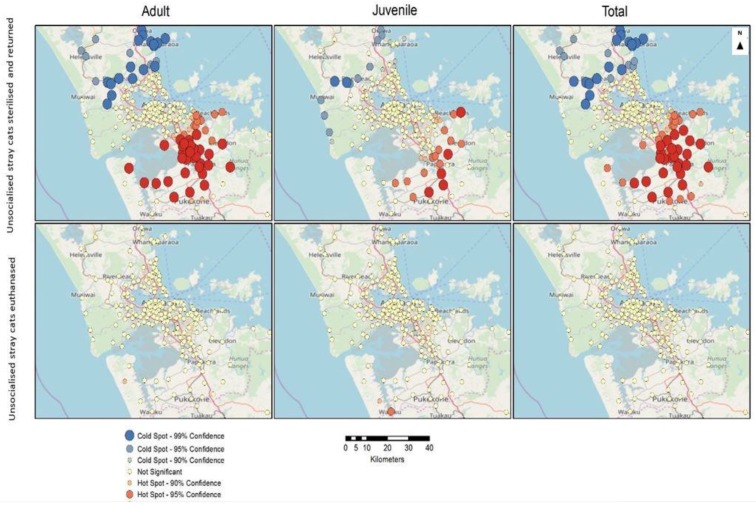
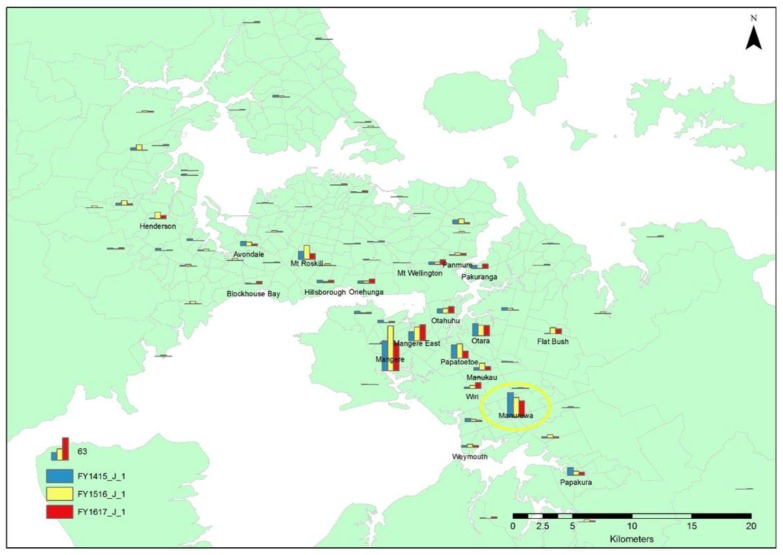
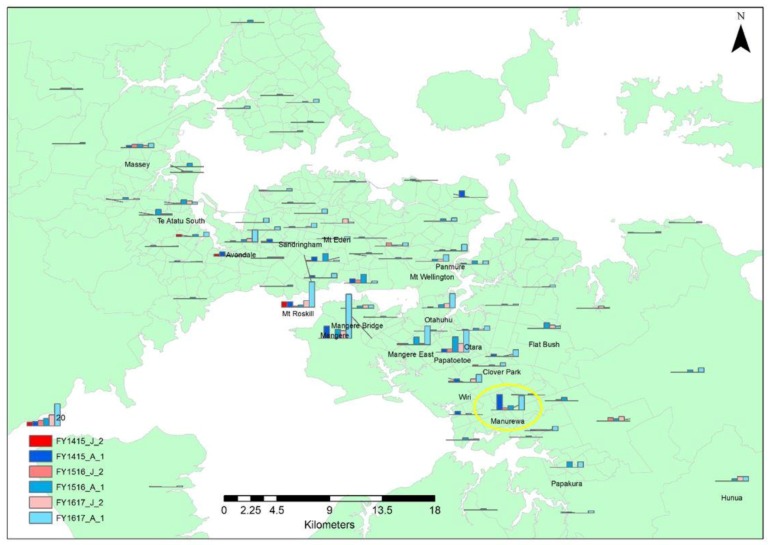
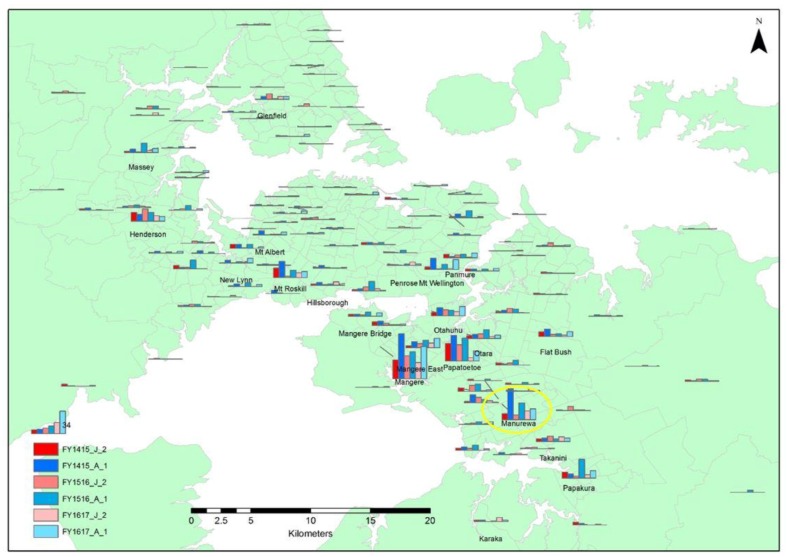
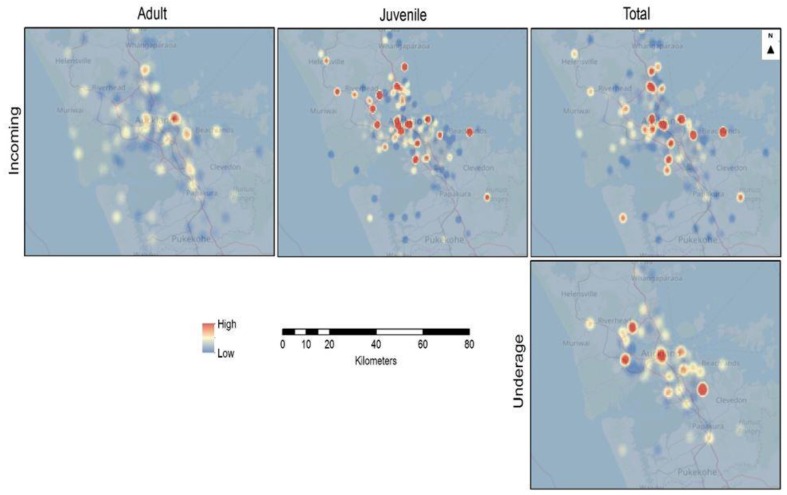
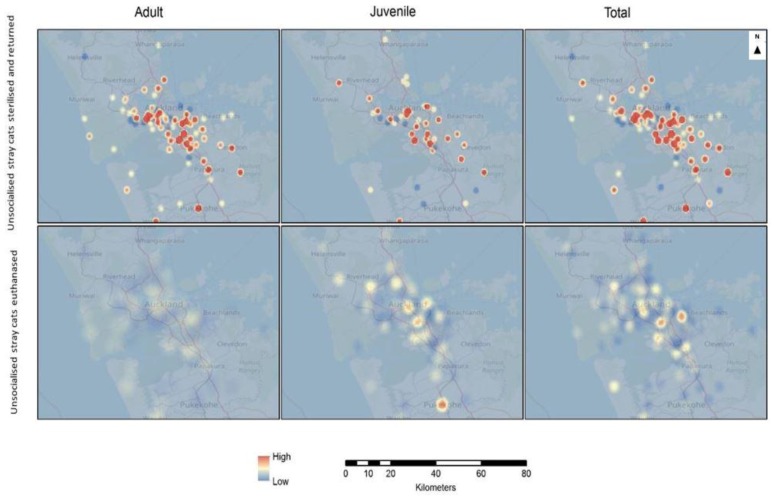
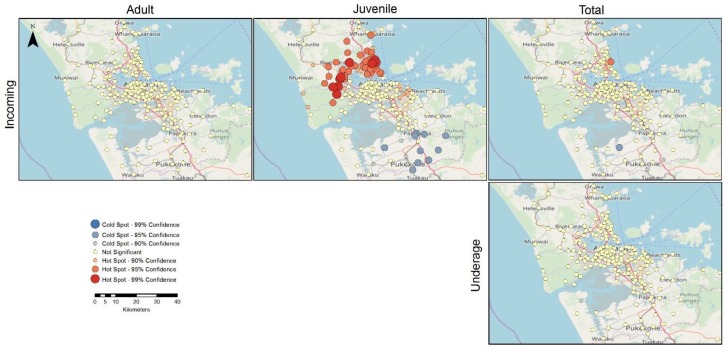
There is a need for effective and humane management tools to manage urban stray cats and minimise negative impacts associated with stray cats. One such tool is targeted trap-neuter-return (TTNR), but no concerted implementation of this technique or formal assessments have been reported. To address this deficit, a TTNR programme was implemented and assessed in one Auckland suburb from May 2015 to June 2016; the programme sterilised and returned 348 cats (4.2 cats/1000 residents). Assessment was based on the number of incoming felines; stray, unsocialised cats euthanased; unsocialised, unowned cats sterilised and returned (independently of the TTNR programme); and neonatal/underage euthanasias. Incoming stray felines, underage euthanasias, and unsocialised stray cat euthanasias were all reduced for the targeted suburb when compared for the years before and after the programme (the percentage reduction in these parameters was −39, −17, −34, −7, and −47, respectively). These outcome measures had a greater reduction in the targeted suburb compared to the Auckland suburbs not targeted by the TTNR programme ( < 0.01), although causation cannot be inferred, as a variety of reasons could have contributed to the changes. This pilot programme suggests that TTNR could be a valuable, humane cat management tool in urban New Zealand, and further assessment is warranted.
需要有效的人道管理工具来管理城市流浪猫,并尽量减少与流浪猫相关的负面影响。其中一种工具是针对性的诱捕-绝育-放归(TTNR),但尚未有关于该技术的协同实施或正式评估的报道。为了弥补这一不足,2015年5月至2016年6月在奥克兰的一个郊区实施并评估了一项TTNR计划;该计划为348只猫进行了绝育并放归(每1000名居民中有4.2只猫)。评估基于进入的猫科动物数量;对流浪、未社会化的猫实施安乐死;对未社会化、无主的猫进行绝育并放归(独立于TTNR计划);以及新生/未成年猫的安乐死情况。与该计划实施前后的年份相比,目标郊区的进入流浪猫、未成年猫安乐死以及未社会化流浪猫安乐死数量均有所减少(这些参数的减少百分比分别为−39、−17、−34、−7和−47)。与未纳入TTNR计划的奥克兰郊区相比,目标郊区的这些结果指标下降幅度更大(<0.01),不过由于多种原因可能导致了这些变化,所以无法推断因果关系。这个试点项目表明,TTNR可能是新西兰城市中一种有价值的人道猫管理工具,值得进一步评估。