Forni Diego, Cagliani Rachele, Pontremoli Chiara, Pozzoli Uberto, Vertemara Jacopo, De Gioia Luca, Clerici Mario, Sironi Manuela
Bioinformatics Laboratory, Scientific Institute IRCCS E.Medea, Bosisio Parini, Italy.
Department of Biotechnology and Biosciences, University of Milan-Bicocca, Milan, Italy.
Front Microbiol. 2018 May 1;9:854. doi: 10.3389/fmicb.2018.00854. eCollection 2018.
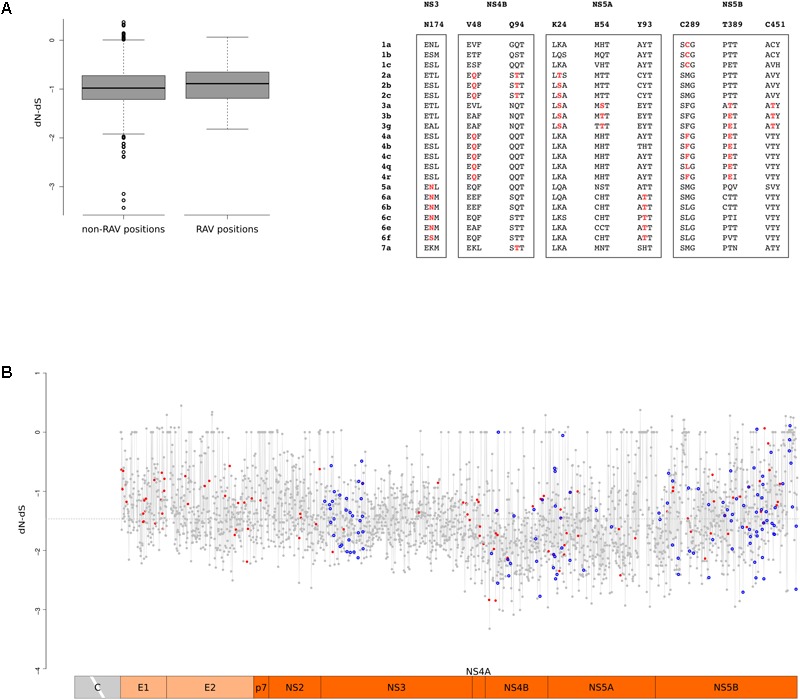
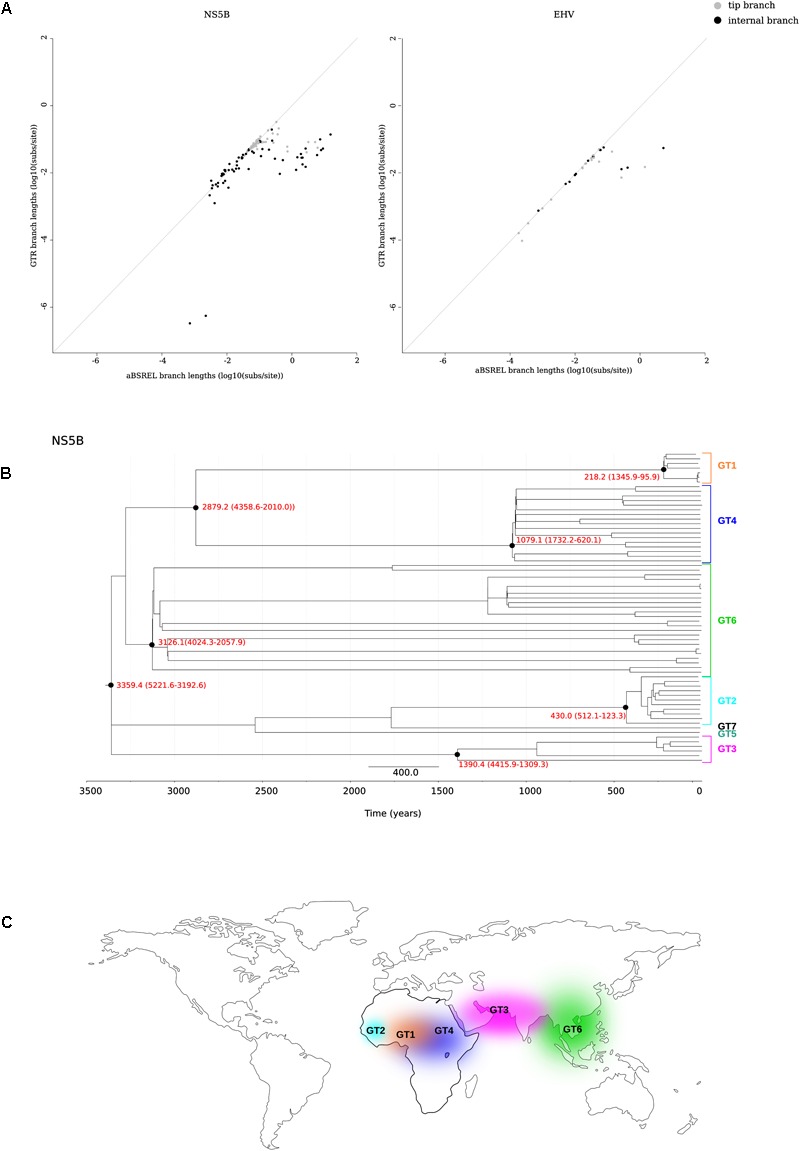
Hepatitis C virus (HCV) belongs to the genus and is genetically heterogeneous, with seven major genotypes further divided into several recognized subtypes. HCV origin was previously dated in a range between ∼200 and 1000 years ago. Hepaciviruses have been identified in several domestic and wild mammals, the largest viral diversity being observed in bats and rodents. The closest relatives of HCV were found in horses/donkeys (equine hepaciviruses, EHV). However, the origin of HCV as a human pathogen is still an unsolved puzzle. Using a selection-informed evolutionary model, we show that the common ancestor of extant HCV genotypes existed at least 3000 years ago (CI: 3192-5221 years ago), with the oldest genotypes being endemic to Asia. EHV originated around 1100 CE (CI: 291-1640 CE). These time estimates exclude that EHV transmission was mainly sustained by widespread veterinary practices and suggest that HCV originated from a single zoonotic event with subsequent diversification in human populations. We also describe a number of biologically important sites in the major HCV genotypes that have been positively selected and indicate that drug resistance-associated variants are significantly enriched at positively selected sites. HCV exploits several cell-surface molecules for cell entry, but only two of these (CD81 and OCLN) determine the species-specificity of infection. Herein evolutionary analyses do not support a long-standing association between primates and hepaciviruses, and signals of positive selection at CD81 were only observed in Chiroptera. No evidence of selection was detected for OCLN in any mammalian order. These results shed light on the origin of HCV and provide a catalog of candidate genetic modulators of HCV phenotypic diversity.
丙型肝炎病毒(HCV)属于该属,在基因上具有异质性,有七种主要基因型,进一步分为几种公认的亚型。HCV的起源时间此前被定在约200至1000年前的范围内。在几种家养和野生哺乳动物中已鉴定出肝炎病毒属病毒,在蝙蝠和啮齿动物中观察到最大的病毒多样性。HCV最亲近的亲属是在马/驴中发现的(马肝炎病毒,EHV)。然而,HCV作为人类病原体的起源仍然是一个未解之谜。使用一种基于选择的进化模型,我们表明现存HCV基因型的共同祖先至少在3000年前就已存在(置信区间:3192 - 5221年前),最古老的基因型在亚洲为地方病。EHV大约起源于公元1100年(置信区间:公元291 - 1640年)。这些时间估计排除了EHV传播主要由广泛的兽医实践维持的可能性,并表明HCV起源于单一的人畜共患病事件,随后在人类群体中发生了多样化。我们还描述了主要HCV基因型中一些经过正选择的具有生物学重要性的位点,并表明与耐药性相关的变体在正选择位点显著富集。HCV利用几种细胞表面分子进入细胞,但其中只有两种(CD81和OCLN)决定感染的物种特异性。在此,进化分析不支持灵长类动物与肝炎病毒属病毒之间长期存在的关联,并且仅在翼手目中观察到CD81的正选择信号。在任何哺乳动物目中均未检测到OCLN的选择证据。这些结果揭示了HCV的起源,并提供了HCV表型多样性的候选遗传调节因子目录。