IARC Monographs Programme, International Agency for Research on Cancer, Lyon, France.
Occup Environ Med. 2018 Aug;75(8):593-603. doi: 10.1136/oemed-2017-104944. Epub 2018 May 16.
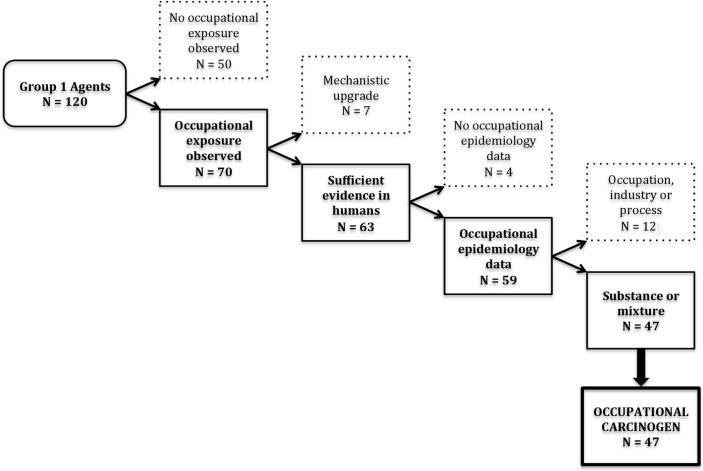
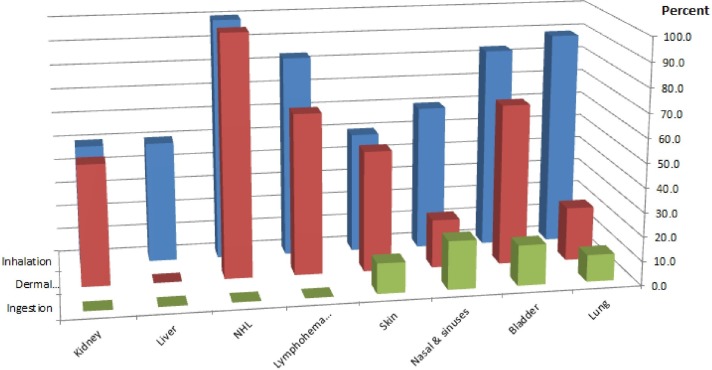
The recognition of occupational carcinogens is important for primary prevention, compensation and surveillance of exposed workers, as well as identifying causes of cancer in the general population. This study updates previously published lists of known occupational carcinogens while providing additional information on cancer type, exposure scenarios and routes, and discussing trends in the identification of carcinogens over time. Data were extracted from International Agency for Research on Cancer (IARC) Monographs covering the years 1971-2017, using specific criteria to ensure occupational relevance and provide high confidence in the causality of observed exposure-disease associations. Selected agents were substances, mixtures or types of radiation classified in IARC Group 1 with 'sufficient evidence of carcinogenicity' in humans from studies of exposed workers and evidence of occupational exposure documented in the pertinent monograph. The number of known occupational carcinogens has increased over time: 47 agents were identified as known occupational carcinogens in 2017 compared with 28 in 2004. These estimates are conservative and likely underestimate the number of carcinogenic agents present in workplaces. Exposure to these agents causes a wide range of cancers; cancers of the lung and other respiratory sites, followed by skin, account for the largest proportion. The dominant routes of exposure are inhalation and dermal contact. Important progress has been made in identifying occupational carcinogens; nevertheless, there is an ongoing need for research on the causes of work-related cancer. Most workplace exposures have not been evaluated for their carcinogenic potential due to inadequate epidemiologic evidence and a paucity of quantitative exposure data.
职业性致癌剂的识别对于初级预防、接触工人的赔偿和监测以及确定一般人群中癌症的病因都很重要。本研究在提供有关癌症类型、暴露情况和途径的额外信息的同时,更新了先前公布的已知职业性致癌剂清单,并讨论了随着时间的推移识别致癌剂的趋势。数据来自国际癌症研究机构 (IARC) 专论,涵盖 1971 年至 2017 年,使用特定标准来确保职业相关性,并为观察到的暴露-疾病关联的因果关系提供高度信心。选定的制剂是物质、混合物或辐射类型,根据在接触工人的研究中对人类具有“足够致癌性”的证据以及相关专论中记录的职业暴露证据,被分类为 IARC 第 1 组。1971 年至 2017 年间,已知职业性致癌剂的数量有所增加:2017 年有 47 种被确定为已知职业性致癌剂,而 2004 年有 28 种。这些估计数是保守的,可能低估了工作场所中存在的致癌剂数量。这些制剂的暴露会导致多种癌症;肺癌和其他呼吸道部位的癌症,其次是皮肤癌,占最大比例。暴露的主要途径是吸入和皮肤接触。在识别职业性致癌剂方面已经取得了重要进展;然而,仍然需要研究与工作相关的癌症的病因。由于缺乏充分的流行病学证据和缺乏定量暴露数据,大多数工作场所暴露尚未评估其致癌潜力。