Department of Pathology, Stanford University School of Medicine, Stanford, CA, USA.
Department of Pathology, Microbiology and Immunology, Vanderbilt University Medical Center, Nashville, TN, USA.
Nat Chem Biol. 2018 Jun;14(6):609-617. doi: 10.1038/s41589-018-0060-1. Epub 2018 May 16.
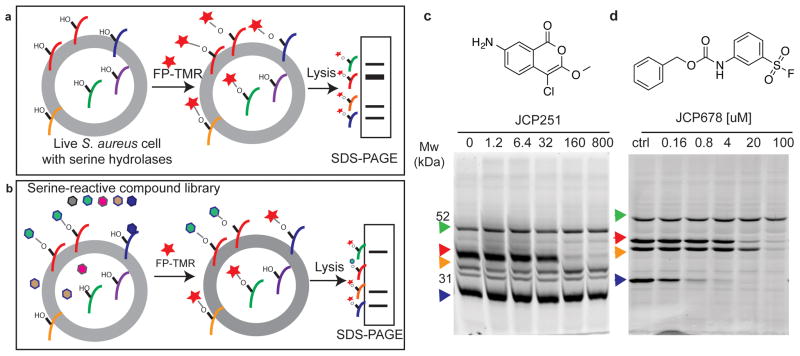
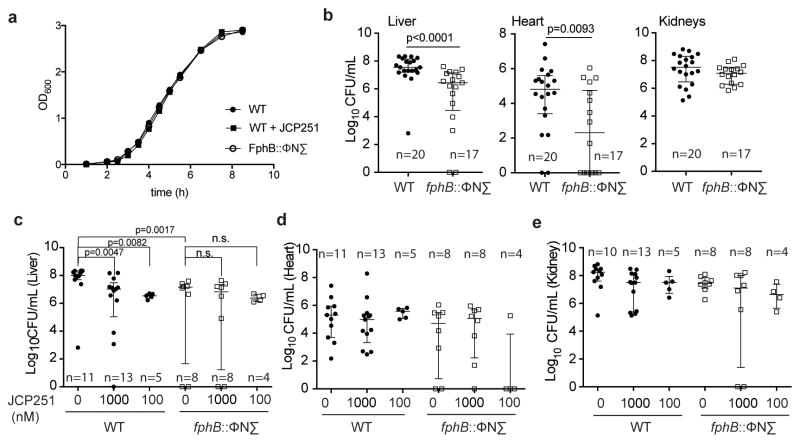
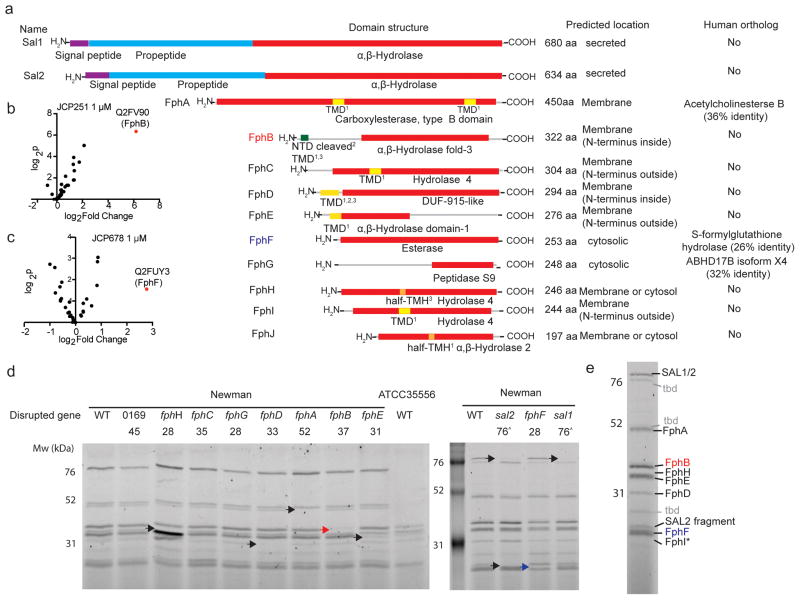
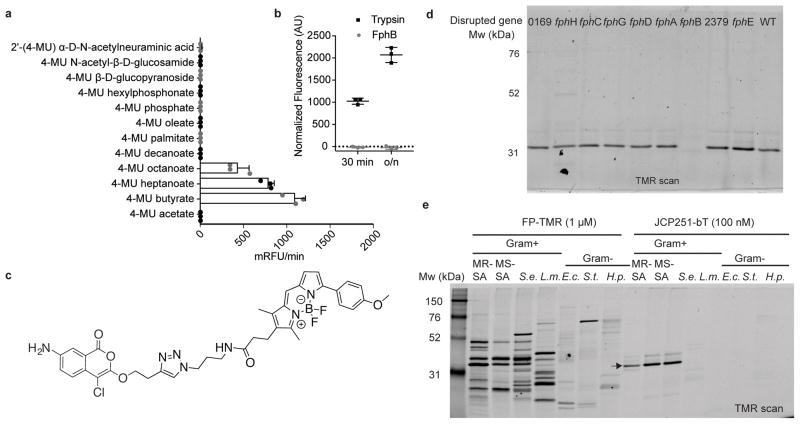
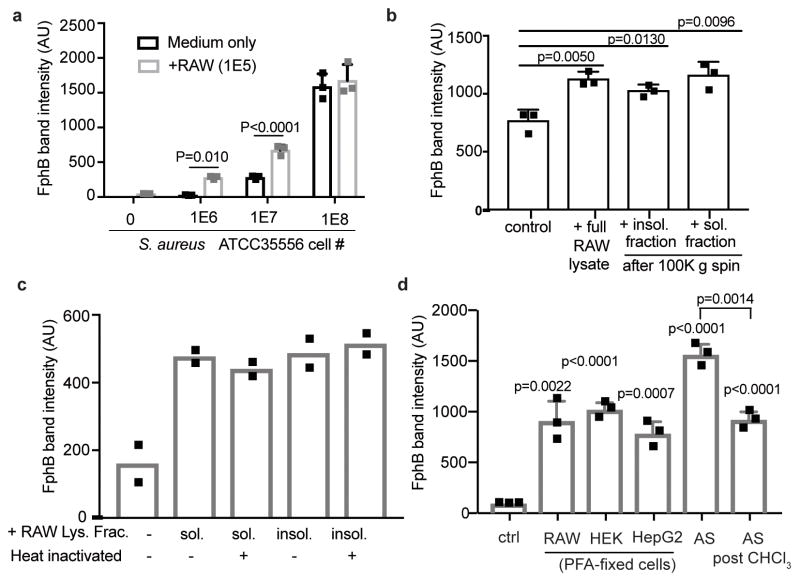
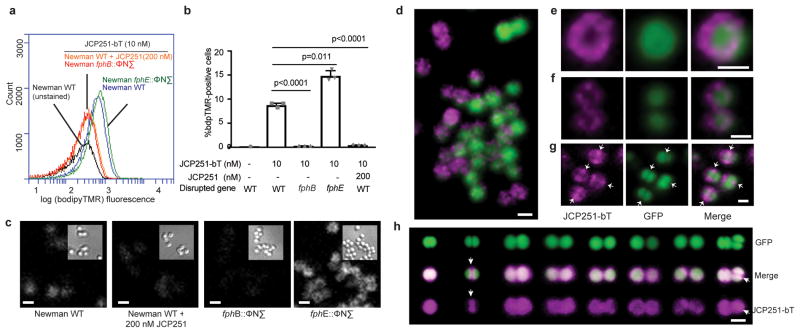
Serine hydrolases play diverse roles in regulating host-pathogen interactions in a number of organisms, yet few have been characterized in the human pathogen Staphylococcus aureus. Here we describe a chemical proteomic screen that identified ten previously uncharacterized S. aureus serine hydrolases that mostly lack human homologs. We termed these enzymes fluorophosphonate-binding hydrolases (FphA-J). One hydrolase, FphB, can process short fatty acid esters, exhibits increased activity in response to host cell factors, is located predominantly on the bacterial cell surface in a subset of cells, and is concentrated in the division septum. Genetic disruption of fphB confirmed that the enzyme is dispensable for bacterial growth in culture but crucial for establishing infection in distinct sites in vivo. A selective small molecule inhibitor of FphB effectively reduced infectivity in vivo, suggesting that it may be a viable therapeutic target for the treatment or management of Staphylococcus infections.
丝氨酸水解酶在多种生物体中发挥着调节宿主-病原体相互作用的多样化作用,但在人类病原体金黄色葡萄球菌中,只有少数几种得到了描述。在这里,我们描述了一个化学蛋白质组学筛选,该筛选鉴定出了十种以前未被描述的金黄色葡萄球菌丝氨酸水解酶,这些酶大多数缺乏人类同源物。我们将这些酶命名为氟膦酸盐结合水解酶(FphA-J)。一种水解酶,FphB,可以处理短脂肪酸酯,对宿主细胞因子的反应增加,在细菌细胞表面的一部分细胞中主要存在,并且集中在分裂隔膜中。fphB 的基因缺失证实该酶对于细菌在培养中的生长是可有可无的,但对于在体内不同部位建立感染是至关重要的。FphB 的选择性小分子抑制剂在体内有效降低了感染性,表明它可能是治疗或管理金黄色葡萄球菌感染的可行治疗靶点。