Department of Immunology, Institute for Biological Research "Siniša Stanković", University of Belgrade, Belgrade, Serbia.
Laboratory for Molecular Microbiology, Institute of Molecular Genetics and Genetic Engineering, University of Belgrade, Belgrade, Serbia.
Front Immunol. 2018 May 2;9:942. doi: 10.3389/fimmu.2018.00942. eCollection 2018.
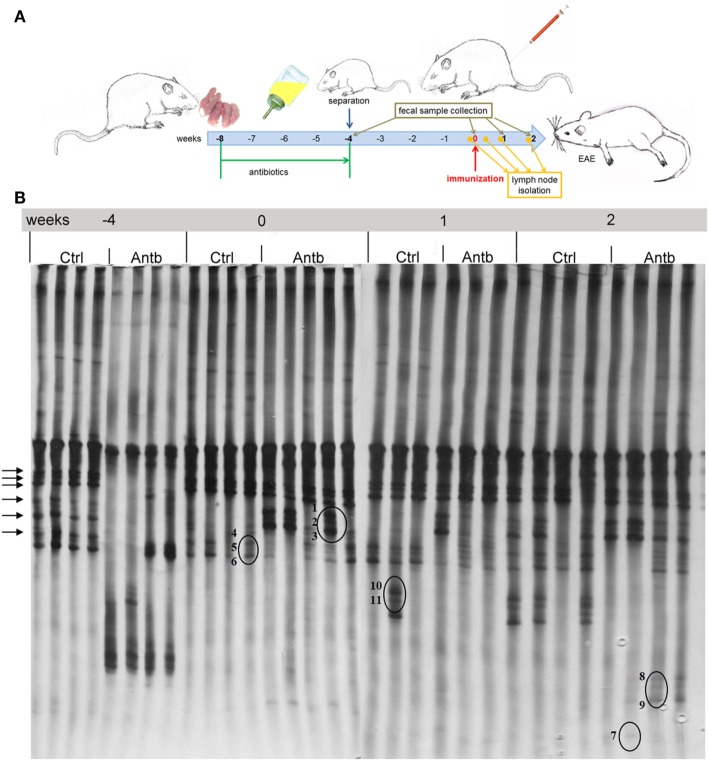
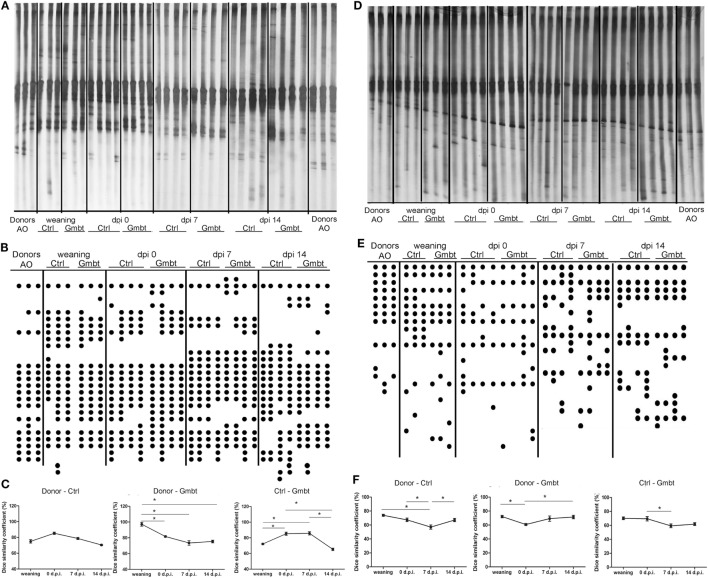
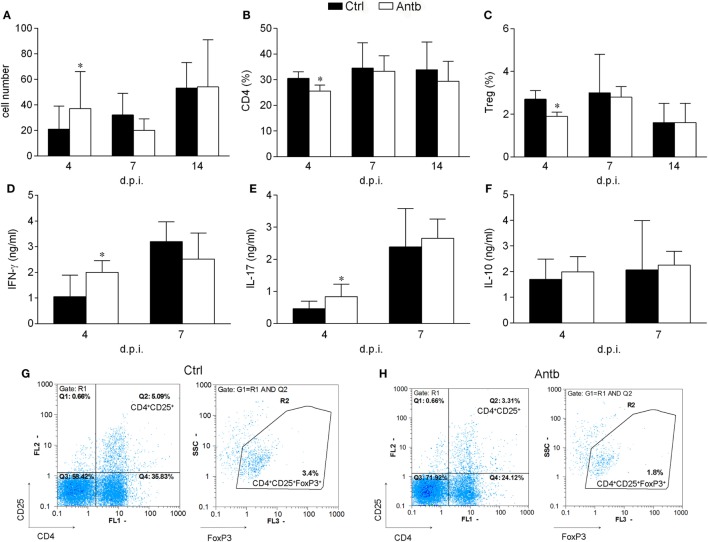
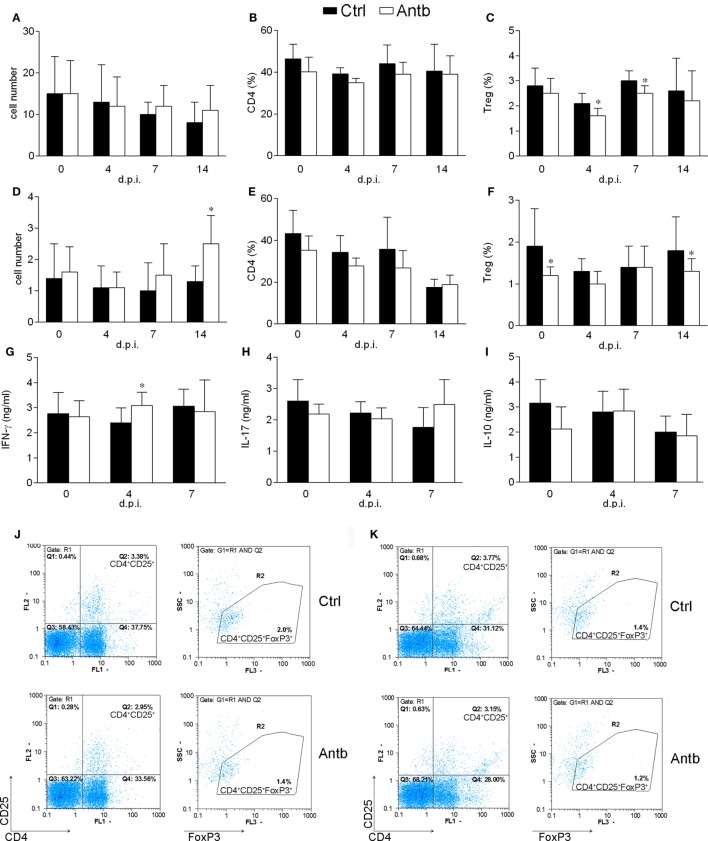
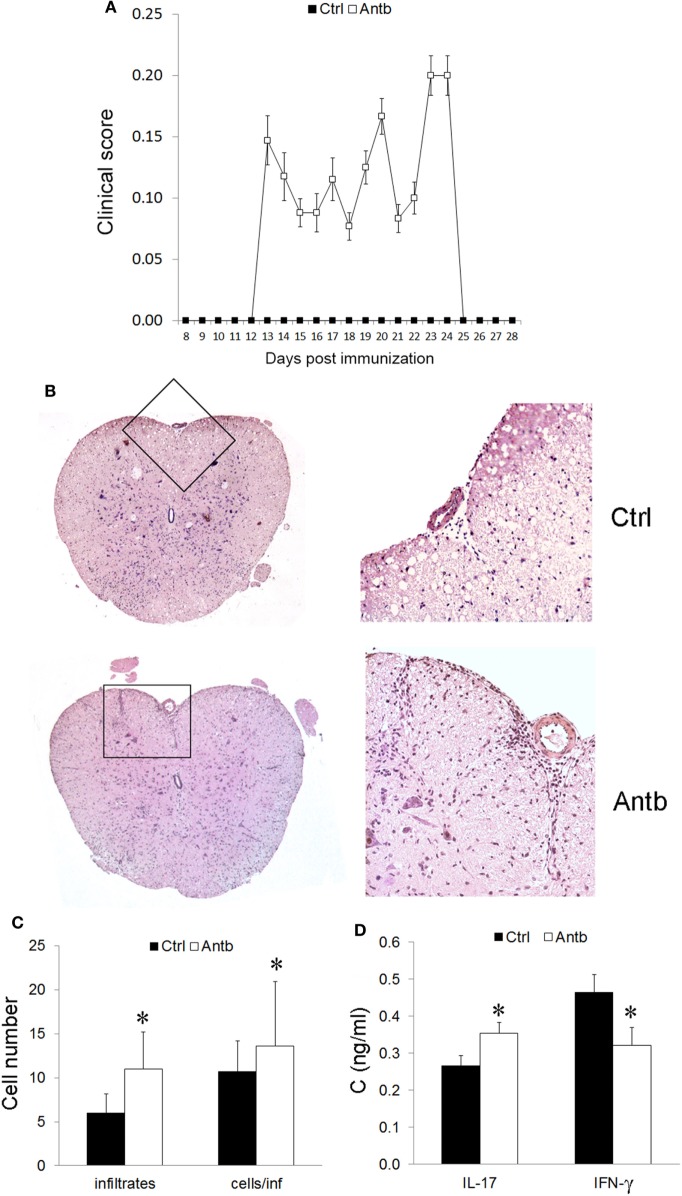
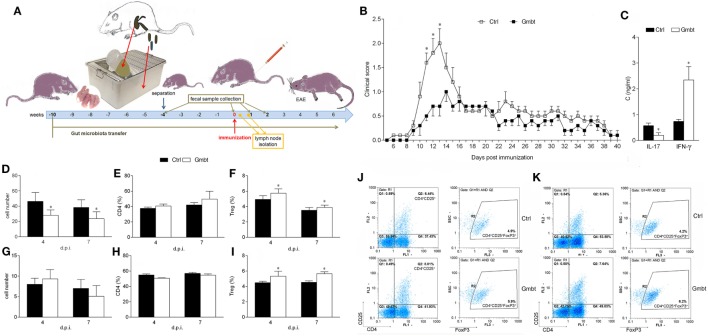
Albino Oxford (AO) rats are extremely resistant to induction of experimental autoimmune encephalomyelitis (EAE). EAE is an animal model of multiple sclerosis, a chronic inflammatory disease of the central nervous system (CNS), with established autoimmune pathogenesis. The autoimmune response against the antigens of the CNS is initiated in the peripheral lymphoid tissues after immunization of AO rats with CNS antigens. Subsequently, limited infiltration of the CNS occurs, yet without clinical sequels. It has recently become increasingly appreciated that gut-associated lymphoid tissues (GALT) and gut microbiota play an important role in regulation and propagation of encephalitogenic immune response. Therefore, modulation of AO gut microbiota by antibiotics was performed in this study. The treatment altered composition of gut microbiota in AO rats and led to a reduction in the proportion of regulatory T cells in Peyer's patches, mesenteric lymph nodes, and in lymph nodes draining the site of immunization. Upregulation of interferon-γ and interleukin (IL)-17 production was observed in the draining lymph nodes. The treatment led to clinically manifested EAE in AO rats with more numerous infiltrates and higher production of IL-17 observed in the CNS. Importantly, transfer of AO gut microbiota into EAE-prone Dark Agouti rats ameliorated the disease. These results clearly imply that gut microbiota is an important factor in AO rat resistance to EAE and that gut microbiota transfer is an efficacious way to treat CNS autoimmunity. These findings also support the idea that gut microbiota modulation has a potential as a future treatment of multiple sclerosis.
白化牛津(AO)大鼠对实验性自身免疫性脑脊髓炎(EAE)的诱导具有极强的抵抗力。EAE 是多发性硬化症的动物模型,是一种中枢神经系统(CNS)的慢性炎症性疾病,具有明确的自身免疫发病机制。在用 CNS 抗原免疫 AO 大鼠后,针对 CNS 抗原的自身免疫反应在外周淋巴组织中被引发。随后,中枢神经系统发生有限的浸润,但没有临床后遗症。最近越来越多的人认识到,肠道相关淋巴组织(GALT)和肠道微生物群在调节和传播致脑炎免疫反应方面发挥着重要作用。因此,本研究中通过抗生素来调节 AO 肠道微生物群。该治疗改变了 AO 大鼠肠道微生物群的组成,并导致派尔集合淋巴结、肠系膜淋巴结和免疫接种部位引流淋巴结中调节性 T 细胞的比例减少。在引流淋巴结中观察到干扰素-γ和白细胞介素(IL)-17 的产生上调。该治疗导致 AO 大鼠出现临床上表现的 EAE,中枢神经系统中观察到更多的浸润和更高水平的 IL-17 产生。重要的是,将 AO 肠道微生物群转移到易患 EAE 的暗阿育王大鼠中可改善疾病。这些结果清楚地表明,肠道微生物群是 AO 大鼠对 EAE 抵抗力的重要因素,而肠道微生物群转移是治疗中枢神经系统自身免疫的有效方法。这些发现还支持这样一种观点,即肠道微生物群调节具有作为多发性硬化症未来治疗方法的潜力。