Stanisavljević Suzana, Lukić Jovanka, Soković Svetlana, Mihajlovic Sanja, Mostarica Stojković Marija, Miljković Djordje, Golić Natasa
Department of Immunology, Institute for Biological Research "Siniša Stanković," University of Belgrade Belgrade, Serbia.
Laboratory for Molecular Microbiology, Institute of Molecular Genetics and Genetic Engineering, University of Belgrade Belgrade, Serbia.
Front Microbiol. 2016 Dec 15;7:2005. doi: 10.3389/fmicb.2016.02005. eCollection 2016.
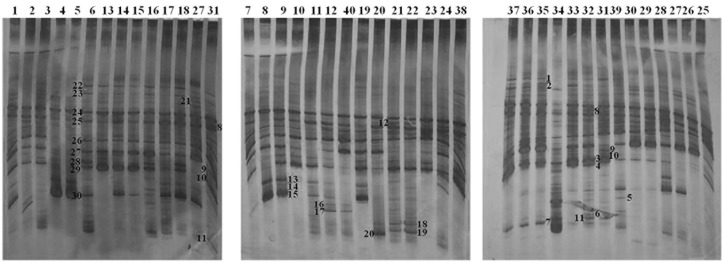
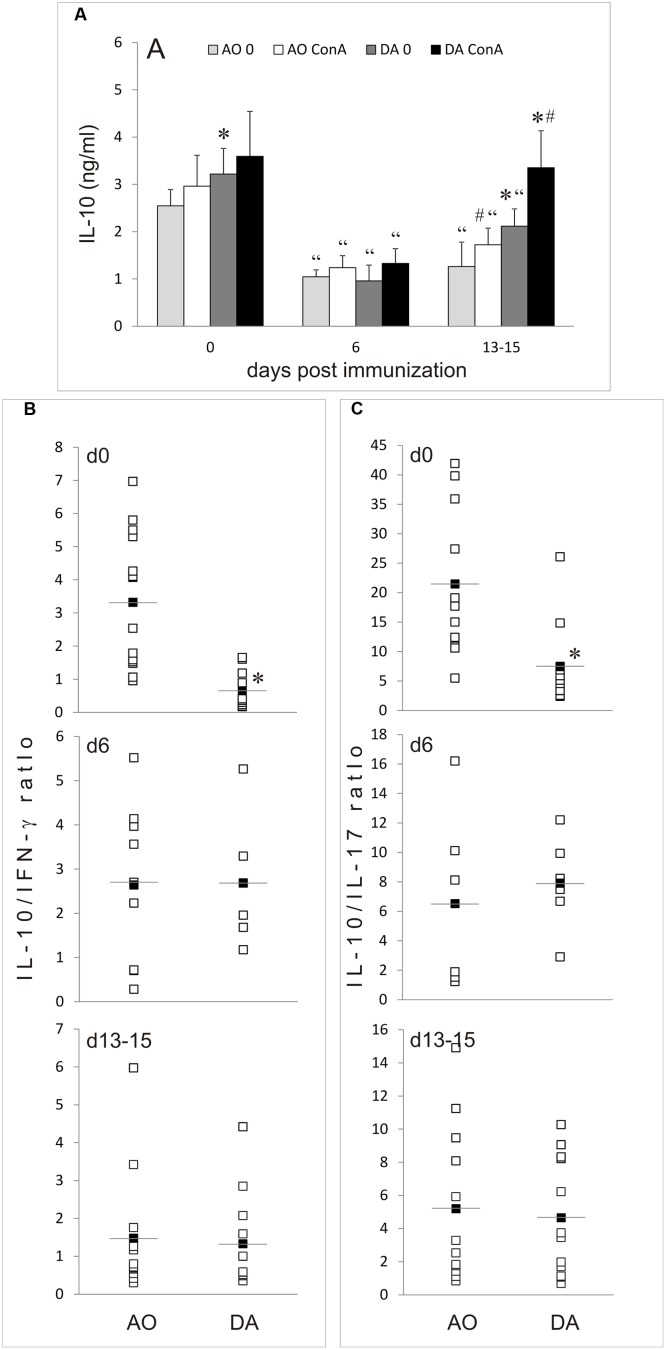
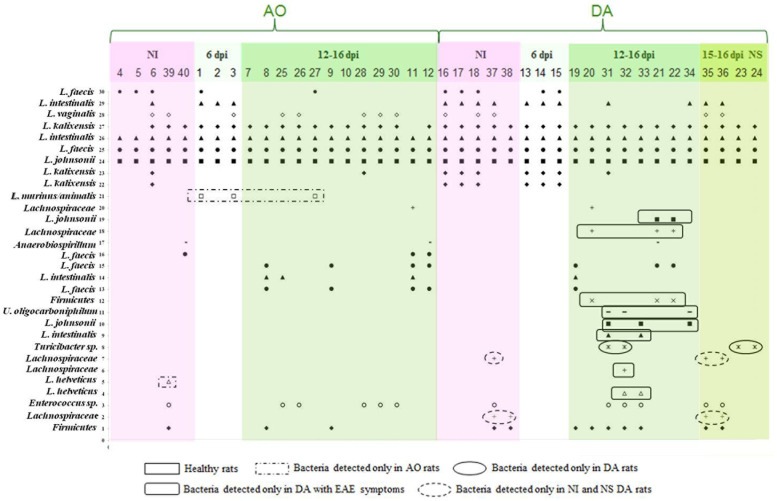
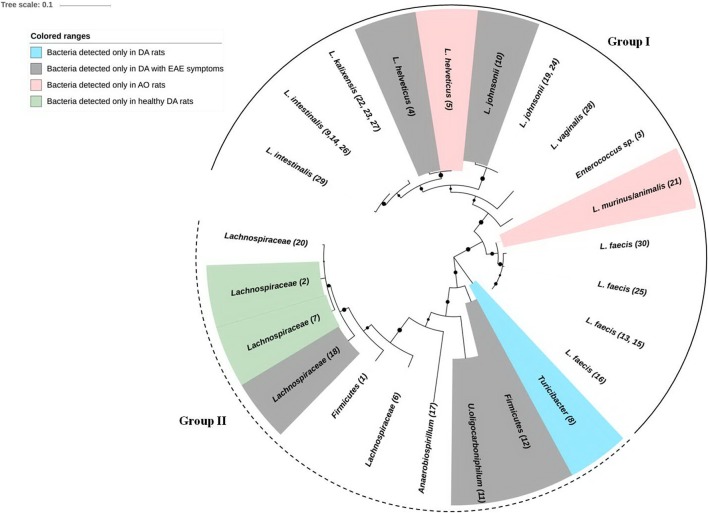
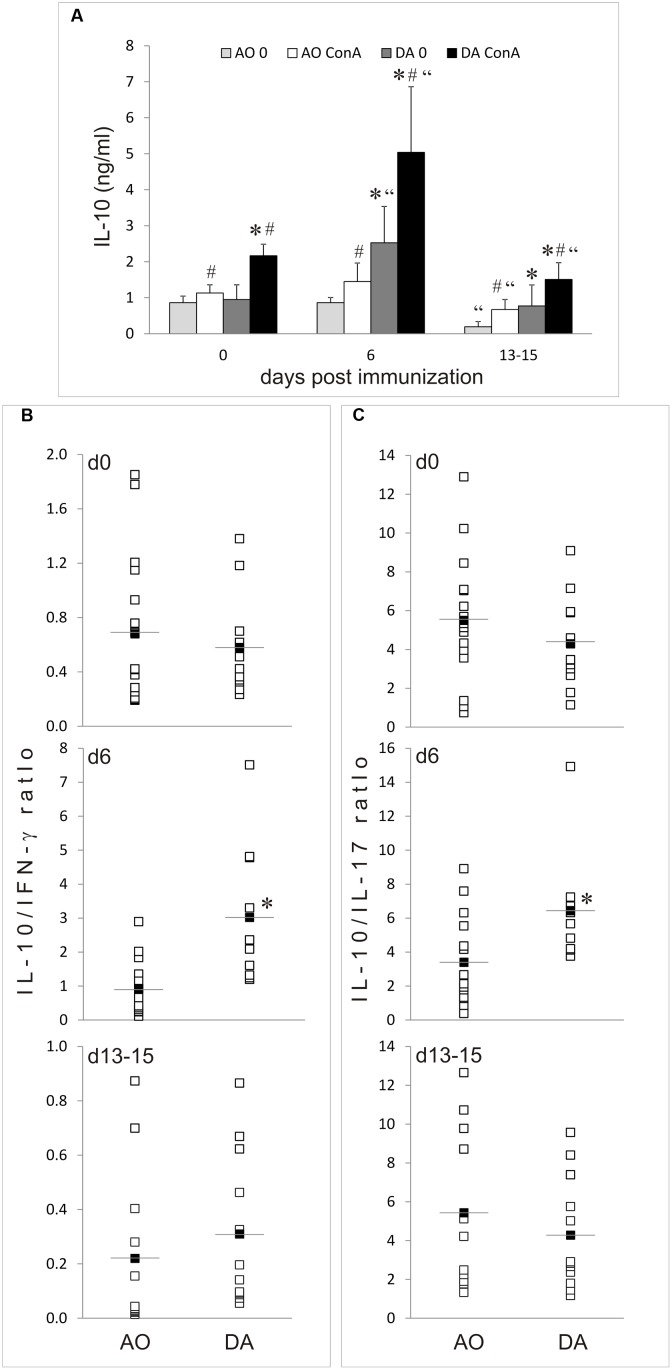
Multiple sclerosis is a chronic inflammatory disease of the central nervous system (CNS). It is widely accepted that autoimmune response against the antigens of the CNS is the essential pathogenic force in the disease. It has recently become increasingly appreciated that activated encephalitogenic cells tend to migrate toward gut associated lymphoid tissues (GALTs) and that interrupted balance between regulatory and inflammatory immunity within the GALT might have decisive role in the initiation and propagation of the CNS autoimmunity. Gut microbiota composition and function has the major impact on the balance in the GALT. Thus, our aim was to perform analyses of gut microbiota in experimental autoimmune encephalomyelitis (EAE), an animal model of multiple sclerosis. Albino Oxford (AO) rats that are highly resistant to EAE induction and Dark Agouti (DA) rats that develop EAE after mild immunization were compared for gut microbiota composition in different phases after EAE induction. Microbial analyses of the genus and related lactic acid bacteria showed higher diversity of spp. in EAE-resistant AO rats, while some members of and () were detected only in feces of DA rats at the peak of the disease (between 13 and 16 days after induction). Interestingly, in contrast to our previous study where sp. was found exclusively in non-immunized AO, but not in DA rats, in this study it was detected in DA rats that remained healthy 16 days after induction, as well as in four of 12 DA rats at the peak of the disease. Similar observation was obtained for the members of . Further, production of a typical regulatory cytokine interleukin-10 was compared in GALT cells of AO and DA rats, and higher production was observed in DA rats. Our data contribute to the idea that gut microbiota and GALT considerably influence multiple sclerosis pathogenesis.
多发性硬化症是一种中枢神经系统(CNS)的慢性炎症性疾病。人们普遍认为,针对中枢神经系统抗原的自身免疫反应是该疾病的主要致病因素。最近,人们越来越认识到,活化的致脑炎性细胞倾向于向肠道相关淋巴组织(GALT)迁移,并且GALT内调节性免疫和炎性免疫之间的平衡中断可能在中枢神经系统自身免疫的起始和传播中起决定性作用。肠道微生物群的组成和功能对GALT中的平衡有重大影响。因此,我们的目的是对实验性自身免疫性脑脊髓炎(EAE)(一种多发性硬化症的动物模型)的肠道微生物群进行分析。比较了对EAE诱导具有高度抗性的白化牛津(AO)大鼠和轻度免疫后发生EAE的黑褐大鼠在EAE诱导后不同阶段的肠道微生物群组成。对属及相关乳酸菌的微生物分析显示,EAE抗性AO大鼠中 spp. 的多样性更高,而在疾病高峰期(诱导后13至16天之间)仅在黑褐大鼠的粪便中检测到 和 ()的一些成员。有趣的是,与我们之前的研究不同,在之前的研究中 菌仅在未免疫的AO大鼠中发现,而在黑褐大鼠中未发现,在本研究中,在诱导后16天仍保持健康的黑褐大鼠以及疾病高峰期12只黑褐大鼠中的4只中检测到了该菌。对 的成员也有类似的观察结果。此外,比较了AO和黑褐大鼠GALT细胞中典型调节性细胞因子白细胞介素-10的产生,发现黑褐大鼠中的产生量更高。我们的数据支持了肠道微生物群和GALT对多发性硬化症发病机制有显著影响的观点。