Faculty of Chemistry Biochemistry and Pharmacy, National University of San Luis, Chacabuco 917, 5700 San Luis, Argentina.
Institute of Biotechnology-Institute of Basic Sciences, National University of San Juan, Av. Libertador General San Martin 1109, 5400 San Juan, Argentina.
Molecules. 2018 May 16;23(5):1187. doi: 10.3390/molecules23051187.
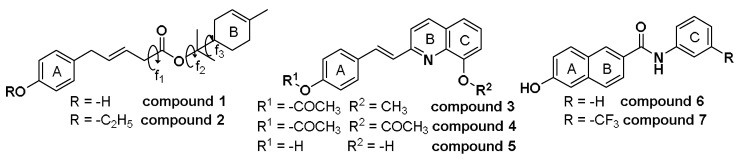
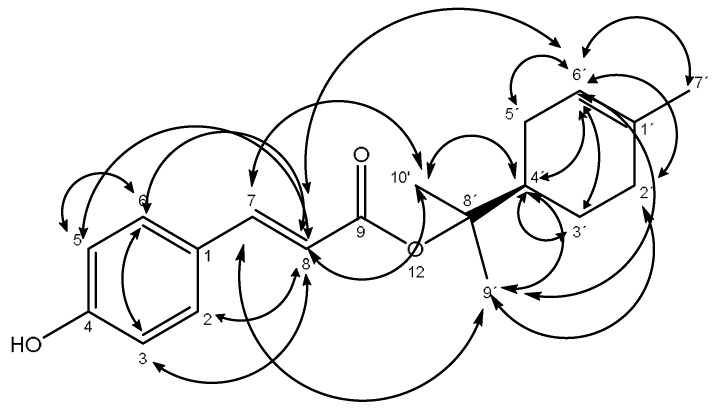
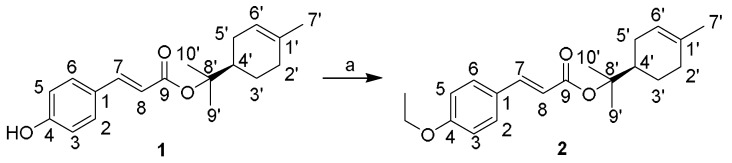
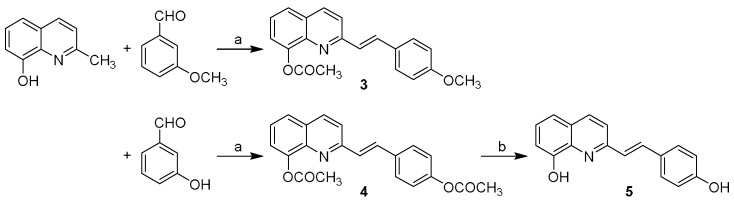
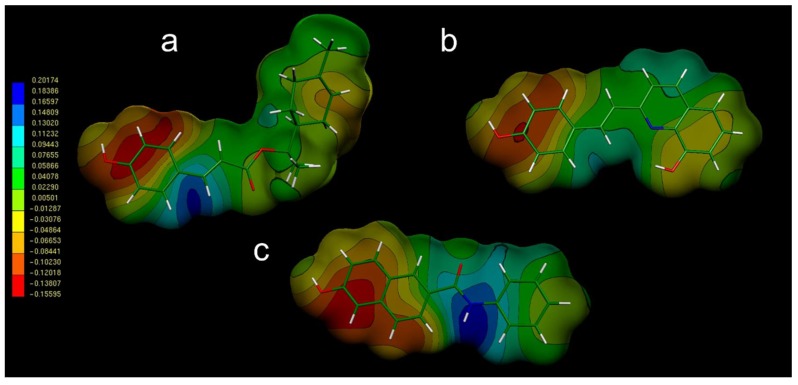
(Schltdl.) H. Rainer, commonly known as "arachichú", "araticú", "aratigú", and "yerba mora", is a plant that grows in Argentina. Infusions and decoctions are used in folk medicine as a gargle against throat pain and for calming toothache; another way to use the plant for these purposes is chewing its leaves. Extracts from bark, flowers, leaves, and fruits from were subjected to antibacterial assays against a panel of Gram (+) and Gram (-) pathogenic bacteria according to Clinical and Laboratory Standards Institute protocols. Extracts from the stem bark and leaves showed moderate activity against the bacteria tested with values between 250⁻1000 µg/mL. Regarding flower extracts, less polar extracts (hexane, dichloromethane) showed very strong antibacterial activity against methicillin-sensitive ATCC 25923 and methicillin-resistant ATCC 43300 with values between 16⁻125 µg/mL. Additionally, hexane extract showed activity against (MIC = 250 µg/mL). The global methanolic extract of the fruits (MeOHGEF) was also active against the three strains mentioned above, with MICs values 250⁻500 µg/mL. Bioassay-guided fractionation of MeOHGEF led to the isolation of a new main compound-()-2-(4-methylcyclohex-3-en-1-yl)propan-2-yl ()-3-(4-hydroxyphenyl)acrylate (). The structure and relative configurations have been determined by means of 1D and 2D NMR techniques, including COSY, HMQC, HMBC, and NOESY correlations. Compound 1 showed strong antimicrobial activity against all Gram (+) species tested (MICs = 3.12⁻6.25 µg/mL). In addition, the synthesis and antibacterial activity of some compounds structurally related to compound (including four new compounds) are reported. A SAR study for these compounds was performed based on the results obtained by using molecular calculations.
(Schltdl.) H. Rainer,通常被称为“arachichú”、“araticú”、“aratigú”和“yerba mora”,是一种生长在阿根廷的植物。民间医学中使用汤剂和煎剂作为喉咙痛的漱口液,并用于缓解牙痛;另一种使用这种植物的方法是咀嚼其叶子。根据临床和实验室标准协会的协议,对来自 的树皮、花朵、叶子和果实提取物进行了针对革兰氏阳性和革兰氏阴性致病菌的抗菌测定。树皮和叶子提取物对测试的细菌具有中等活性,其值在 250⁻1000 µg/mL 之间。关于花提取物,非极性提取物(己烷、二氯甲烷)对甲氧西林敏感的 ATCC 25923 和甲氧西林耐药的 ATCC 43300 具有非常强的抗菌活性,其值在 16⁻125 µg/mL 之间。此外,己烷提取物对 也有活性(MIC = 250 µg/mL)。果实的全球甲醇提取物(MeOHGEF)也对上述三种菌株有效,MIC 值为 250⁻500 µg/mL。基于生物测定的 MeOHGEF 的分步分离导致了一种新的主要化合物-()-2-(4-甲基环己-3-烯-1-基)丙烷-2-基 ()-3-(4-羟基苯基)丙烯酸酯 () 的分离。通过 1D 和 2D NMR 技术(包括 COSY、HMQC、HMBC 和 NOESY 相关)确定了结构和相对构型。化合物 1 对所有测试的革兰氏阳性菌均表现出强烈的抗菌活性(MICs = 3.12⁻6.25 µg/mL)。此外,还报道了一些结构上与化合物 相关的化合物(包括四个新化合物)的合成和抗菌活性。根据使用分子计算获得的结果,对这些化合物进行了 SAR 研究。