Shi Le, Chen Wenhao, Deng Jiahui, Chen Sijing, Han Ying, Khan Muhammad Z, Liu Jiajia, Que Jianyu, Bao Yanping, Lu Lin, Shi Jie
Department of Pharmacology, School of Basic Medical Sciences, Peking University Health Science Center, Beijing, China.
National Institute on Drug Dependence and Beijing Key Laboratory of Drug Dependence Research, Peking University, Beijing, China.
Front Neurosci. 2018 May 3;12:295. doi: 10.3389/fnins.2018.00295. eCollection 2018.
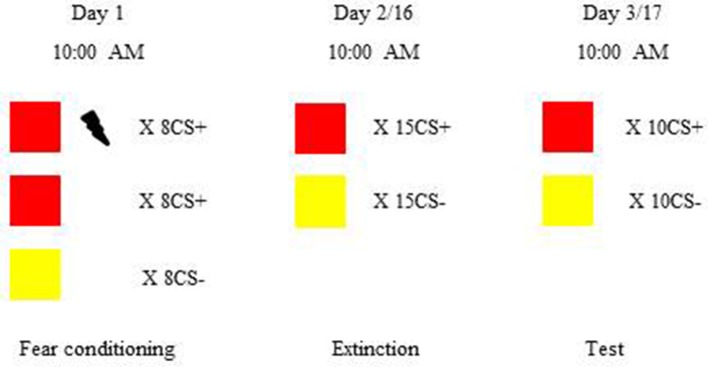
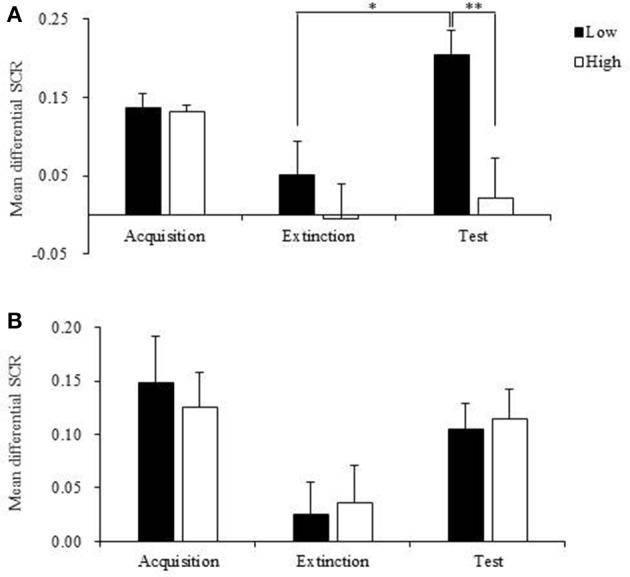
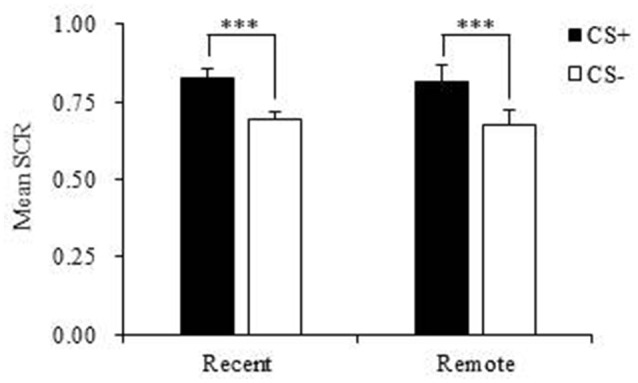
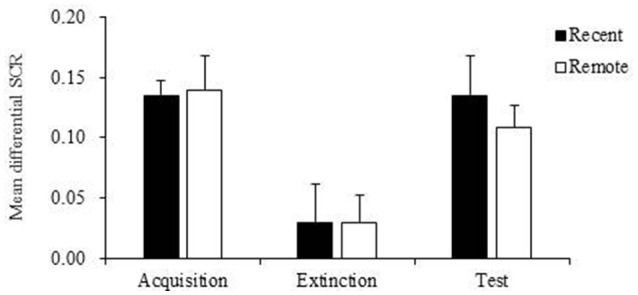
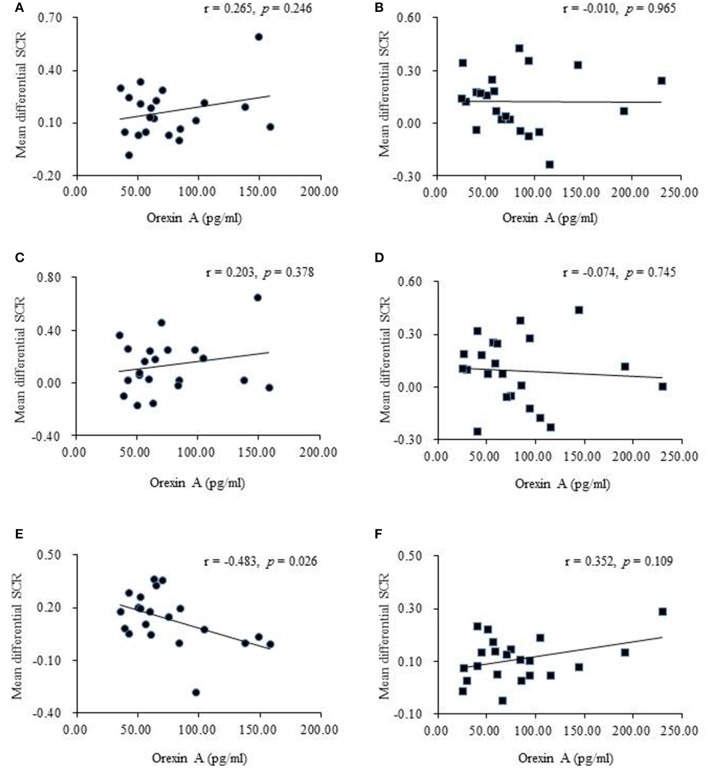
Recently the role of the orexin system in the learning and memory, especially orexin A, which could enhance fear memory through regulating the activity of amygdala, has drawn considerable attention. However, the relationship between orexin A and extinction memory remains unclear. To investigate the effect of orexin A on extinction memory in humans, we recruited 43 male subjects and divided them into a recent group and remote group. After acquiring Pavlovian fear conditioning, individuals in recent group experienced fear extinction 24 h after acquisition, and remote group underwent extinction 2 weeks later. Meanwhile, plasma orexin A levels before extinction were measured by enzyme-linked immunosorbent assay. Both groups received memory test 24 h after fear extinction. The results showed that both recent and remote groups successfully acquired fear conditioning and had spontaneous recovery at test. In particular, the correlational analysis indicated that orexin A levels before extinction were negatively associated with fear responses during test only in recent group, but not in remote group. Moreover, individuals with high orexin A levels still kept low fear responses after extinction in recent group by subgroup analyses. The results suggest that orexin A could influence the retention of recent fear memory extinction, without affecting remote fear extinction. These findings remind us the orexin system can be a potential treatment target for fear-related disorders, and the mechanisms of recent and remote fear extinction may be different.
最近,食欲素系统在学习和记忆中的作用,尤其是食欲素A,它可以通过调节杏仁核的活动来增强恐惧记忆,这引起了相当大的关注。然而,食欲素A与消退记忆之间的关系仍不清楚。为了研究食欲素A对人类消退记忆的影响,我们招募了43名男性受试者,并将他们分为近期组和远期组。在获得巴甫洛夫恐惧条件反射后,近期组的个体在获得条件反射24小时后经历恐惧消退,远期组在两周后进行消退。同时,通过酶联免疫吸附测定法测量消退前血浆食欲素A水平。两组在恐惧消退24小时后接受记忆测试。结果表明,近期组和远期组均成功获得恐惧条件反射,并在测试时有自发恢复。特别是,相关性分析表明,仅近期组消退前的食欲素A水平与测试期间的恐惧反应呈负相关,而远期组则不然。此外,通过亚组分析,近期组中食欲素A水平高的个体在消退后仍保持低恐惧反应。结果表明,食欲素A可以影响近期恐惧记忆消退的保持,而不影响远期恐惧消退。这些发现提醒我们,食欲素系统可能是恐惧相关障碍的潜在治疗靶点,近期和远期恐惧消退的机制可能不同。