Department of Pharmaceutics, School of Pharmacy, China Pharmaceutical University, Nanjing, 210009, P.R. China.
Key Laboratory of Druggability of Biopharmaceutics, China Pharmaceutical University, Nanjing, 210009, PR China.
Theranostics. 2018 Apr 15;8(10):2830-2845. doi: 10.7150/thno.23209. eCollection 2018.
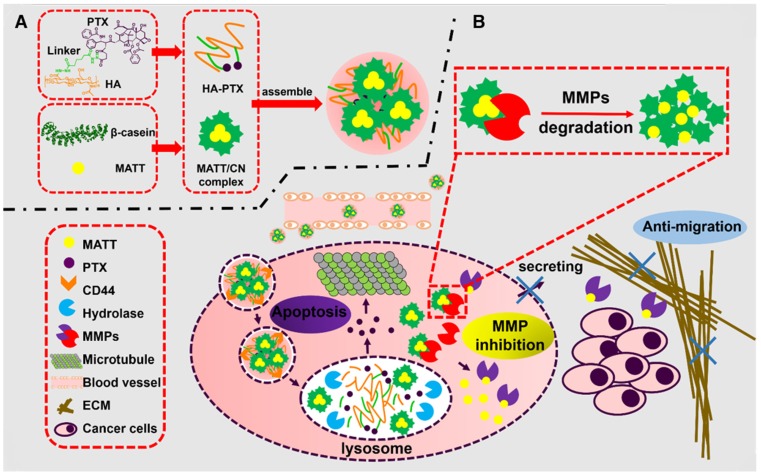
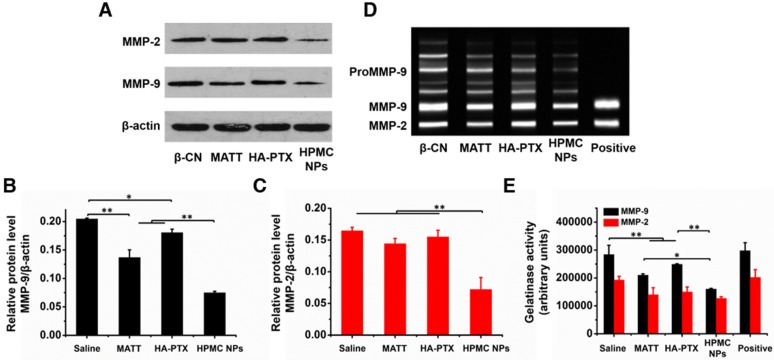
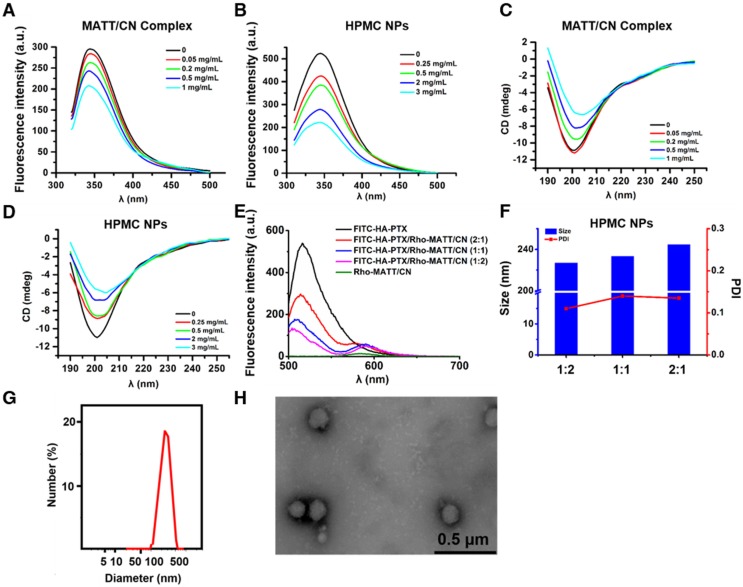
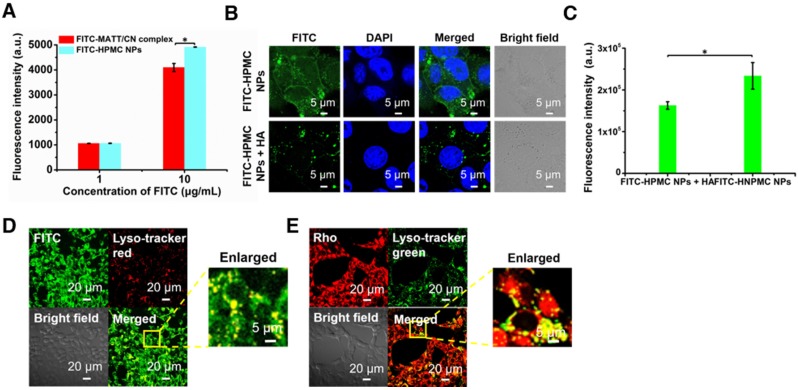
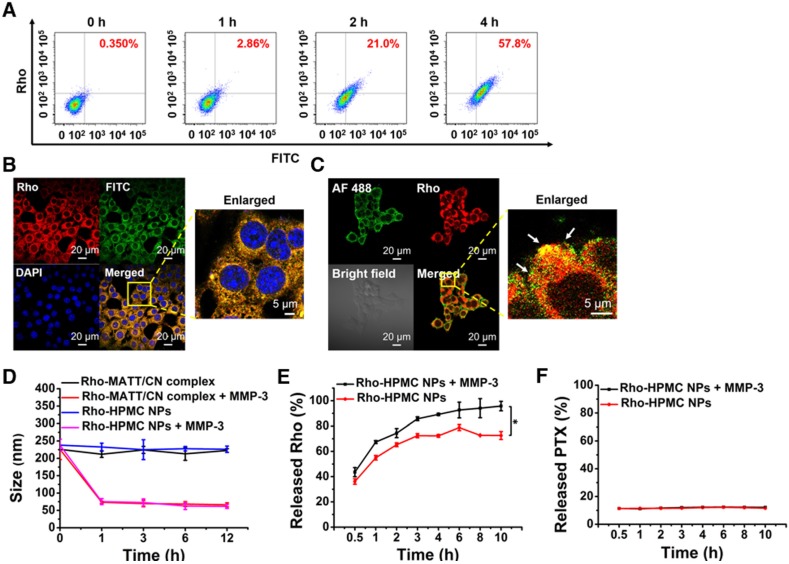
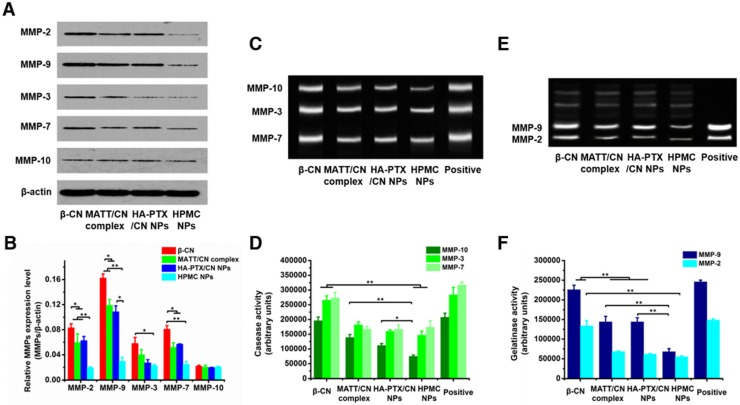
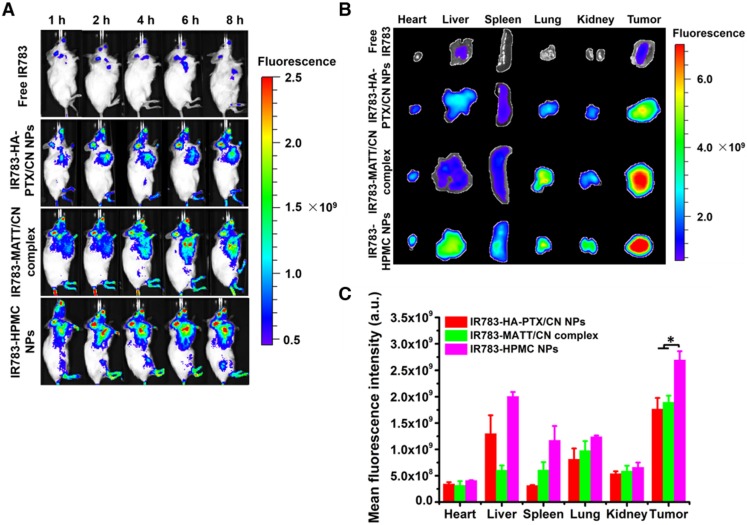
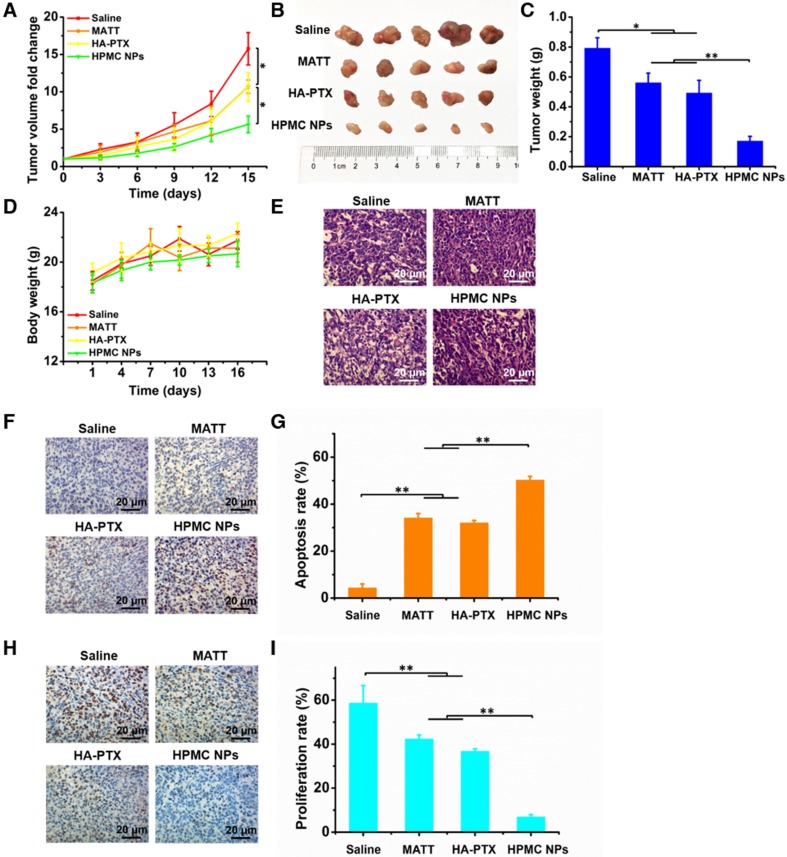
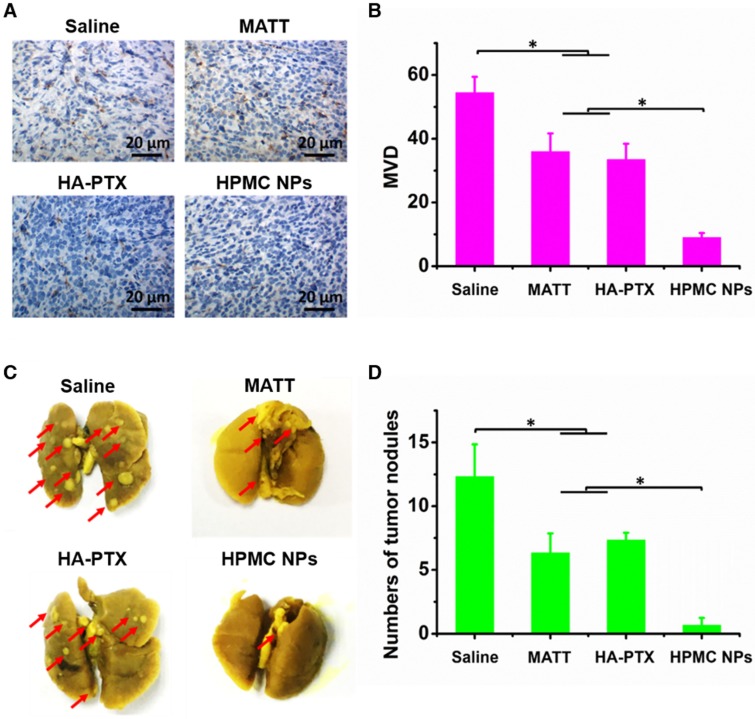
Treatment for metastatic cancer is a great challenge throughout the world. Commonly, directed inhibition of extracellular matrix metalloproteinases (MMPs) secreted by cancer cells can reduce metastasis. Here, a novel nanoplatform (HPMC NPs) assembled from hyaluronic acid (HA)-paclitaxel (PTX) prodrug and marimastat (MATT)/β-casein (CN) complexes was established to cure a 4T1 metastatic cancer model targeting CD44 and intracellular, rather than extracellular, MMPs. HPMC NPs were prepared by assembling the complexes and prodrug under ultrasonic treatment, which the interaction between them was evaluated by förster resonance energy transfer, circular dichroism and fluorescence spectra. The developed nanoplatform was characterized dynamic light scattering and transmission electron microscopy, and was evaluated in terms of MMP-sensitive release and stability. Subsequently, the cellular uptake, trafficking, and invasion were studied by flow cytometry, confocal laser microscopy and transwell assay. MMP expression and activity was determined by western blotting and gelatin zymography. Finally, the studies of biodistribution and antitumor efficacy were performed in a mouse 4T1 tumor breast model, followed by safety study in normal mouse. The interaction between the prodrug and complexes is strong with a high affinity, resulting in the assembly of these two components into hybrid nanoparticles (250 nm). Compared with extracellular incubation with MATT, HPMC NP treatment markedly reduced the expression (100%) and activity (50%) of MMPs in 4T1 cells and in the tumor. HPMC NPs exhibited 1.4-fold tumor accumulation, inhibited tumor-growth by >8-fold in volume with efficient apoptosis and proliferation, and suppressed metastasis (>5-fold) and angiogenesis (>3-fold). Overall, HPMC NPs were efficient in metastatic cancer therapy. According to the assembly of polymer prodrug and protein-drug complexes, this study offers a new strategy for constructing nanoparticles for targeted drug delivery, biomedical imaging, and combinatorial treatment. Importantly, inhibition of intracellular MMPs, metastasis and angiogenesis can be potently blocked, benefiting the rational design of nanomedicine for cancer treatment.
转移性癌症的治疗是全世界的一大挑战。通常,靶向抑制癌细胞分泌的细胞外基质金属蛋白酶(MMPs)可以减少转移。在这里,建立了一种由透明质酸(HA)-紫杉醇(PTX)前药和马立马司他(MATT)/β-酪蛋白(CN)复合物组装而成的新型纳米平台(HPMC NPs),以治疗针对 CD44 和细胞内而非细胞外 MMPs 的 4T1 转移性癌症模型。通过超声处理组装复合物和前药来制备 HPMC NPs,并通过荧光共振能量转移、圆二色性和荧光光谱评估它们之间的相互作用。所开发的纳米平台通过动态光散射和透射电子显微镜进行了表征,并通过 MMP 敏感释放和稳定性进行了评估。随后,通过流式细胞术、共聚焦激光显微镜和 Transwell 测定研究了细胞摄取、转运和侵袭。通过 Western blot 和明胶酶谱测定确定 MMP 表达和活性。最后,在 4T1 肿瘤乳腺癌模型中进行了生物分布和抗肿瘤疗效的研究,并在正常小鼠中进行了安全性研究。前药与复合物之间的相互作用很强,具有很高的亲和力,导致这两种成分组装成杂化纳米颗粒(250nm)。与 MATT 的细胞外孵育相比,HPMC NP 处理显著降低了 4T1 细胞和肿瘤中 MMPs 的表达(100%)和活性(50%)。HPMC NPs 表现出 1.4 倍的肿瘤积累,体积抑制肿瘤生长超过 8 倍,具有有效的凋亡和增殖,并抑制转移(>5 倍)和血管生成(>3 倍)。总体而言,HPMC NPs 在转移性癌症治疗中具有很高的疗效。根据聚合物前药和蛋白药物复合物的组装,本研究为构建用于靶向药物递送、生物医学成像和联合治疗的纳米颗粒提供了一种新策略。重要的是,细胞内 MMPs、转移和血管生成的抑制作用可以得到有效阻断,有利于癌症治疗的纳米医学的合理设计。