Department of Urology, Keck School of Medicine, University of Southern California, Los Angeles, CA.
Van Andel Research Institute, Grand Rapids, MI.
Hepatology. 2018 Oct;68(4):1412-1428. doi: 10.1002/hep.30091.
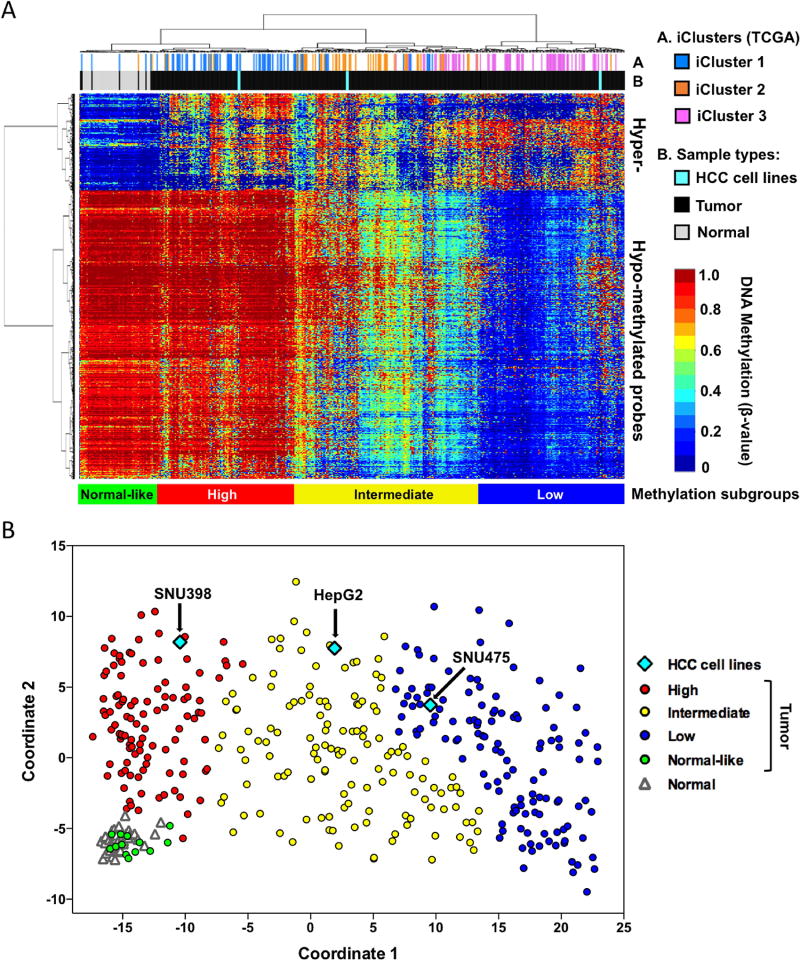
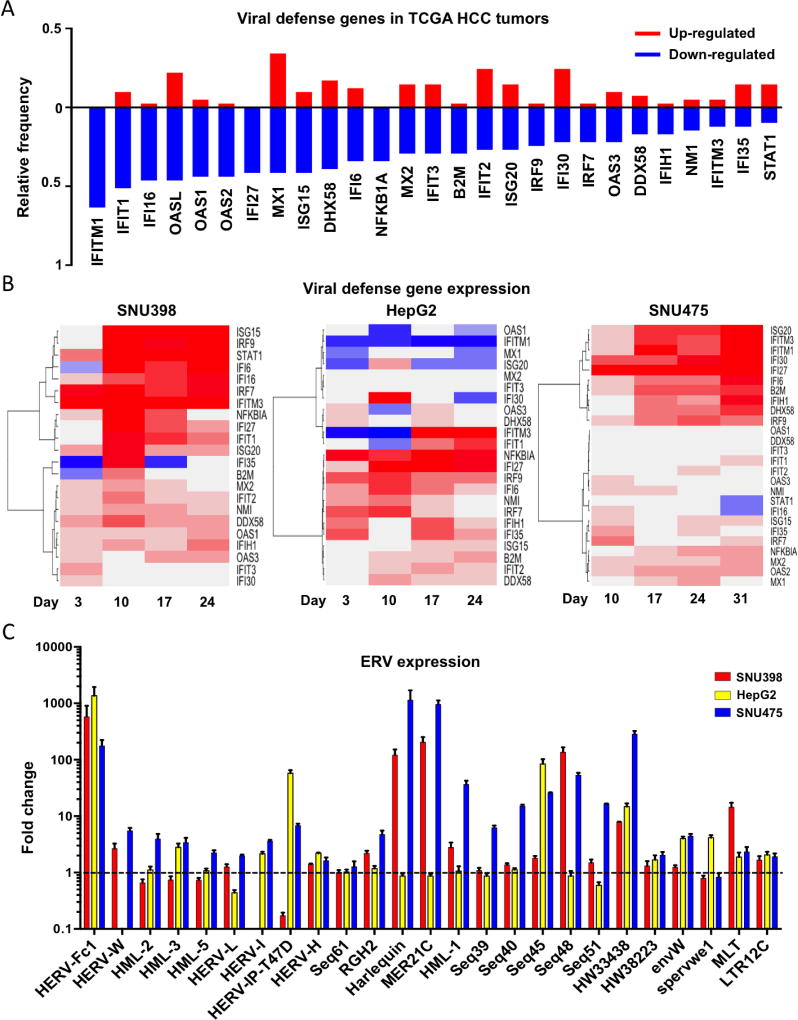
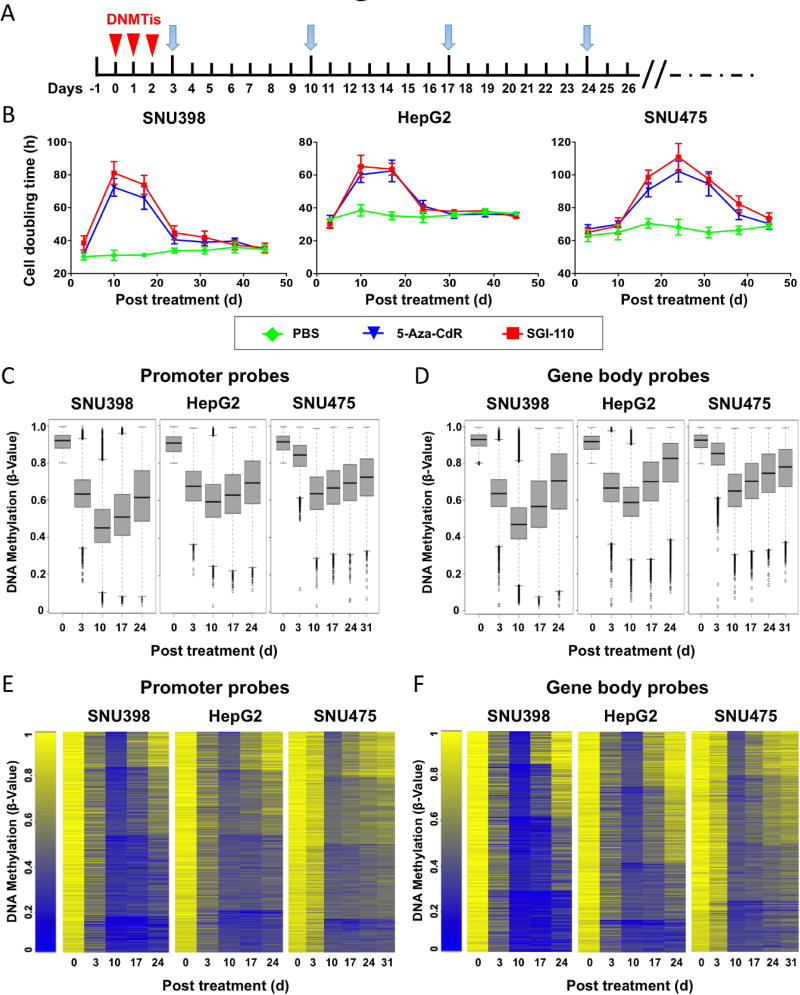
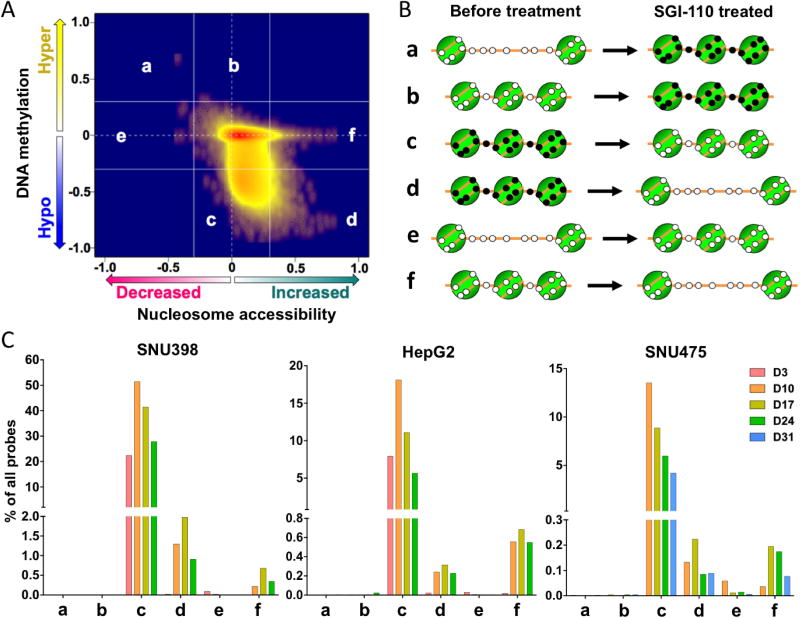
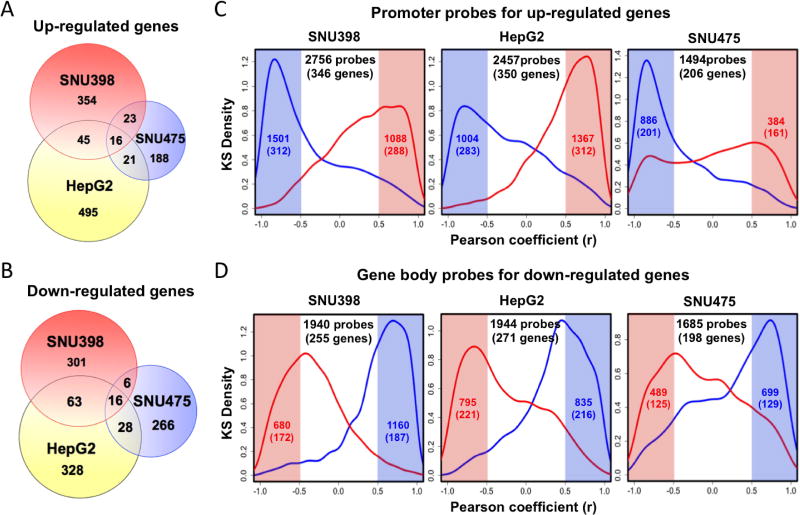
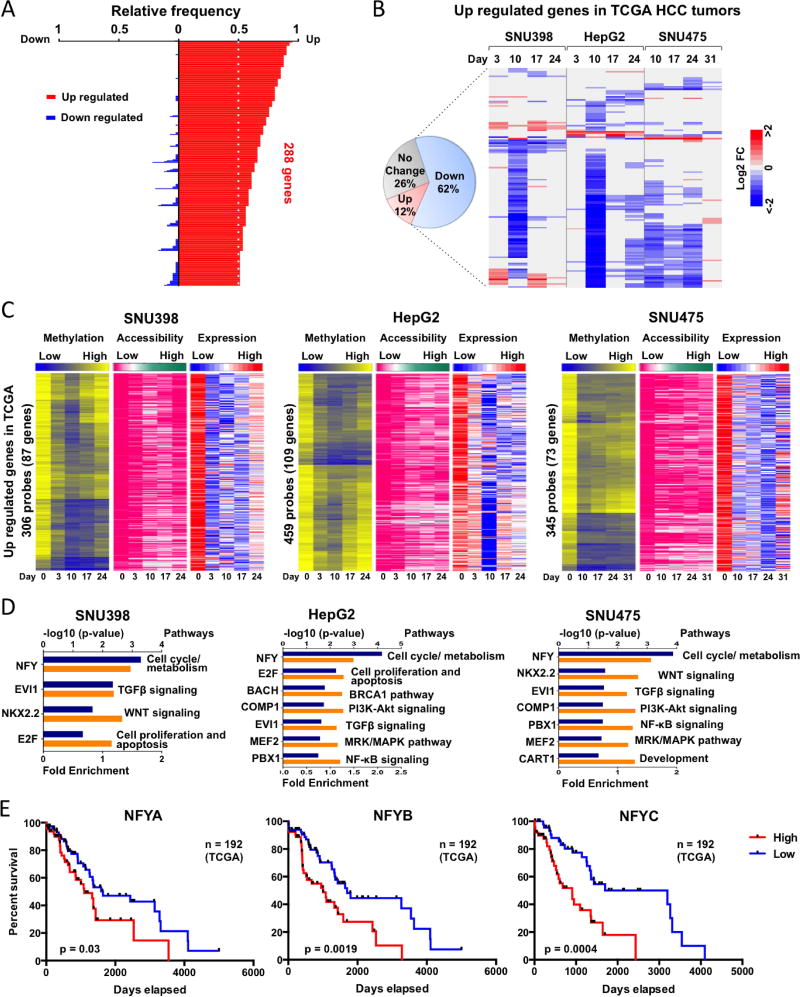
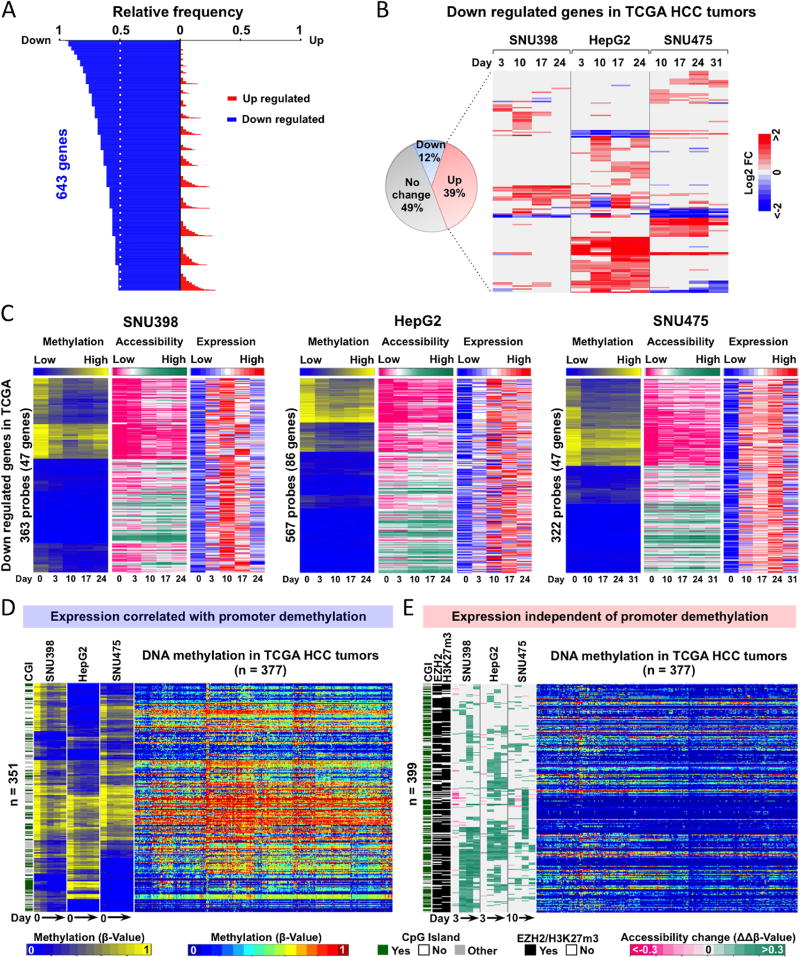
There is an urgent need to develop more effective therapies for hepatocellular carcinoma (HCC) because of its aggressiveness. Guadecitabine (SGI-110) is a second-generation DNA methyltransferase inhibitor (DNMTi), which is currently in clinical trials for HCC and shows greater stability and performance over first-generation DNMTis. In order to identify potential therapeutic targets of SGI-110 for clinical trials, HCC cell lines (SNU398, HepG2, and SNU475) were used to evaluate the effects of transient SGI-110 treatment by an integrative analysis of DNA methylation, nucleosome accessibility, gene expression profiles, and its clinical relevance by comparison to The Cancer Genome Atlas (TCGA) HCC clinical data. Each HCC cell line represents a different DNA methylation subtype of primary HCC tumors based on TCGA data. After SGI-110 treatment, all cell lines were sensitive to SGI-110 with prolonged antiproliferation effects. Expression of up-regulated genes, including tumor suppressors, was positively correlated with nucleosome accessibility and negatively correlated with gene promoter DNA methylation. Alternatively, expression of down-regulated genes, such as oncogenes, was negatively correlated with nucleosome accessibility and positively correlated with gene body DNA methylation. SGI-110 can also act as a dual inhibitor to down-regulate polycomb repressive complex 2 (PRC2) genes by demethylating their gene bodies, resulting in reactivation of PRC2 repressed genes without involvement of DNA methylation. Furthermore, it can up-regulate endogenous retroviruses to reactivate immune pathways. Finally, about 48% of frequently altered genes in primary HCC tumors can be reversed by SGI-110 treatment.
Our integrative analysis has successfully linked the antitumor effects of SGI-110 to detailed epigenetic alterations in HCC cells, identified potential therapeutic targets, and provided a rationale for combination treatments of SGI-110 with immune checkpoint therapies.
由于其侵袭性,迫切需要开发更有效的肝细胞癌 (HCC) 治疗方法。SGI-110(Guadecitabine)是一种第二代 DNA 甲基转移酶抑制剂 (DNMTi),目前正在 HCC 的临床试验中进行研究,其在稳定性和性能方面优于第一代 DNMTi。为了确定 SGI-110 用于临床试验的潜在治疗靶点,我们使用 HCC 细胞系(SNU398、HepG2 和 SNU475)通过整合分析 DNA 甲基化、核小体可及性、基因表达谱来评估瞬时 SGI-110 治疗的效果,并且将其与癌症基因组图谱 (TCGA) HCC 临床数据进行了比较。根据 TCGA 数据,每个 HCC 细胞系都代表原发性 HCC 肿瘤的不同 DNA 甲基化亚型。在 SGI-110 治疗后,所有细胞系对 SGI-110 均敏感,具有延长的抗增殖作用。上调基因的表达,包括肿瘤抑制基因,与核小体可及性呈正相关,与基因启动子 DNA 甲基化呈负相关。相反,下调基因的表达,如癌基因,与核小体可及性呈负相关,与基因体 DNA 甲基化呈正相关。SGI-110 还可以作为双重抑制剂通过去甲基化其基因体来下调多梳抑制复合物 2 (PRC2) 基因,从而在不涉及 DNA 甲基化的情况下重新激活被 PRC2 抑制的基因。此外,它可以上调内源性逆转录病毒来重新激活免疫途径。最后,约 48%的原发性 HCC 肿瘤中经常改变的基因可以通过 SGI-110 治疗逆转。
我们的综合分析成功地将 SGI-110 的抗肿瘤作用与 HCC 细胞中的详细表观遗传改变联系起来,确定了潜在的治疗靶点,并为 SGI-110 与免疫检查点疗法联合治疗提供了依据。