Respiratory Infection Section, National Heart and Lung Institute, Imperial College London, London, UK.
National Infection Service, Public Health England, London, UK.
Nat Immunol. 2018 Jun;19(6):625-635. doi: 10.1038/s41590-018-0111-5. Epub 2018 May 18.
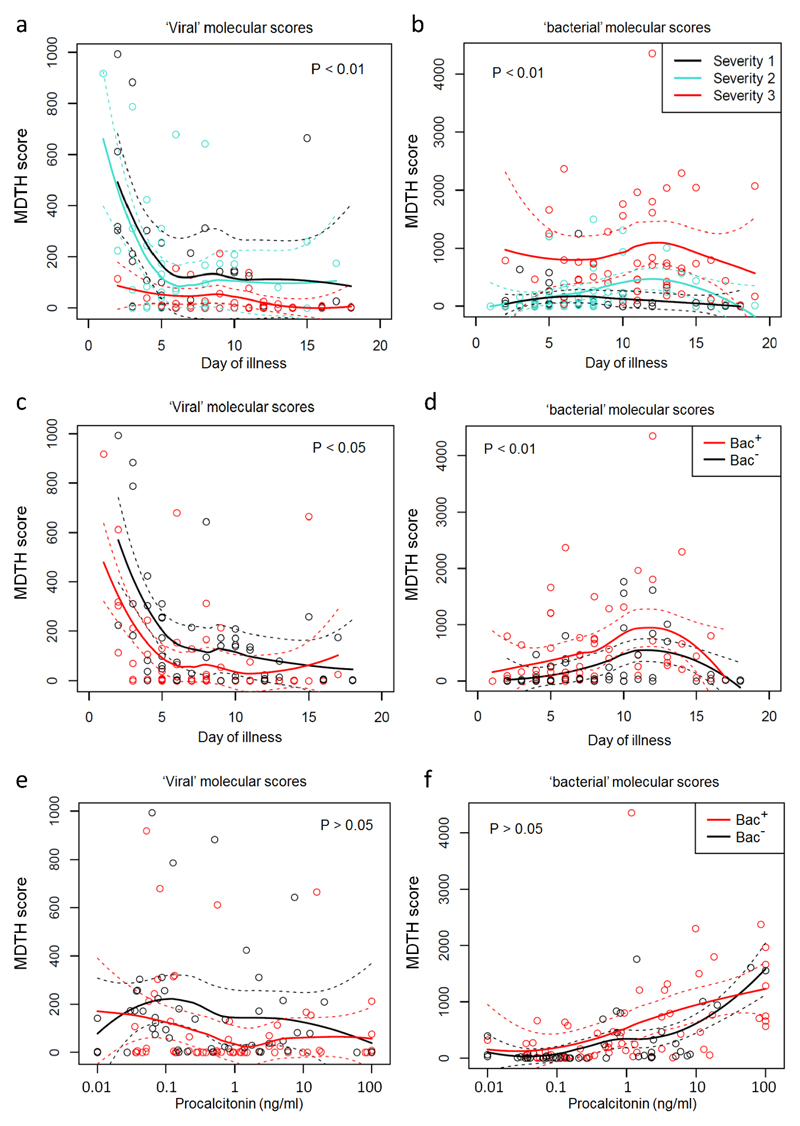
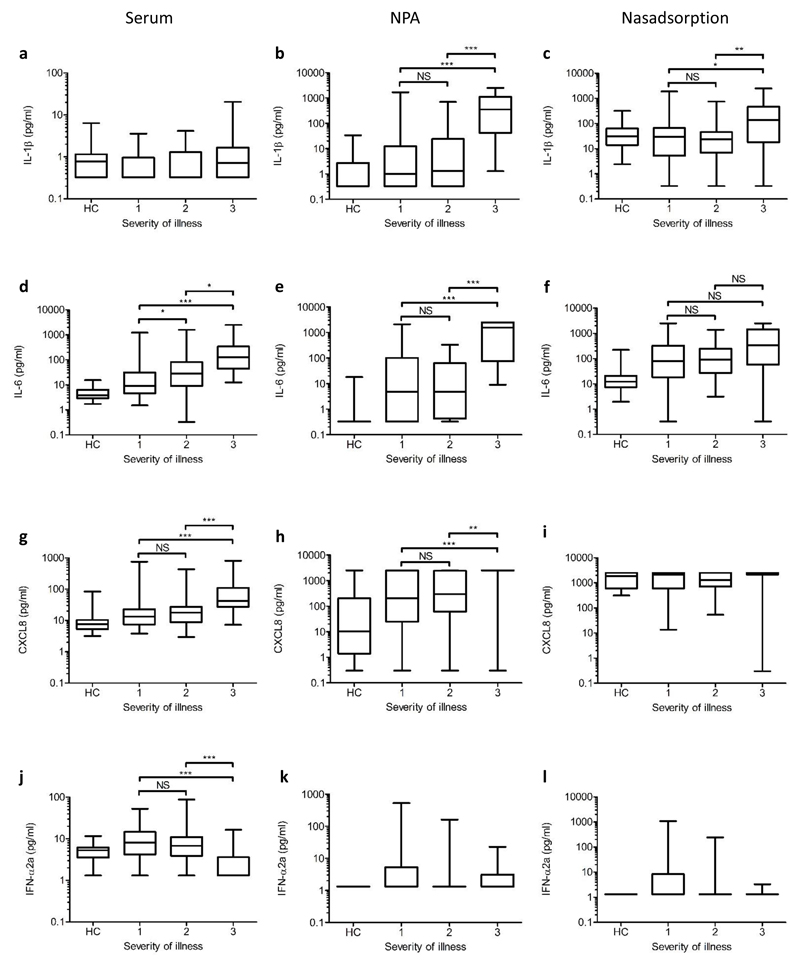
Transcriptional profiles and host-response biomarkers are used increasingly to investigate the severity, subtype and pathogenesis of disease. We now describe whole-blood mRNA signatures and concentrations of local and systemic immunological mediators in 131 adults hospitalized with influenza, from whom extensive clinical and investigational data were obtained by MOSAIC investigators. Signatures reflective of interferon-related antiviral pathways were common up to day 4 of symptoms in patients who did not require mechanical ventilator support; in those who needed mechanical ventilation, an inflammatory, activated-neutrophil and cell-stress or death ('bacterial') pattern was seen, even early in disease. Identifiable bacterial co-infection was not necessary for this 'bacterial' signature but was able to enhance its development while attenuating the early 'viral' signature. Our findings emphasize the importance of timing and severity in the interpretation of host responses to acute viral infection and identify specific patterns of immune-system activation that might enable the development of novel diagnostic and therapeutic tools for severe influenza.
转录谱和宿主反应生物标志物越来越多地被用于研究疾病的严重程度、亚型和发病机制。我们现在描述了 131 名因流感住院的成年人的全血 mRNA 特征和局部及全身免疫介质的浓度,这些成年人是由 MOSAIC 研究人员获得了广泛的临床和研究数据。在不需要机械通气支持的患者中,症状出现后第 4 天之前,反映干扰素相关抗病毒途径的特征是常见的;在那些需要机械通气的患者中,即使在疾病早期,也可以看到炎症、激活的中性粒细胞和细胞应激或死亡(“细菌”)模式。这种“细菌”特征不需要可识别的细菌合并感染,但能够增强其发展,同时减弱早期的“病毒”特征。我们的发现强调了在解释宿主对急性病毒感染的反应时时间和严重程度的重要性,并确定了可能使严重流感的新型诊断和治疗工具得以发展的特定免疫系统激活模式。