Liu Wenxue, Zhang Jing, Gan Xupei, Shen Fangqian, Yang Xiaoming, Du Na, Xia Dandan, Liu Lei, Qiao Lianqiao, Pan Jufang, Sun Yunyan, Xi Xiaowei
Department of Obstetrics and Gynecology, Shanghai General Hospital, School of Medicine, Shanghai Jiao Tong University, Shanghai, 200080, China.
Department of Obstetrics and Gynecology, The International Peace Maternity & Child Health Hospital, School of Medicine, Shanghai Jiao Tong University, Shanghai, 200080, China.
Cancer Med. 2018 Jul;7(7):3132-3142. doi: 10.1002/cam4.1485. Epub 2018 May 18.
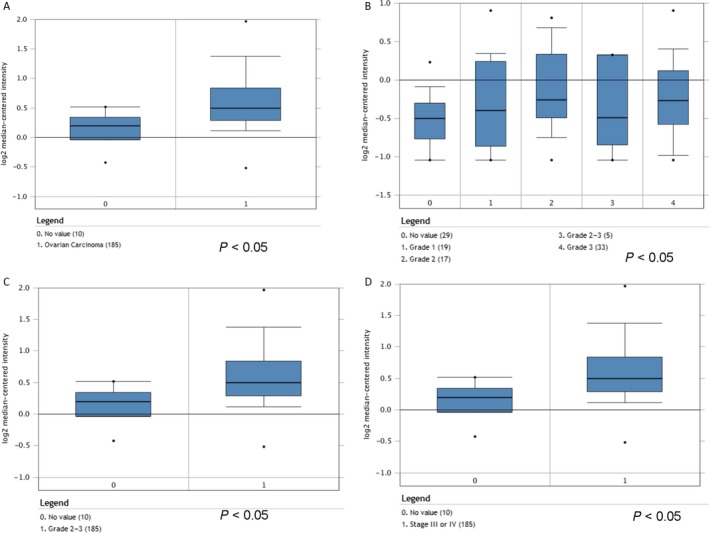
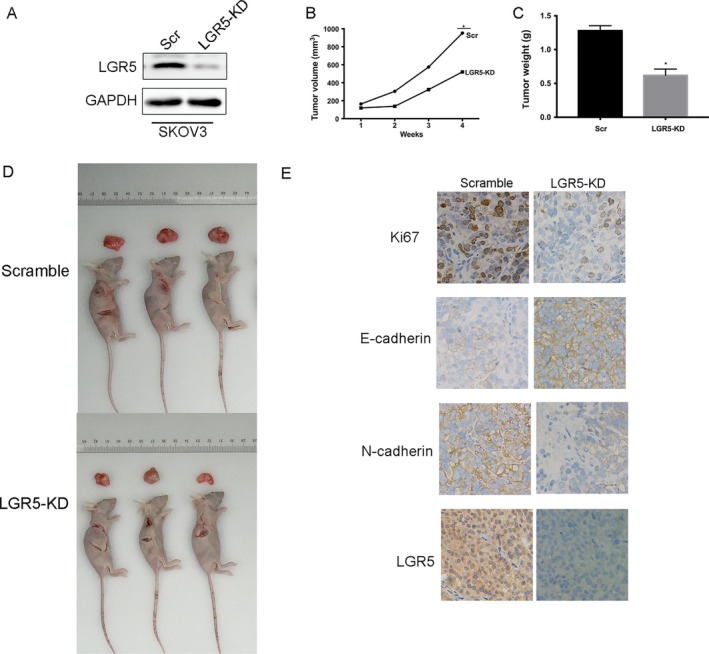
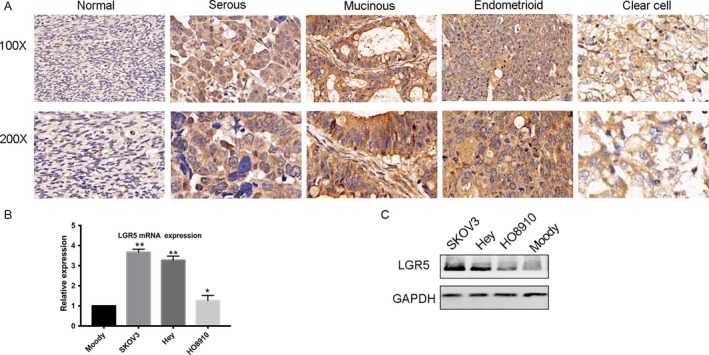
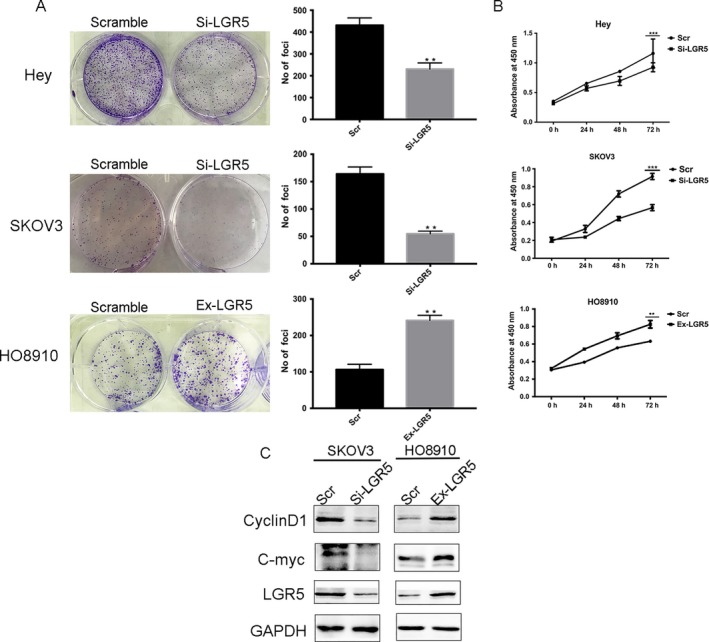
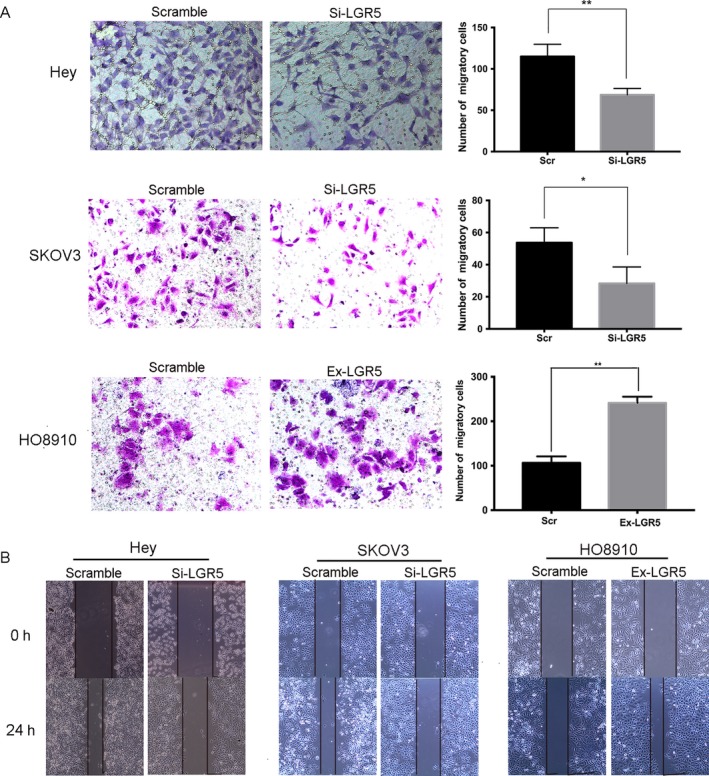
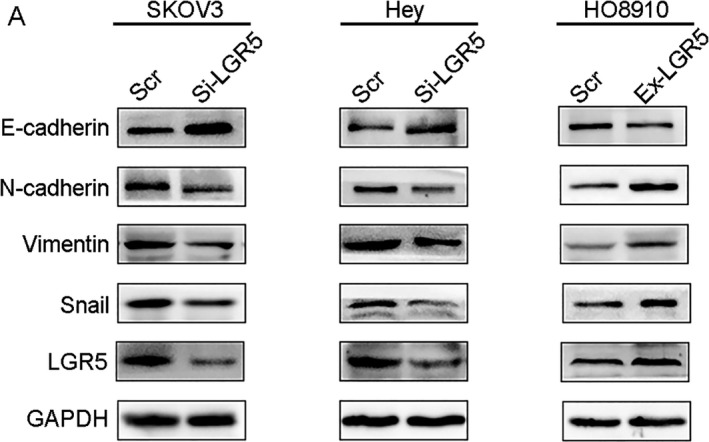
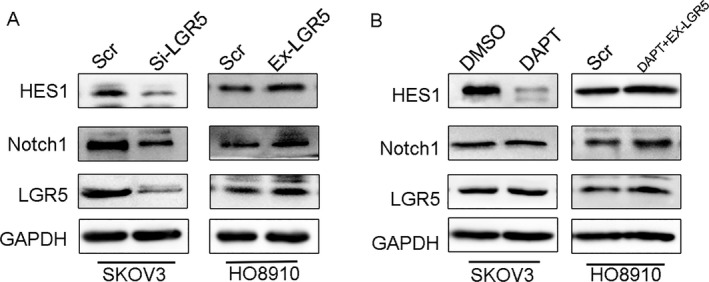
Leucine-rich repeat-containing G protein-coupled receptor 5 (LGR5) plays a vital role in the development of malignant tumors; however, its biological role and underlying mechanism in epithelial ovarian cancer (EOC) remain unclear. In this study, we aimed to investigate the biological function and clinical significance of LGR5 in human EOC. We evaluated LGR5 expression in EOC cell lines and tissues from ovarian cancer patients by qPCR, Western blotting, and immunohistochemical analysis. Cell proliferation, colony formation, transwell invasion assay, and scratch-wound assays were conducted to evaluate the expansion and invasion abilities of EOC cells. Tumor xenograft experiments were performed in female BALB/c athymic nude mice to test cell proliferation in vivo. Western blot analysis was performed to confirm the expression of epithelial-to-mesenchymal transition (EMT) signature proteins and their association with Notch1 signaling. The results demonstrated that LGR5 was overexpressed in EOC tissues and cell lines. Aberrant expression of LGR5 was significantly associated with patient age (P = 0.006), tumor histologic type (P < 0.001), and distant metastasis (P = 0.025). Consistent with these findings, suppression of LGR5 expression led to decreased proliferation and metastasis of EOC cell lines. Furthermore, LGR5 could induce EMT and regulate the Notch1 signaling pathway. Taken together,LGR5 may have an important role in the promotion of tumorigenesis and metastasis of EOC and is a potential therapeutic target for EOC management.
富含亮氨酸重复序列的G蛋白偶联受体5(LGR5)在恶性肿瘤的发生发展中起着至关重要的作用;然而,其在上皮性卵巢癌(EOC)中的生物学作用及潜在机制仍不清楚。在本研究中,我们旨在探讨LGR5在人EOC中的生物学功能及临床意义。我们通过qPCR、蛋白质免疫印迹和免疫组织化学分析评估了EOC细胞系以及卵巢癌患者组织中LGR5的表达情况。进行细胞增殖、集落形成、Transwell侵袭实验和划痕实验以评估EOC细胞的增殖和侵袭能力。在雌性BALB/c无胸腺裸鼠中进行肿瘤异种移植实验以检测细胞在体内的增殖情况。通过蛋白质免疫印迹分析来确认上皮-间质转化(EMT)标志性蛋白的表达及其与Notch1信号通路的关联。结果表明,LGR5在EOC组织和细胞系中过表达。LGR5的异常表达与患者年龄(P = 0.006)、肿瘤组织学类型(P < 0.001)及远处转移(P = 0.025)显著相关。与这些发现一致,抑制LGR5表达导致EOC细胞系的增殖和转移减少。此外,LGR5可诱导EMT并调节Notch1信号通路。综上所述,LGR5可能在促进EOC的肿瘤发生和转移中起重要作用,并且是EOC治疗的潜在靶点。