Department of Cardiology, Nagoya University Graduate School of Medicine, Nagoya, Japan.
Korean J Intern Med. 2018 Nov;33(6):1039-1049. doi: 10.3904/kjim.2018.106. Epub 2018 May 23.
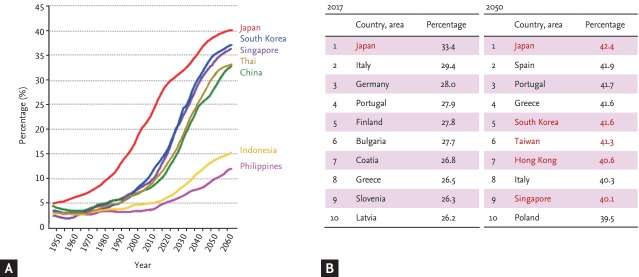
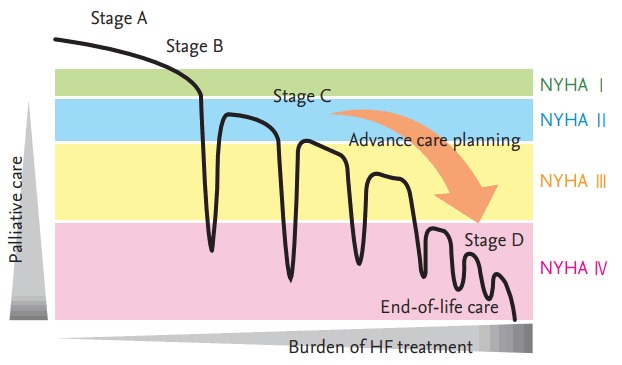
The populations of Asian countries are expected to age rapidly in the near future, with a dramatic increase in the number of heart failure (HF) patients also anticipated. The need for palliative and end-of-life care for elderly patients with advanced HF is currently recognized in aging societies. However, palliative care and active treatment for HF are not mutually exclusive, and palliative care should be provided to reduce suffering occurring at any stage of symptomatic HF after the point of diagnosis. HF patients are at high risk of sudden cardiac death from the early stages of the disease onwards. The decision of whether to perform cardiopulmonary resuscitation in the event of an emergency is challenging, especially in elderly HF patients, because of the difficulty in accurately predicting the prognosis of the condition. Furthermore, advanced HF patients are often fitted with a device, and device deactivation at the end of life is a complicated process. Treatment strategies should thus be discussed by multi-disciplinary teams, including palliative experts, and should consider patient directives to address the problems discussed above. Open communication with the HF patient regarding the expected prognosis, course, and treatment options will serve to support the patient and aid in future planning.
亚洲国家的人口预计在不久的将来将迅速老龄化,心力衰竭 (HF) 患者的数量也预计将大幅增加。在老龄化社会中,目前人们认识到需要为患有晚期 HF 的老年患者提供姑息治疗和临终关怀。然而,姑息治疗和 HF 的积极治疗并不相互排斥,姑息治疗应该在诊断后 HF 出现症状的任何阶段提供,以减轻痛苦。HF 患者从疾病早期开始就有发生心源性猝死的高风险。在紧急情况下是否进行心肺复苏的决定具有挑战性,尤其是在老年 HF 患者中,因为准确预测病情预后非常困难。此外,晚期 HF 患者通常会安装设备,而在生命末期停用设备是一个复杂的过程。因此,应通过多学科团队(包括姑息治疗专家)讨论治疗策略,并考虑患者的指示,以解决上述问题。与 HF 患者就预期预后、病程和治疗选择进行开诚布公的沟通,将有助于支持患者并为未来的计划提供帮助。