
异染色质结构域在新的端粒处逐渐形成,并在稳定的端粒处具有动态性。
A Heterochromatin Domain Forms Gradually at a New Telomere and Is Dynamic at Stable Telomeres.
机构信息
Department of Genetics and Genome Sciences, Case Western Reserve University, Cleveland, Ohio, USA.
Departments of Immunology and Molecular Genetics, Lerner Research Institute, Cleveland Clinic Foundation, Cleveland, Ohio, USA.
出版信息
Mol Cell Biol. 2018 Jul 16;38(15). doi: 10.1128/MCB.00393-17. Print 2018 Aug 1.
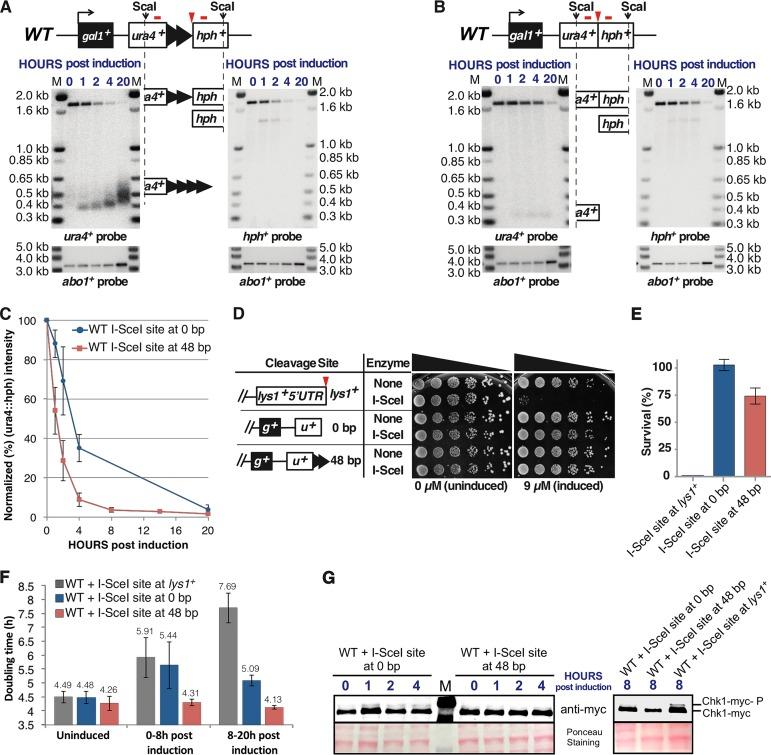
Heterochromatin domains play important roles in chromosome biology, organismal development, and aging, including centromere function, mammalian female X chromosome inactivation, and senescence-associated heterochromatin foci. In the fission yeast and metazoans, heterochromatin contains histone H3 that is dimethylated at lysine 9. While factors required for heterochromatin have been identified, the dynamics of heterochromatin formation are poorly understood. Telomeres convert adjacent chromatin into heterochromatin. To form a new heterochromatic region in , an inducible DNA double-strand break (DSB) was engineered next to 48 bp of telomere repeats in euchromatin, which caused formation of a new telomere and the establishment and gradual spreading of a new heterochromatin domain. However, spreading was dynamic even after the telomere had reached its stable length, with reporter genes within the heterochromatin domain showing variegated expression. The system also revealed the presence of repeats located near the boundaries of euchromatin and heterochromatin that are oriented to allow the efficient healing of a euchromatic DSB to cap the chromosome end with a new telomere. Telomere formation in therefore reveals novel aspects of heterochromatin dynamics and fail-safe mechanisms to repair subtelomeric breaks, with implications for similar processes in metazoan genomes.
异染色质结构域在染色体生物学、生物发育和衰老中发挥着重要作用,包括着丝粒功能、哺乳动物雌性 X 染色体失活和衰老相关异染色质焦点。在裂殖酵母和后生动物中,异染色质含有组蛋白 H3,其赖氨酸 9 被二甲基化。虽然已经确定了形成异染色质所需的因子,但异染色质形成的动态过程仍不清楚。端粒将相邻染色质转化为异染色质。为了在 中形成一个新的异染色质区域,在常染色质中紧邻 48 个碱基对的端粒重复序列处设计了一个可诱导的 DNA 双链断裂 (DSB),这导致了一个新的端粒的形成和一个新的异染色质区域的建立和逐渐扩展。然而,即使在端粒达到稳定长度后,扩展仍然是动态的,异染色质区域内的报告基因表现出斑驳的表达。该系统还揭示了存在于常染色质和异染色质边界附近的重复序列,这些重复序列的取向允许高效地修复常染色质 DSB,并用新的端粒封闭染色体末端。因此, 中端粒的形成揭示了异染色质动力学的新方面和修复亚端粒断裂的故障安全机制,这对后生动物基因组中的类似过程具有重要意义。




 Zotero 插件