Department of Diagnostic Medicine and Pathobiology, College of Veterinary Medicine, Kansas State University, Manhattan, KS, USA.
Biosecurity Research Institute, Kansas State University, Manhattan, KS, USA.
Sci Rep. 2018 May 21;8(1):7951. doi: 10.1038/s41598-018-26208-8.
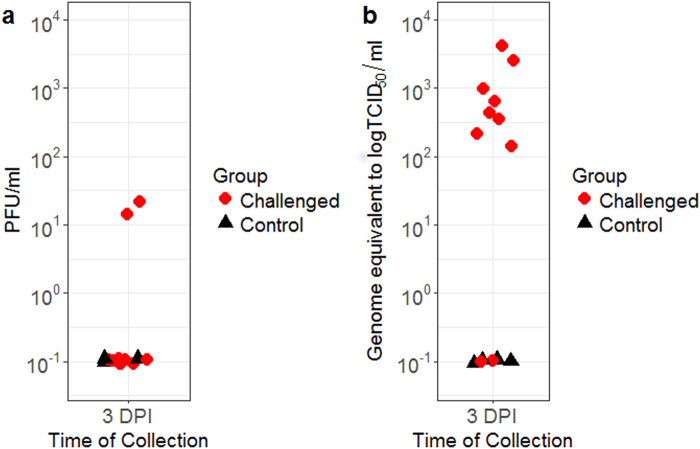
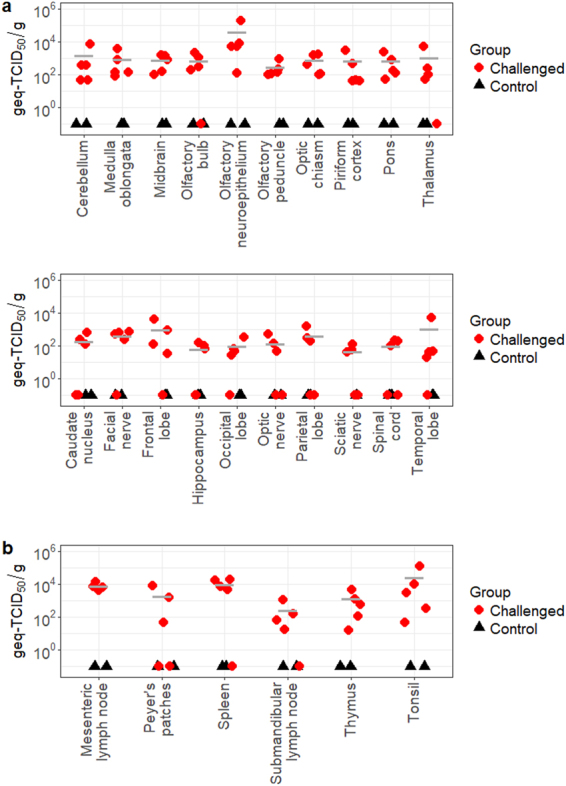
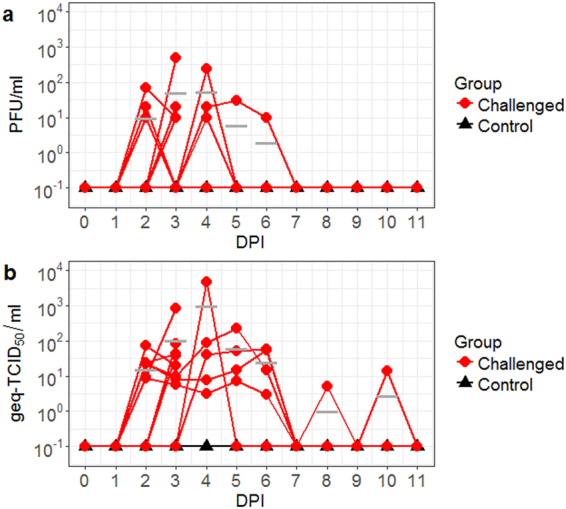
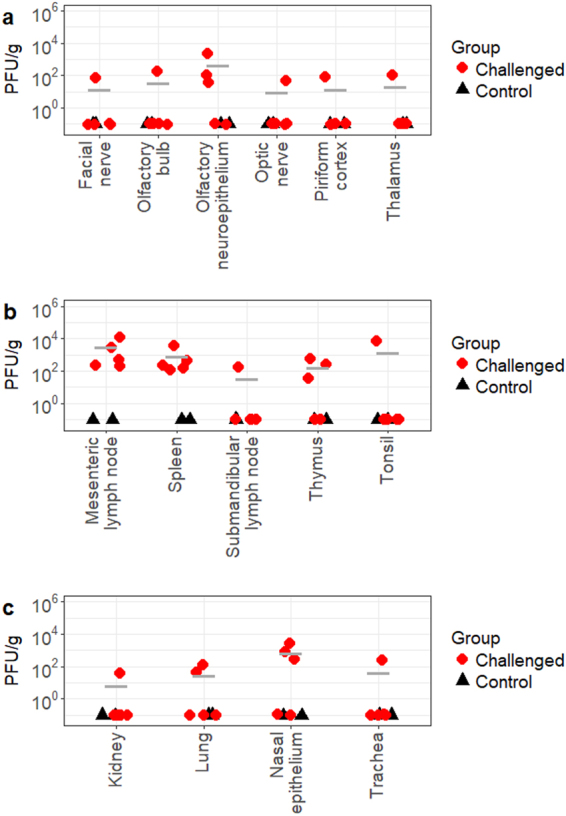
Japanese encephalitis virus (JEV) is a mosquito-borne flavivirus that is capable of causing encephalitic diseases in children. While humans can succumb to severe disease, the transmission cycle is maintained by viremic birds and pigs in endemic regions. Although JEV is regarded as a significant threat to the United States (U.S.), the susceptibility of domestic swine to JEV infection has not been evaluated. In this study, domestic pigs from North America were intravenously challenged with JEV to characterize the pathological outcomes. Systemic infection followed by the development of neutralizing antibodies were observed in all challenged animals. While most clinical signs were limited to nonspecific symptoms, virus dissemination and neuroinvasion was observed at the acute phase of infection. Detection of infectious viruses in nasal secretions suggest infected animals are likely to promote the vector-free transmission of JEV. Viral RNA present in tonsils at 28 days post infection demonstrates the likelihood of persistent infection. In summary, our findings indicate that domestic pigs can potentially become amplification hosts in the event of an introduction of JEV into the U.S. Vector-free transmission to immunologically naïve vertebrate hosts is also likely through nasal shedding of infectious viruses.
日本脑炎病毒(JEV)是一种经蚊子传播的黄病毒,能够导致儿童脑炎疾病。虽然人类可能会患上严重疾病,但在流行地区,带病毒的鸟类和猪维持着病毒传播循环。尽管 JEV 被认为是对美国(U.S.)的重大威胁,但 domestic swine 对 JEV 感染的易感性尚未得到评估。在这项研究中,来自北美的 domestic swine 通过静脉内挑战 JEV 来描述其病理结果。所有受挑战的动物均观察到系统性感染和中和抗体的产生。虽然大多数临床症状仅限于非特异性症状,但在感染的急性期观察到病毒扩散和神经入侵。在鼻分泌物中检测到传染性病毒表明,感染动物可能会促进 JEV 的无媒介传播。感染后 28 天扁桃体中存在的病毒 RNA 表明存在持续性感染的可能性。总之,我们的研究结果表明,在 JEV 引入美国的情况下,domestic swine 可能成为扩增宿主。通过传染性病毒的鼻腔脱落,也可能向免疫原性未成熟的脊椎动物宿主进行无媒介传播。