Division of Gastroenterology, Massachusetts General Hospital and Harvard Medical School, Boston, MA, USA.
Clinical and Translational Epidemiology Unit, Massachusetts General Hospital and Harvard Medical School, Boston, MA, USA.
Nat Rev Gastroenterol Hepatol. 2018 Sep;15(9):525-535. doi: 10.1038/s41575-018-0022-9.
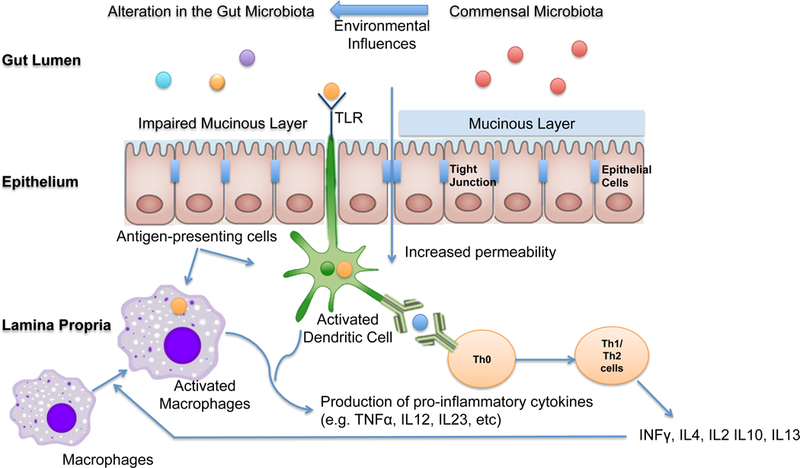
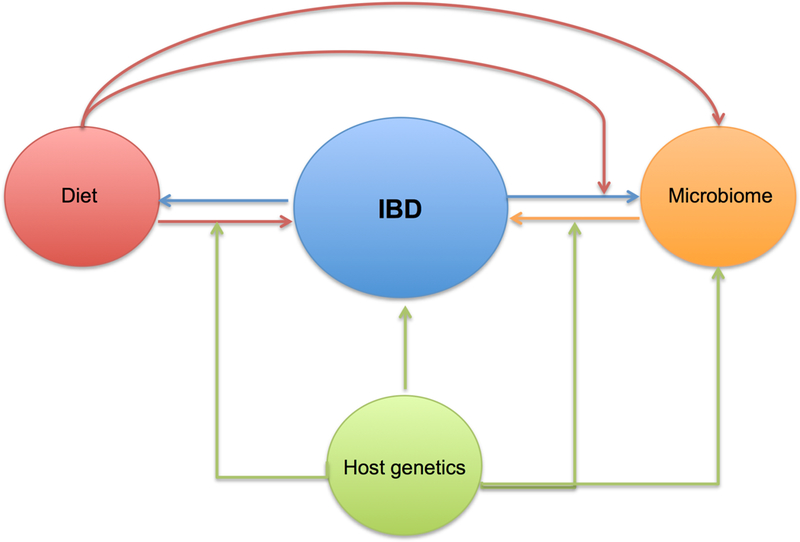
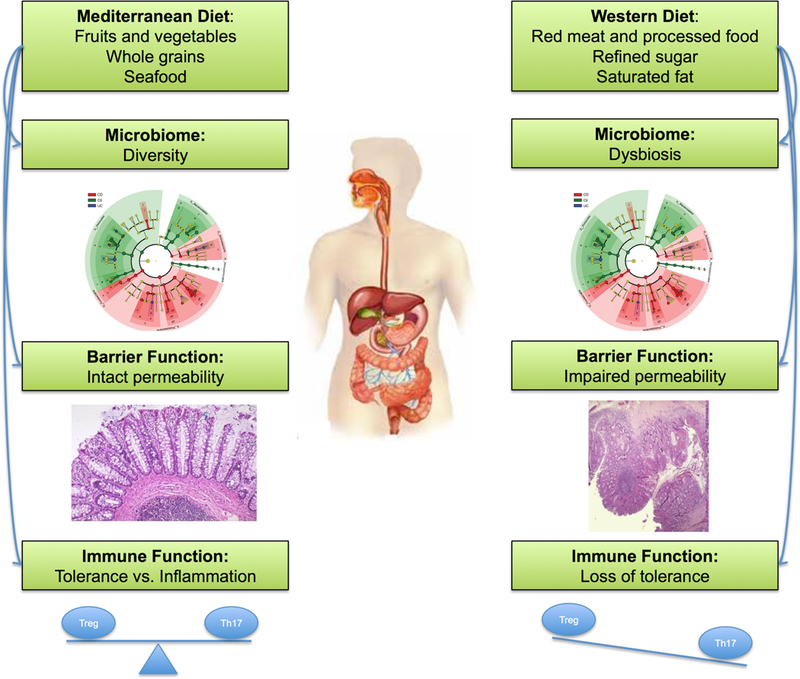
Crohn's disease and ulcerative colitis, collectively known as IBD, are chronic inflammatory disorders of the gastrointestinal tract. Although the aetiopathogenesis of IBD is largely unknown, it is widely thought that diet has a crucial role in the development and progression of IBD. Indeed, epidemiological and genetic association studies have identified a number of promising dietary and genetic risk factors for IBD. These preliminary studies have led to major interest in investigating the complex interaction between diet, host genetics, the gut microbiota and immune function in the pathogenesis of IBD. In this Review, we discuss the recent epidemiological, gene-environment interaction, microbiome and animal studies that have explored the relationship between diet and the risk of IBD. In addition, we highlight the limitations of these prior studies, in part by explaining their contradictory findings, and review future directions.
克罗恩病和溃疡性结肠炎,统称为 IBD,是胃肠道的慢性炎症性疾病。虽然 IBD 的病因学在很大程度上尚不清楚,但人们普遍认为饮食在 IBD 的发展和进展中起着至关重要的作用。事实上,流行病学和遗传关联研究已经确定了一些有希望的饮食和遗传风险因素 IBD。这些初步研究极大地激发了人们对饮食、宿主遗传学、肠道微生物群和免疫功能在 IBD 发病机制中的复杂相互作用的兴趣。在这篇综述中,我们讨论了最近的流行病学、基因-环境相互作用、微生物组和动物研究,这些研究探讨了饮食与 IBD 风险之间的关系。此外,我们还强调了这些先前研究的局限性,部分是通过解释它们相互矛盾的发现,并审查未来的方向。