Baumgart Pia, Kirsten Holger, Haak Rainer, Olms Constanze
Department of Dental Prosthodontics and Materials Science, University of Leipzig, Liebigstraße 12, Haus 1, 04103, Leipzig, Germany.
Institute for Medical Informatics, Statistics, and Epidemiology (IMISE), Haertelstraße 16-18, 04107, Leipzig, Germany.
Int J Implant Dent. 2018 May 23;4(1):16. doi: 10.1186/s40729-018-0127-5.
Implant and superstructure provide a complex system, which has to withstand oral conditions. Concerning the brittleness of many ceramics, fractures are a greatly feared issue. Therefore, polymer-infiltrated ceramic networks (PICNs) were developed. Because of its low Young's modulus and high elastic modulus, the PICN crown on a one-piece zirconia implant might absorb forces to prevent the system from fracturing in order to sustain oral forces. Recommendations for the material of superstructure on zirconia implants are lacking, and only one study investigates PICN crowns on these types of implants. Accordingly, this study aimed to examine PICN crowns on one-piece zirconia implants regarding bond strength and surface wear after long-term chewing simulation (CS).
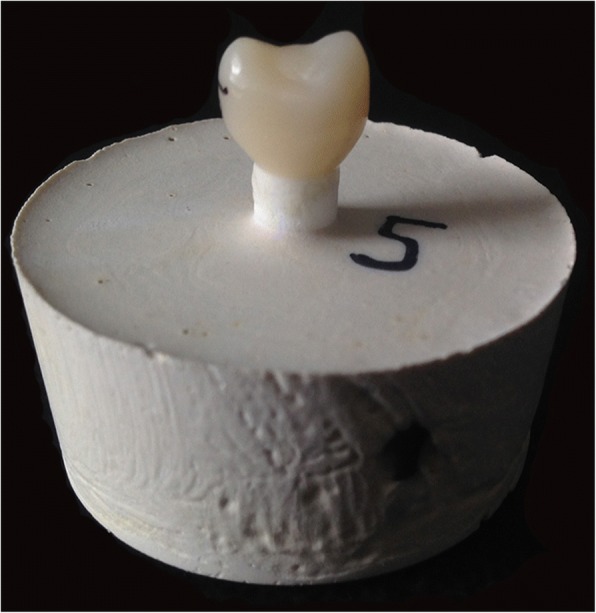
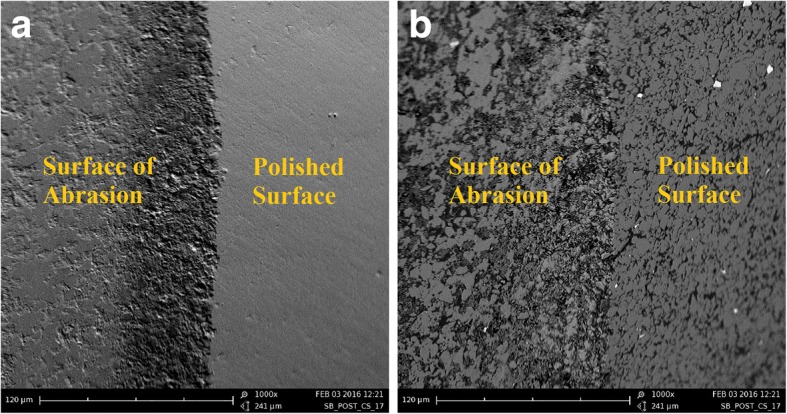
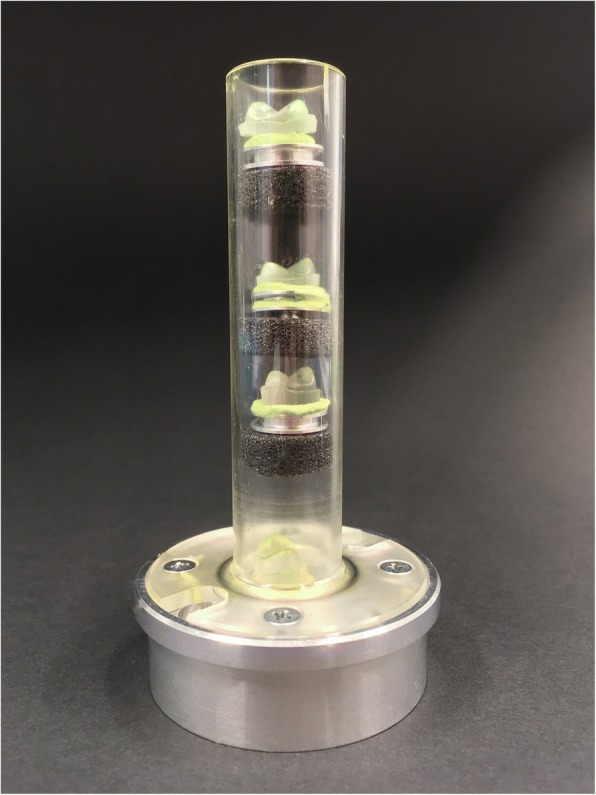
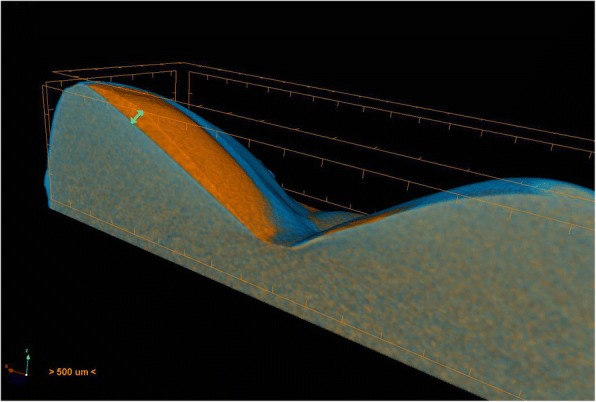
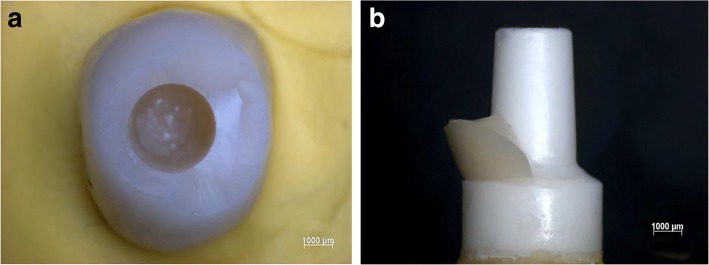
Twenty-five hybrid ceramic crowns (Vita Enamic, Vita Zahnfabrik) were produced using computer-aided design/computer-aided manufacturing (CAD/CAM) technology and adhesively bonded (RelyX™ Ultimate, 3M ESPE) to zirconia implants. Twenty of the specimens underwent simultaneous mechanical loading and thermocycling simulating a 5-year clinical situation (SD Mechatronik GmbH). Wear depth and wear volume, based on X-ray micro-computed tomography volume scans (Skyscan 1172-100-50, Bruker) before and after CS, were evaluated. All crowns were removed from the implants using a universal testing machine (Z010, Zwick GmbH&Co.KG). Subsequently, luting agent was light microscopically localized (Stemi 2000-C, Zeiss). With a scanning electron microscope (SEM, Phenom™ G2 pro, Phenom World), the area of abrasion was assessed.
PICN on one-piece zirconia implants showed high bond strength and high wear after CS.
种植体和上部结构构成一个复杂的系统,必须能够承受口腔环境。鉴于许多陶瓷材料的脆性,骨折是一个令人非常担忧的问题。因此,开发了聚合物渗透陶瓷网络(PICN)。由于其低杨氏模量和高弹性模量,一体式氧化锆种植体上的PICN冠可能会吸收力量,以防止系统断裂,从而承受口腔力量。目前缺乏关于氧化锆种植体上部结构材料的建议,只有一项研究调查了这类种植体上的PICN冠。因此,本研究旨在研究一体式氧化锆种植体上的PICN冠在长期咀嚼模拟(CS)后的粘结强度和表面磨损情况。
使用计算机辅助设计/计算机辅助制造(CAD/CAM)技术制作25个混合陶瓷冠(Vita Enamic,维他齿科),并通过粘结剂(RelyX™ Ultimate,3M ESPE)粘结到氧化锆种植体上。20个样本进行了同时模拟5年临床情况的机械加载和热循环(SD Mechatronik GmbH)。根据CS前后的X射线微计算机断层扫描体积扫描(Skyscan 1172-100-50,布鲁克)评估磨损深度和磨损体积。使用万能试验机(Z010,Zwick GmbH&Co.KG)将所有冠从种植体上取下。随后,在光学显微镜下定位粘结剂(Stemi 2000-C,蔡司)。使用扫描电子显微镜(SEM,Phenom™ G2 pro,Phenom World)评估磨损区域。