Department of Anesthesiology, Intensive Care Medicine, Palliative Care Medicine and Pain Management, Berufsgenossenschaftliches Universitätsklinikum Bergmannsheil gGmbH Bochum, Medical Faculty of Ruhr University Bochum, Bürkle-de-la-Camp-Platz 1, 44789, Bochum, Germany.
Department of Palliative Medicine, Munich University Hospital, Ludwig-Maximilians- University Munich, Munich, Germany.
BMC Palliat Care. 2018 May 24;17(1):80. doi: 10.1186/s12904-018-0334-0.
Due to increasing life expectancy, more and more older people are suffering from dementia and comorbidities. To date, little information is available on place of death for dementia patients in Germany. In addition, the association of place of death and comorbidities is unknown.
A population-based cross-sectional survey was conducted in Westphalia-Lippe (Germany), based on the analysis of death certificates from 2011. Individuals with dementia ≥ 65 years were identified using the documented cause of death. In this context, all mentioned causes of death were included. In addition, ten selected comorbidities were also analyzed. The results were presented descriptively. Using multivariate logistic regression, place of death was analyzed for any association with comorbidities.
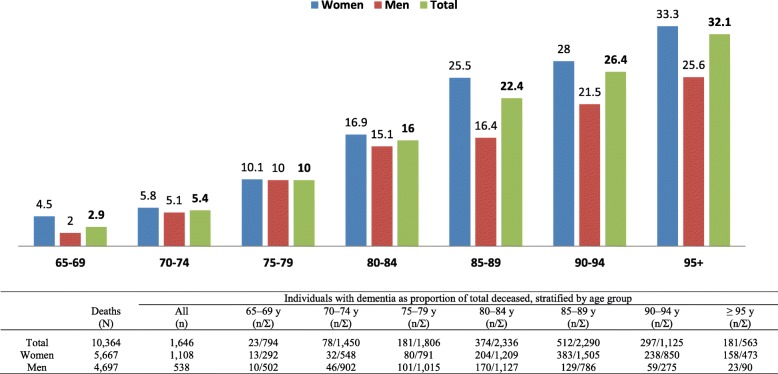
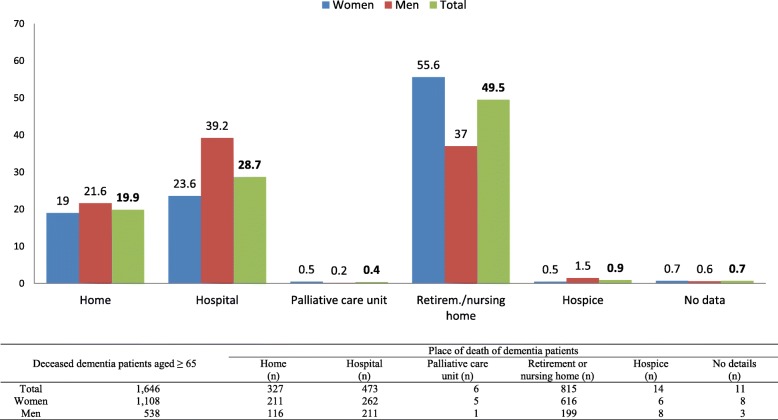
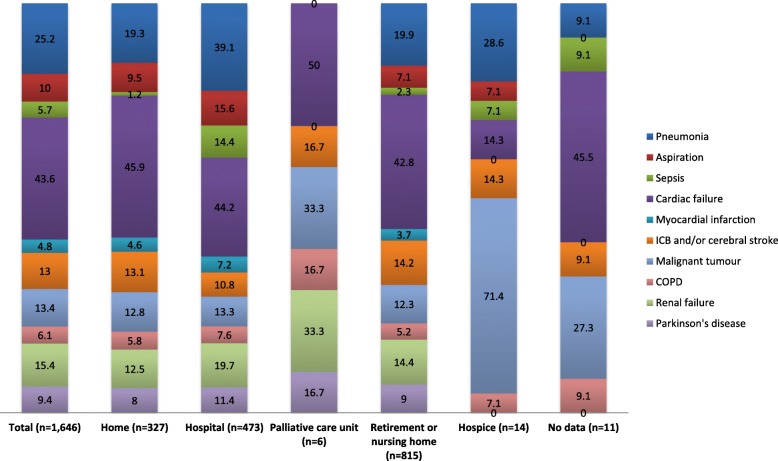
A total of 10,364 death certificates were analyzed. Dementia was recorded in 1646 cases (15.9%; mean age 86.3 ± 6.9 years; 67.3% women). On average, 1.5 ± 1.0 selected comorbidities were present. Places of death were distributed as follows: home (19.9%), hospital (28.7%), palliative care unit (0.4%), nursing home (49.5%), hospice (0.9%), no details (0.7%). The death certificates documented cardiac failure in 43.6% of cases, pneumonia in 25.2%, and malignant tumour in 13.4%. An increased likelihood of dying in hospital compared to home or nursing home, respectively, was found for the following comorbidities (OR [95%-CI]): pneumonia (2.96 [2.01-4.35], p = 0.001); (2.38 [1.75-3.25], p = 0.001); renal failure (1.93 [1.26-2.97], p = 0.003); (1.65 [1.18-2.32], p = 0.003); and sepsis (13.73 [4.88-38.63], p = 0.001); (7.34 [4.21-12.78], p = 0.001).
The most common place of death in patients with dementia is the retirement or nursing home, followed by hospital and home. Specific comorbidities, such as pneumonia or sepsis, correlated with an increased probability of dying in hospital.
由于预期寿命的延长,越来越多的老年人患有痴呆症和合并症。迄今为止,有关德国痴呆症患者死亡地点的信息很少。此外,死亡地点与合并症的关系尚不清楚。
在威斯特伐利亚-利珀(德国)进行了一项基于人群的横断面调查,该调查基于对 2011 年死亡证明的分析。使用记录的死因识别≥65 岁的痴呆症患者。在这种情况下,包括所有提到的死因。此外,还分析了十种选定的合并症。结果以描述性方式呈现。使用多变量逻辑回归分析了死亡地点与合并症的任何关联。
共分析了 10364 份死亡证明。1646 例(15.9%;平均年龄 86.3±6.9 岁;67.3%为女性)记录了痴呆症。平均存在 1.5±1.0 种选定的合并症。死亡地点分布如下:家庭(19.9%)、医院(28.7%)、姑息治疗单位(0.4%)、养老院(49.5%)、临终关怀(0.9%)、无详细信息(0.7%)。死亡证明记录了 43.6%的病例有心衰,25.2%的病例有肺炎,13.4%的病例有恶性肿瘤。与家庭或养老院相比,以下合并症在医院死亡的可能性更高(OR [95%-CI]):肺炎(2.96 [2.01-4.35],p=0.001);(2.38 [1.75-3.25],p=0.001);肾功能衰竭(1.93 [1.26-2.97],p=0.003);(1.65 [1.18-2.32],p=0.003);和败血症(13.73 [4.88-38.63],p=0.001);(7.34 [4.21-12.78],p=0.001)。
痴呆症患者最常见的死亡地点是退休或养老院,其次是医院和家庭。特定的合并症,如肺炎或败血症,与在医院死亡的可能性增加相关。