Departments of Sports Medicine, and.
Physical Performance, Norwegian School of Sport Sciences, Oslo, Norway.
J Strength Cond Res. 2018 Aug;32(8):2314-2323. doi: 10.1519/JSC.0000000000002579.
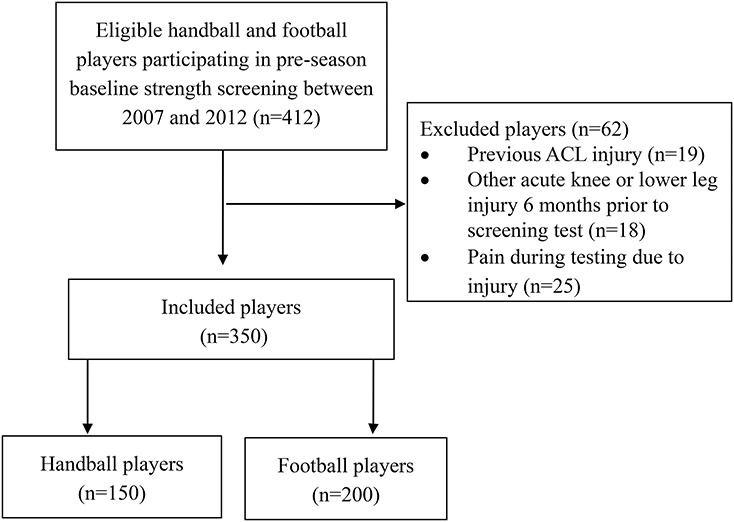
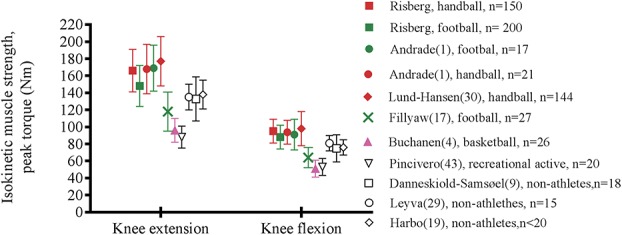
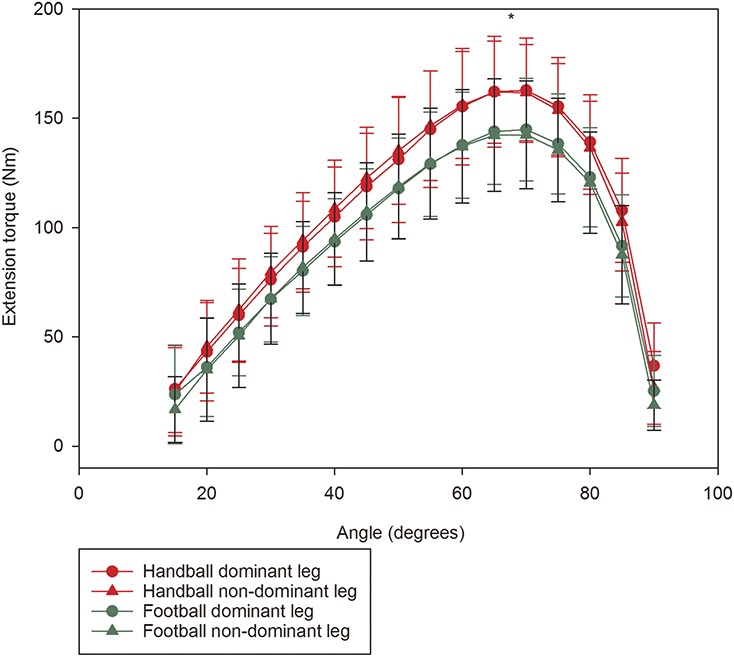
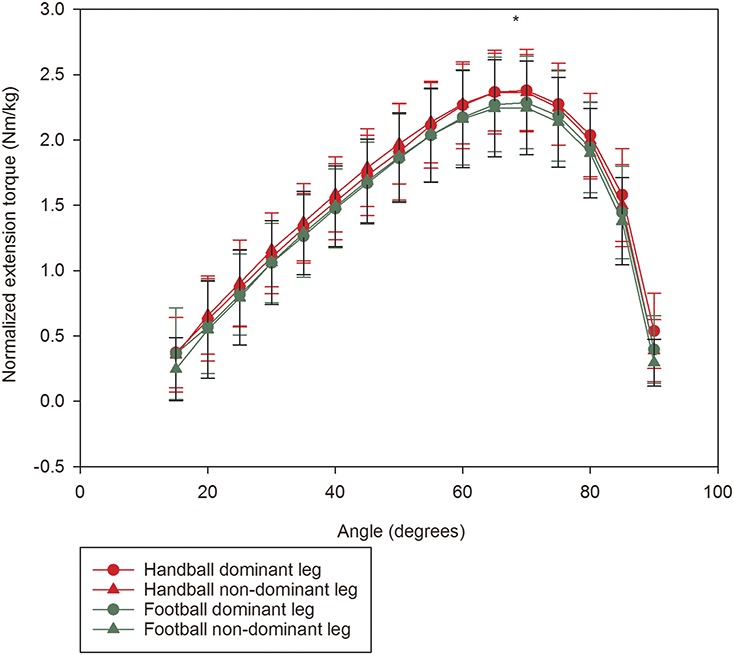
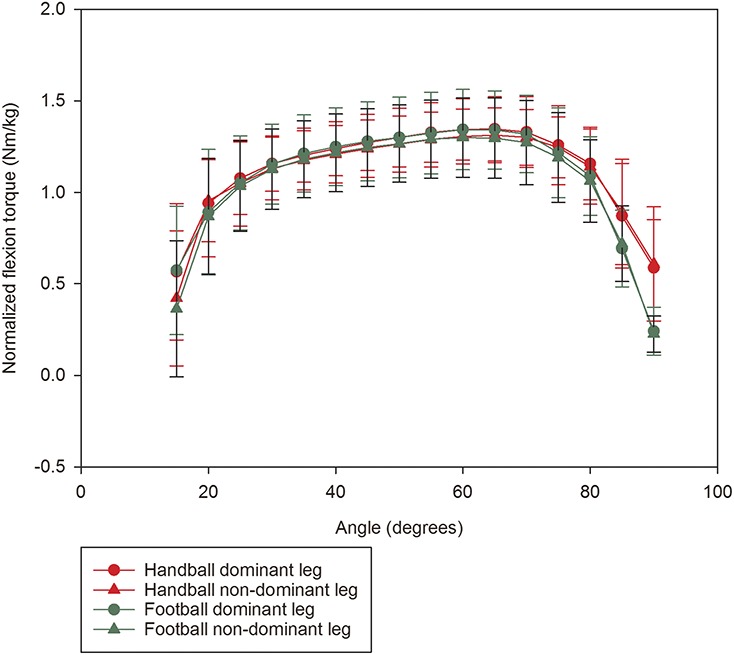
Risberg, MA, Steffen, K, Nilstad, A, Myklebust, G, Kristianslund, E, Moltubakk, MM, and Krosshaug, T. Normative quadriceps and hamstring muscle strength values for female, healthy, elite handball and football players. J Strength Cond Res 32(8): 2314-2323, 2018-This study presents normative values for isokinetic knee extension and flexion muscle strength tests in 350 elite, female, handball (n = 150) and football (n = 200) players. Isokinetic concentric muscle strength tests at 60°·sec were recorded bilaterally using a dynamometer. Peak torque (in Newton meter [N·m]), body mass normalized peak torque (N·m·kg), and hamstring to quadriceps ratio (H:Q ratio) for dominant and nondominant legs were recorded. The female elite players were 20.9 ± 4.0 years, started playing at the elite level at the age of 18.2 ± 2.7 years, with a mean of 9.7 ± 2.2 hours of weekly in-season training. Handball players demonstrated greater quadriceps muscle strength compared with football players (11.0%) (p < 0.001), also when normalized to body mass (4.1%) (p = 0.012), but not for weight-adjusted hamstring muscle strength. The H:Q ratio was higher on the dominant compared with the nondominant leg for handball players only (p = 0.012).The H:Q ratio was significantly lower for handball players (0.58) compared with football players (0.60) (p < 0.02). These normative values for isokinetic knee extension and flexion torques of healthy, elite, female handball and football players can be used to set rehabilitation goals for muscle strength after injury and enable comparison with uninjured legs. Significantly greater quadriceps muscle strength was found for handball players compared with football players, also when normalized to body mass.
里斯伯格、斯蒂芬、尼尔斯塔德、迈克劳斯特、克里斯蒂安松、莫尔图巴克和克罗斯豪格,女性、健康、精英手球和足球运动员的股四头肌和腘绳肌力量的正常值。《力量与调节研究》32(8):2314-2323,2018-本研究为 350 名精英女性手球(n=150)和足球(n=200)运动员的等速膝关节屈伸肌肉力量测试提供了正常值。使用测力计记录双侧等速向心肌肉力量测试,记录优势和非优势腿的峰值扭矩(牛顿米[N·m])、体重标准化峰值扭矩(N·m·kg)和股四头肌与腘绳肌比值(H:Q 比值)。女性精英运动员的年龄为 20.9±4.0 岁,在 18.2±2.7 岁时开始参加精英级别比赛,每周有 9.7±2.2 小时的赛季内训练。与足球运动员相比,手球运动员的股四头肌力量更大(11.0%)(p<0.001),当按体重标准化时(4.1%)(p=0.012)也是如此,但不是体重调整后的腘绳肌力量。在手球运动员中,优势腿的 H:Q 比值高于非优势腿(p=0.012)。手球运动员的 H:Q 比值(0.58)明显低于足球运动员(0.60)(p<0.02)。这些健康、精英、女性手球和足球运动员的等速膝关节伸屈扭矩的正常值可用于设定受伤后肌肉力量的康复目标,并与未受伤的腿进行比较。与足球运动员相比,手球运动员的股四头肌力量明显更大,当按体重标准化时也是如此。