Ophthalmology Unit, IRCCS Ospedale Policlinico San Martino, Viale Benedetto XV, 16132 Genoa, Italy.
Clinica Oculistica, DiNOGMI, University of Genoa and IRCCS Ospedale Policlinico San Martino, Viale Benedetto XV, 16132 Genoa, Italy.
Nutrients. 2018 May 24;10(6):668. doi: 10.3390/nu10060668.
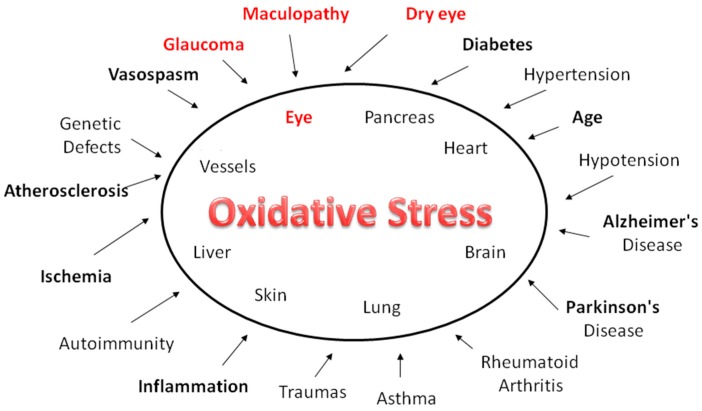
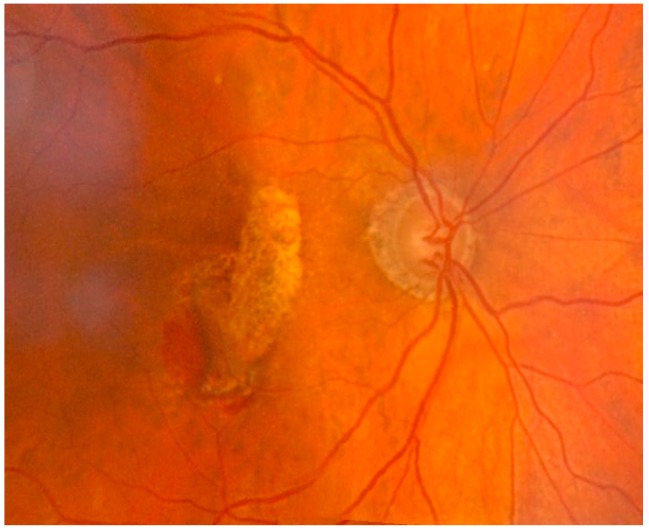
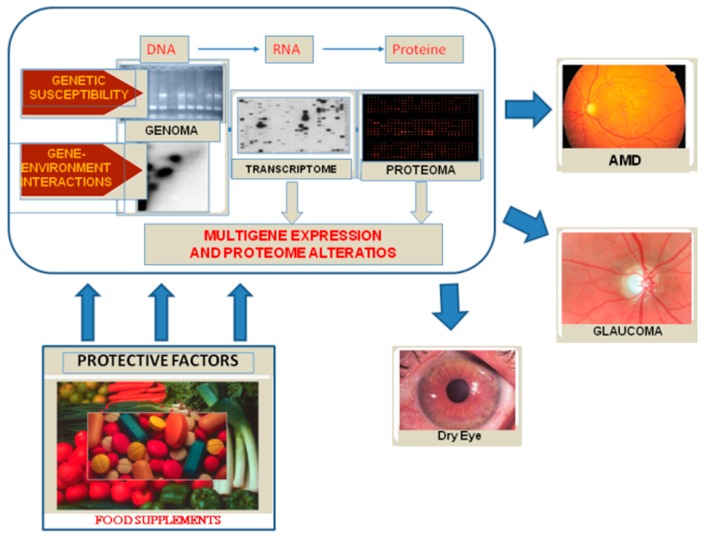
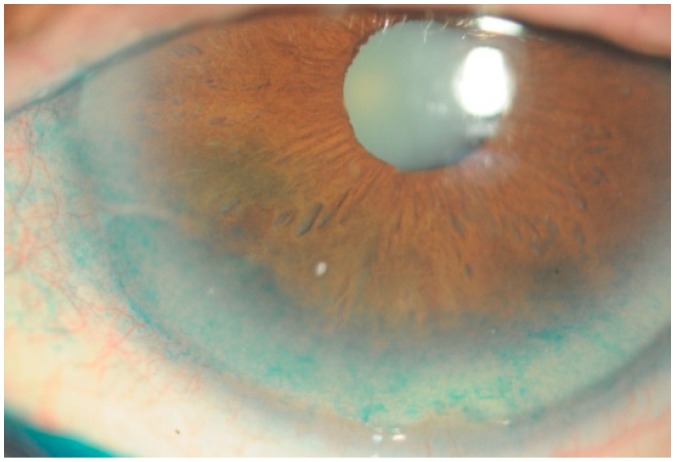
Polyunsaturated fatty acids (PUFA) are known to have numerous beneficial effects, owing to their anti-inflammatory and antioxidant properties. From a metabolic standpoint, the mitochondria play a fundamental role in cellular homeostasis, and oxidative stress can affect their functioning. Indeed, the mitochondria are the main source of ROS, and an imbalance between ROS and antioxidant defenses leads to oxidative stress. In addition, aging, the decline of cellular functions, and continual exposure to light underlie many diseases, particularly those of the eye. Long-term exposure to insults, such as UV light, visible light, ionizing radiation, chemotherapeutics, and environmental toxins, contribute to oxidative damage in ocular tissues and expose the aging eye to considerable risk of pathological consequences of oxidative stress. Ample antioxidant defenses responsible for scavenging free radicals are essential for redox homeostasis in the eye, indeed, eye tissues, starting from the tear film, which normally are exposed to high oxygen levels, have strong antioxidant defenses that are efficient for protecting against ROS-related injuries. On the contrary, instead, the trabecular meshwork is not directly exposed to light and its endothelial cells are poorly equipped with antioxidant defenses. All this makes the eye a target organ of oxidative damage. This review focuses on the role of the polyunsaturated fatty acids in the human eye, particularly in such pathologies as dry eye, glaucoma, and macular degeneration, in which dietary PUFA supplementation can be a valid therapeutic aid.
多不饱和脂肪酸(PUFA)因其具有抗炎和抗氧化特性,而被认为具有许多有益的作用。从代谢的角度来看,线粒体在细胞稳态中起着基本作用,氧化应激会影响其功能。事实上,线粒体是 ROS 的主要来源,ROS 和抗氧化防御之间的平衡失调会导致氧化应激。此外,衰老、细胞功能下降以及持续暴露在光线下是许多疾病的基础,特别是眼部疾病。长期暴露于紫外线、可见光、电离辐射、化疗药物和环境毒素等刺激物会导致眼组织的氧化损伤,使衰老的眼睛面临氧化应激病理性后果的巨大风险。负责清除自由基的充足抗氧化防御对于眼睛的氧化还原稳态至关重要,实际上,从泪膜开始的眼部组织通常暴露在高氧水平下,具有强大的抗氧化防御能力,能够有效地防止与 ROS 相关的损伤。相反,小梁网没有直接暴露在光线下,其内皮细胞的抗氧化防御能力很差。所有这些都使眼睛成为氧化损伤的靶器官。本文综述了多不饱和脂肪酸在人眼,特别是干眼症、青光眼和黄斑变性等疾病中的作用,在这些疾病中,饮食中补充多不饱和脂肪酸可能是一种有效的治疗辅助手段。