Department of Epidemiology and Preclinical Research, National Institutes for Infectious Diseases Lazzaro Spallanzani IRCCS, Rome, 00149, Italy.
Institute of Microbiology, Universita' Cattolica del Sacro Cuore - Fondazione Policlinico Gemelli, Rome, 00168, Italy.
Cell Death Dis. 2018 May 24;9(6):624. doi: 10.1038/s41419-018-0640-8.
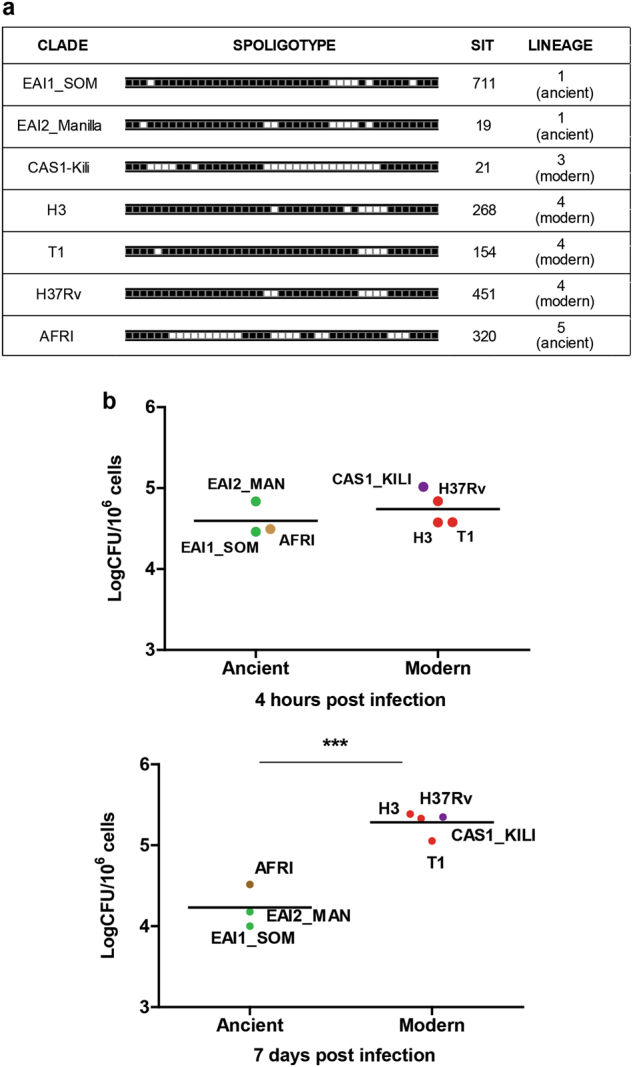
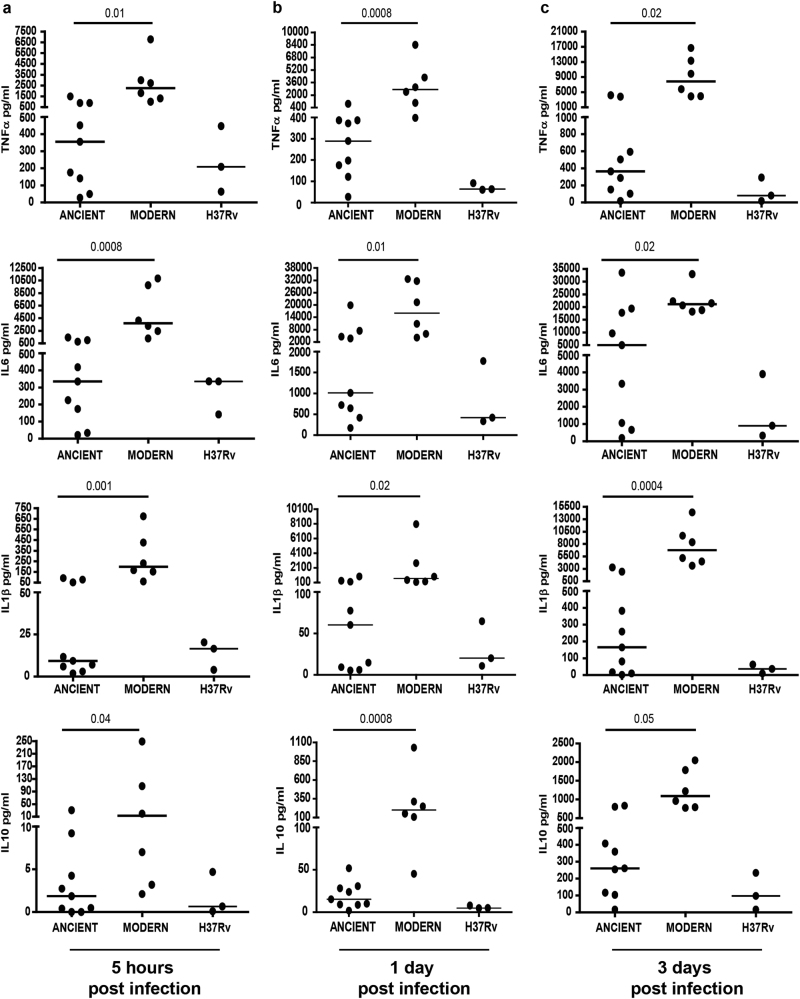
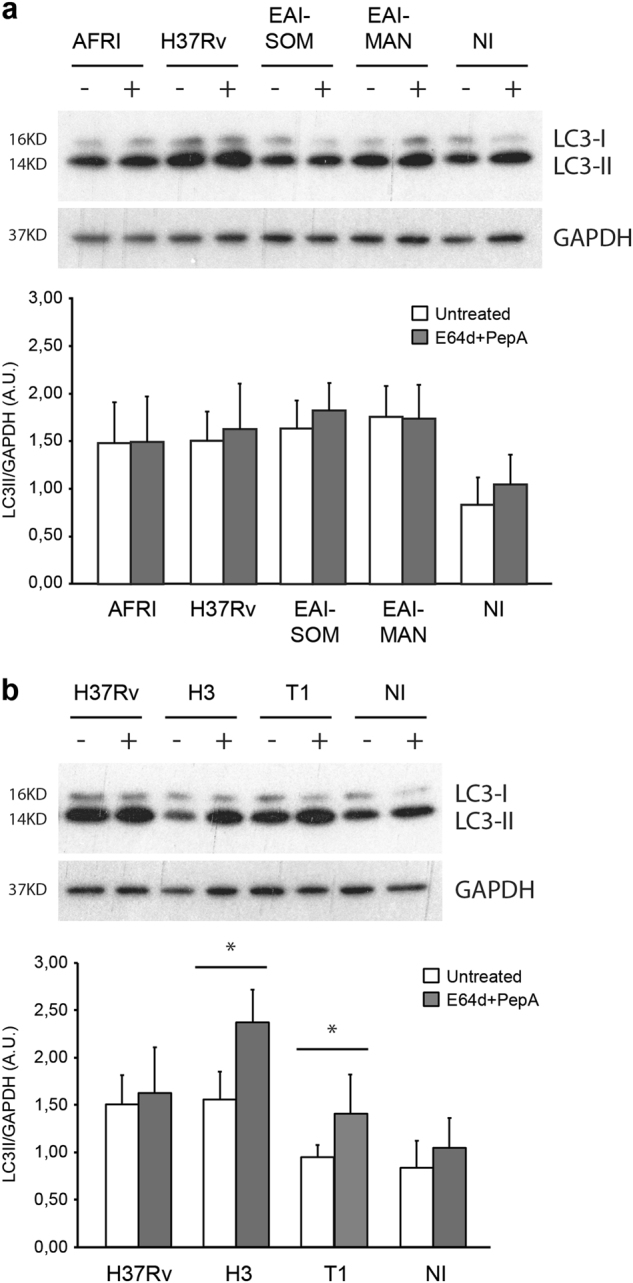
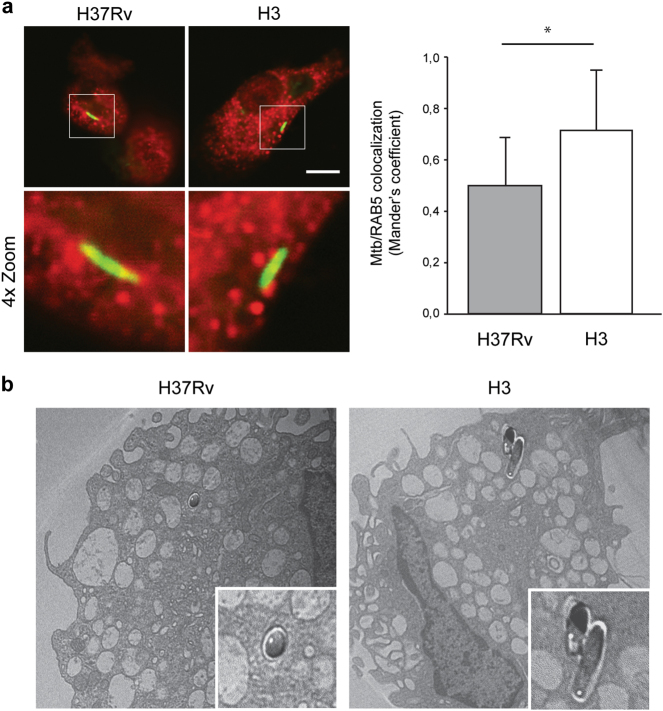
Mycobacterium tuberculosis (Mtb), the causative agent of tuberculosis (TB), has infected over 1.7 billion people worldwide and causes 1.4 million deaths annually. Recently, genome sequence analysis has allowed the reconstruction of Mycobacterium tuberculosis complex (MTBC) evolution, with the identification of seven phylogeographic lineages: four referred to as evolutionarily "ancient", and three "modern". The MTBC strains belonging to "modern" lineages appear to show enhanced virulence that may have warranted improved transmission in humans over ancient lineages through molecular mechanisms that remain to be fully characterized. To evaluate the impact of MTBC genetic diversity on the innate immune response, we analyzed intracellular bacterial replication, inflammatory cytokine levels, and autophagy response in human primary macrophages infected with MTBC clinical isolates belonging to the ancient lineages 1 and 5, and the modern lineage 4. We show that, when compared to ancient lineage 1 and 5, MTBC strains belonging to modern lineage 4 show a higher rate of replication, associated to a significant production of proinflammatory cytokines (IL-1β, IL-6, and TNF-α) and induction of a functional autophagy process. Interestingly, we found that the increased autophagic flux observed in macrophages infected with modern MTBC is due to an autocrine activity of the proinflammatory cytokine IL-1β, since autophagosome maturation is blocked by an interleukin-1 receptor antagonist. Unexpectedly, IL-1β-induced autophagy is not disadvantageous for the survival of modern Mtb strains, which reside within Rab5-positive phagosomal vesicles and avoid autophagosome engulfment. Altogether, these results suggest that autophagy triggered by inflammatory cytokines is compatible with a high rate of intracellular bacilli replication and may therefore contribute to the increased pathogenicity of the modern MTBC lineages.
结核分枝杆菌(Mtb)是结核病(TB)的病原体,已感染全球超过 17 亿人,并导致每年 140 万人死亡。最近,基因组序列分析允许重建结核分枝杆菌复合群(MTBC)的进化,确定了七个地理谱系:四个被称为进化“古老”,三个被称为“现代”。属于“现代”谱系的 MTBC 菌株似乎表现出更高的毒力,这可能通过仍有待充分表征的分子机制导致在人类中比古老谱系具有更高的传播率。为了评估 MTBC 遗传多样性对固有免疫反应的影响,我们分析了感染属于古老谱系 1 和 5 以及现代谱系 4 的 MTBC 临床分离株的人类原代巨噬细胞中的细菌内复制、炎症细胞因子水平和自噬反应。我们表明,与古老谱系 1 和 5 相比,属于现代谱系 4 的 MTBC 菌株表现出更高的复制率,与促炎细胞因子(IL-1β、IL-6 和 TNF-α)的显著产生和功能自噬过程的诱导相关。有趣的是,我们发现,感染现代 MTBC 的巨噬细胞中观察到的增加的自噬通量是由于促炎细胞因子 IL-1β的自分泌活性,因为白细胞介素-1 受体拮抗剂阻断了自噬体成熟。出乎意料的是,IL-1β诱导的自噬对现代 Mtb 菌株的存活没有不利影响,因为现代 Mtb 菌株存在于 Rab5 阳性吞噬小体中并且避免自噬体吞噬。总的来说,这些结果表明,炎症细胞因子触发的自噬与细胞内细菌复制率的提高是兼容的,因此可能有助于现代 MTBC 谱系的致病性增加。