Department of Educational Psychology, The Chinese University of Hong Kong, Hong Kong, Hong Kong, Special Administrative Region of China.
Mol Autism. 2018 May 24;9:34. doi: 10.1186/s13229-018-0217-5. eCollection 2018.
Past studies have shown that robot-based intervention was effective in improving gestural use in children with autism spectrum disorders (ASD). The present study examined whether children with ASD could catch up to the level of gestural production found in age-matched children with typical development and whether they showed an increase in verbal imitation after the completion of robot-based training. We also explored the cognitive and motor skills associated with gestural learning.
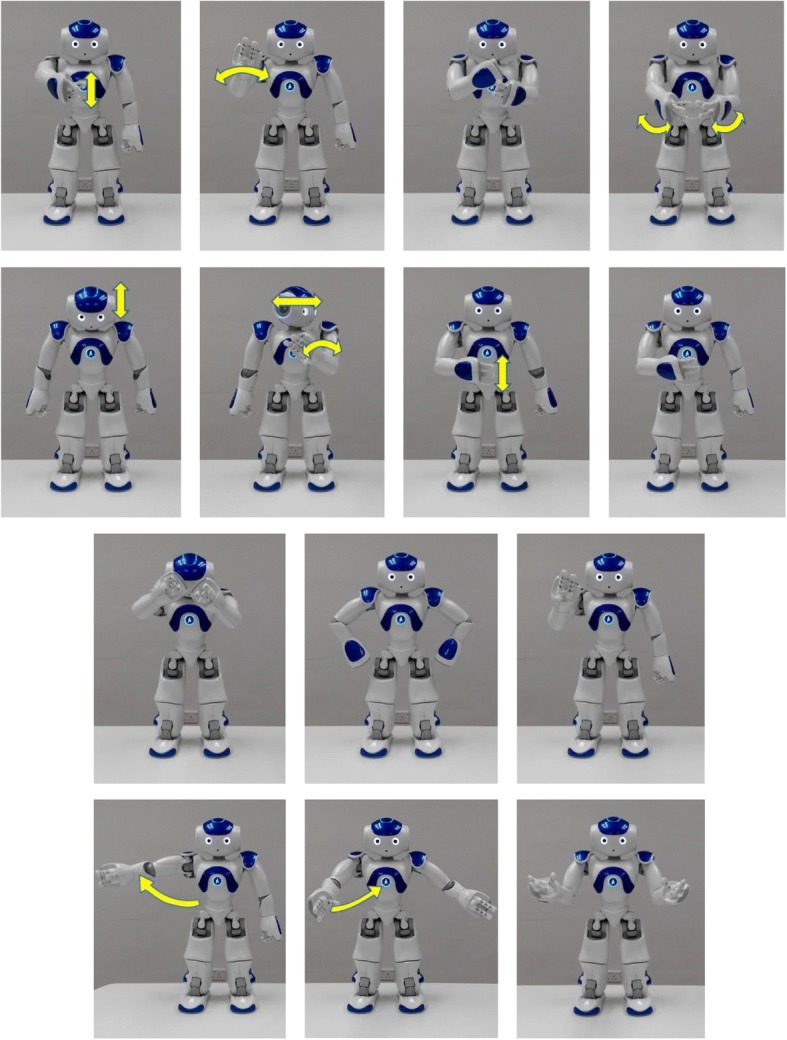
Children with ASD were randomly assigned to two groups. Four- to 6-year-old children with ASD in the intervention group ( = 15) received four 30-min robot-based gestural training sessions. In each session, a social robot, NAO, narrated five stories and gestured (e.g., both hands clapping for an awesome expression). Children with ASD were told to imitate the gestures during training. Age-matched children with ASD in the wait-list control group ( = 15) and age-matched children with typical development ( = 15) received the gestural training after the completion of research. Standardized pretests and posttests (both immediate and delayed) were administered to assess the accuracy and appropriateness of gestural production in both training and novel stories. Children's language and communication abilities, gestural recognition skills, fine motor proficiencies, and attention skills were also examined.
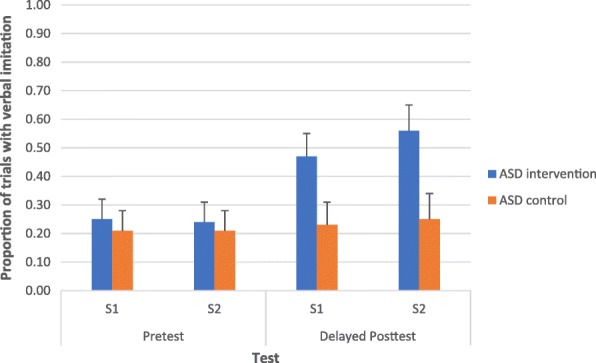
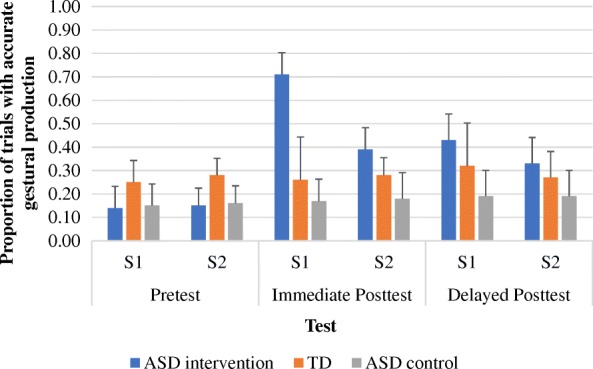
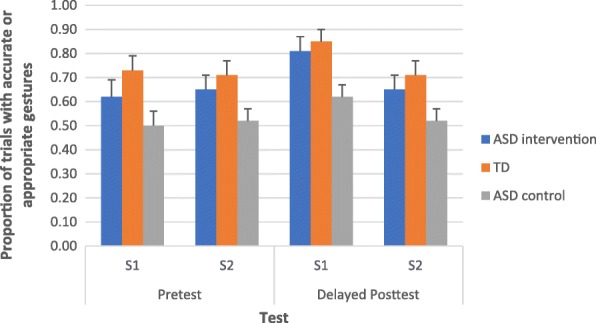
Children with ASD in the intervention condition were more likely to produce accurate or appropriate intransitive gestures in training and novel stories than those in the wait-list control. The positive learning outcomes were maintained in the delayed posttests. The level of gestural production accuracy in children with ASD in the delayed posttest of novel stories was comparable to that in children with typical development, suggesting that children with ASD could catch up to the level of gestural production found in children with typical development. Children with ASD in the intervention condition were also more likely to produce verbal markers while gesturing than those in the wait-list control. Gestural recognition skills were found to significantly predict the learning of gestural production accuracy in the children with ASD, with such relation partially mediated via spontaneous imitation.
Robot-based intervention may reduce the gestural delay in children with ASD in their early childhood.
过去的研究表明,基于机器人的干预措施在改善自闭症谱系障碍(ASD)儿童的手势使用方面是有效的。本研究考察了 ASD 儿童是否能够达到与典型发育儿童相当的手势产生水平,以及他们在完成基于机器人的训练后是否表现出言语模仿的增加。我们还探讨了与手势学习相关的认知和运动技能。
将 ASD 儿童随机分为两组。干预组( = 15)中的 4 至 6 岁 ASD 儿童接受了四次 30 分钟的基于机器人的手势训练。在每次训练中,一个社交机器人 NAO 讲述了五个故事并做出手势(例如,双手鼓掌表示很棒的表情)。要求 ASD 儿童在训练中模仿手势。等待名单对照组( = 15)中的 ASD 儿童和年龄匹配的典型发育儿童( = 15)在研究完成后接受了手势训练。在训练和新故事中,对儿童的手势产生的准确性和适当性进行了标准的前测和后测(即时和延迟)。还检查了儿童的语言和沟通能力、手势识别技能、精细运动能力和注意力技能。
与等待名单对照组相比,干预组中的 ASD 儿童在训练和新故事中更有可能产生准确或适当的非及物手势。积极的学习成果在延迟后测中得以维持。在新故事的延迟后测中,ASD 儿童的手势产生准确性水平与典型发育儿童相当,这表明 ASD 儿童可以赶上典型发育儿童的手势产生水平。干预组中的 ASD 儿童在手势时也更有可能产生口头标记,而等待名单对照组则不然。手势识别技能被发现可以显著预测 ASD 儿童的手势产生准确性学习,这种关系部分通过自发模仿来介导。
基于机器人的干预措施可能会减少 ASD 儿童在幼儿期的手势延迟。