Maqani Nazif, Fine Ryan D, Shahid Mehreen, Li Mingguang, Enriquez-Hesles Elisa, Smith Jeffrey S
Department of Biochemistry and Molecular Genetics, University of Virginia School of Medicine, Charlottesville, VA 22908.
Department of Laboratory Medicine, Jilin Medical University, Jilin, 132013, China.
Microb Cell. 2018 Feb 19;5(5):233-248. doi: 10.15698/mic2018.05.630.
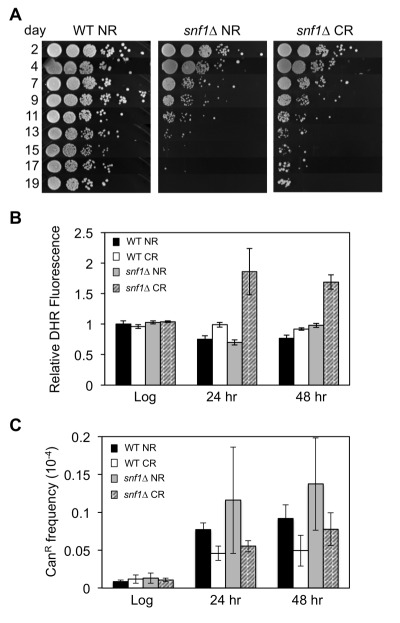
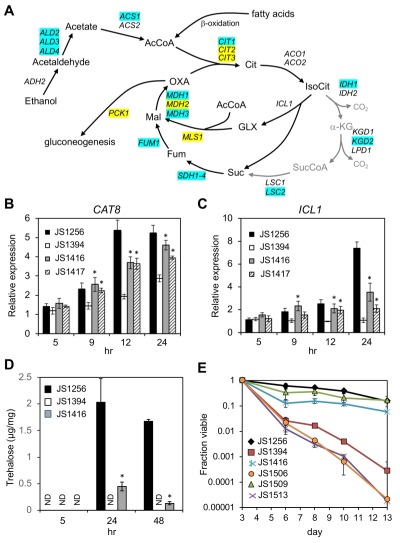
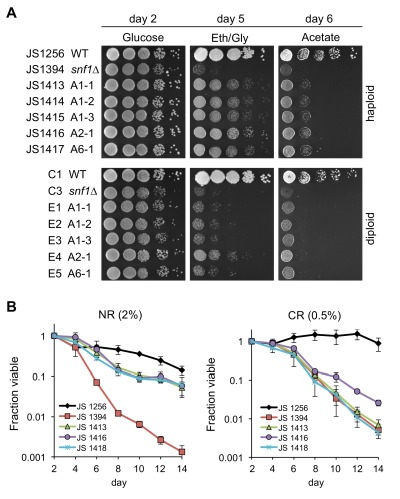
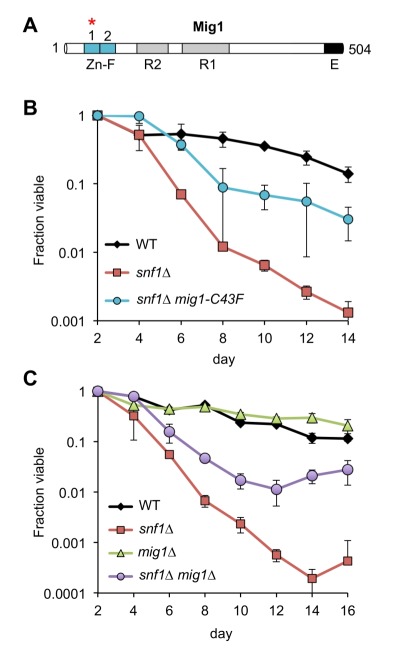
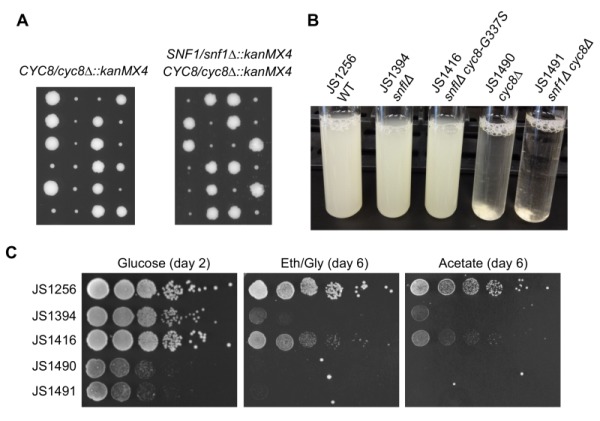
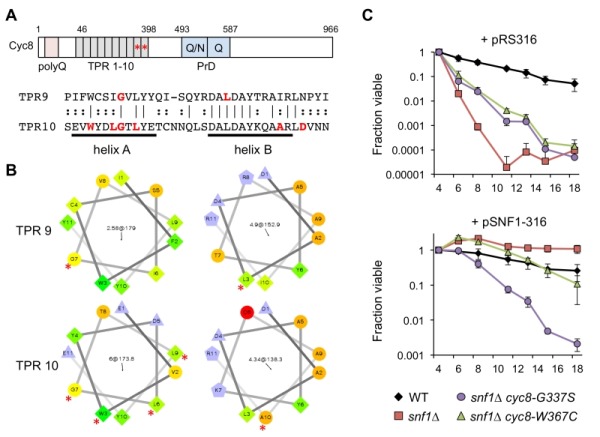
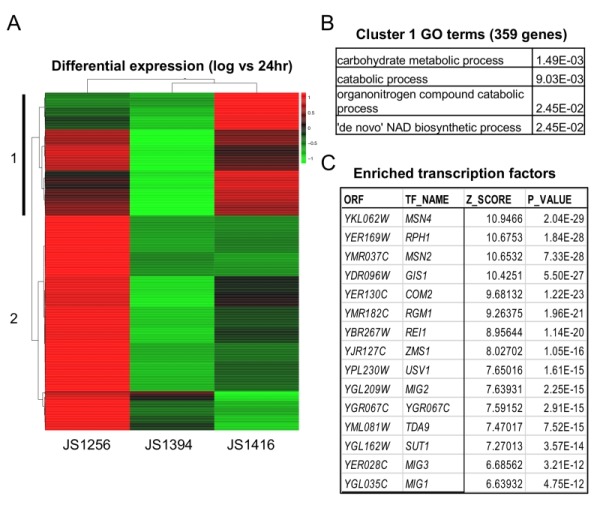
Chronologically aging yeast cells are prone to adaptive regrowth, whereby mutants with a survival advantage spontaneously appear and re-enter the cell cycle in stationary phase cultures. Adaptive regrowth is especially noticeable with short-lived strains, including those defective for SNF1, the homolog of mammalian AMP-activated protein kinase (AMPK). SNF1 becomes active in response to multiple environmental stresses that occur in chronologically aging cells, including glucose depletion and oxidative stress. SNF1 is also required for the extension of chronological lifespan (CLS) by caloric restriction (CR) as defined as limiting glucose at the time of culture inoculation. To identify specific downstream SNF1 targets responsible for CLS extension during CR, we screened for adaptive regrowth mutants that restore chronological longevity to a short-lived ∆ parental strain. Whole genome sequencing of the adapted mutants revealed missense mutations in TPR motifs 9 and 10 of the transcriptional co-repressor Cyc8 that specifically mediate repression through the transcriptional repressor Mig1. Another mutation occurred in itself, thus implicating the activation of Mig1-repressed genes as a key function of SNF1 in maintaining CLS. Consistent with this conclusion, the TPR mutations partially restored growth on alternative carbon sources and significantly extended CLS compared to the ∆ parent. Furthermore, TPR mutations reactivated multiple Mig1-repressed genes, including the transcription factor gene , which is responsible for activating genes of the glyoxylate and gluconeogenesis pathways. Deleting completely blocked CLS extension by the TPR mutations on CLS, identifying these pathways as key Snf1-regulated CLS determinants.
按时间顺序老化的酵母细胞易于发生适应性再生长,即具有生存优势的突变体自发出现并在稳定期培养物中重新进入细胞周期。适应性再生长在短命菌株中尤为明显,包括那些在SNF1(哺乳动物AMP激活蛋白激酶(AMPK)的同源物)方面存在缺陷的菌株。SNF1在响应按时间顺序老化的细胞中出现的多种环境应激时变得活跃,包括葡萄糖耗尽和氧化应激。热量限制(CR)(定义为在培养接种时限制葡萄糖)延长按时间顺序的寿命(CLS)也需要SNF1。为了鉴定在CR期间负责CLS延长的特定下游SNF1靶标,我们筛选了能将按时间顺序的寿命恢复到短命Δ亲本菌株的适应性再生长突变体。对适应性突变体的全基因组测序揭示了转录共抑制因子Cyc8的TPR基序9和10中的错义突变,这些基序通过转录抑制因子Mig1特异性介导抑制作用。另一个突变发生在其自身,因此暗示Mig1抑制基因的激活是SNF1在维持CLS中的关键功能。与这一结论一致,TPR突变部分恢复了在替代碳源上的生长,并且与Δ亲本相比显著延长了CLS。此外,TPR突变重新激活了多个Mig1抑制基因,包括转录因子基因,该基因负责激活乙醛酸和糖异生途径的基因。完全删除该基因会阻断TPR突变对CLS的CLS延长作用,将这些途径确定为关键的Snf1调节的CLS决定因素。