Department of Genetics, Faculty of Agriculture, Ain Shams University, Shoubra El-Khaymah, Cairo, 11241, Egypt.
Center for Functional Genomics of Microbes, Abteilung Molekulare Genetik Und Infektionsbiologie, Felix-Hausdorff-Straße 8, 17487, Greifswald, Germany.
Curr Genet. 2020 Dec;66(6):1191-1203. doi: 10.1007/s00294-020-01109-4. Epub 2020 Sep 26.
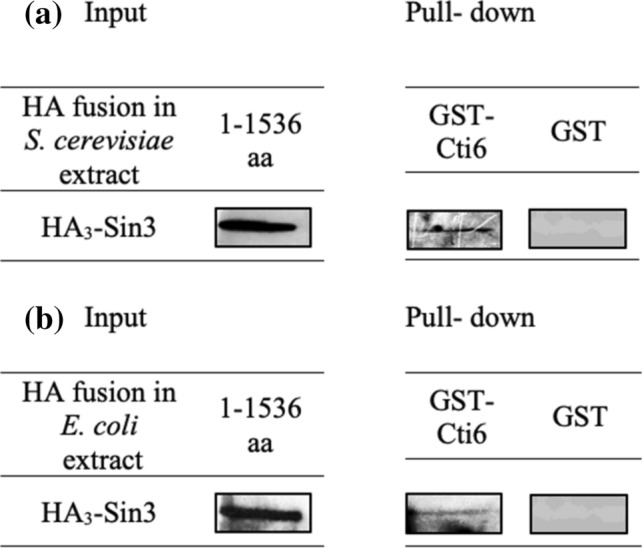
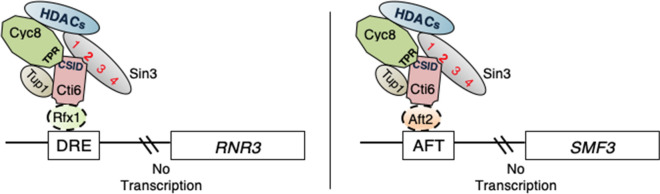
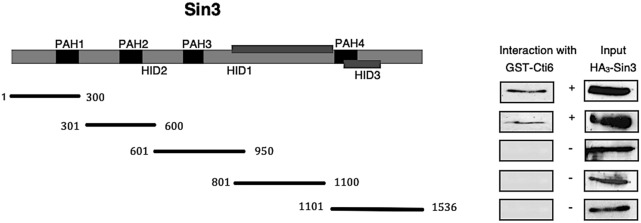
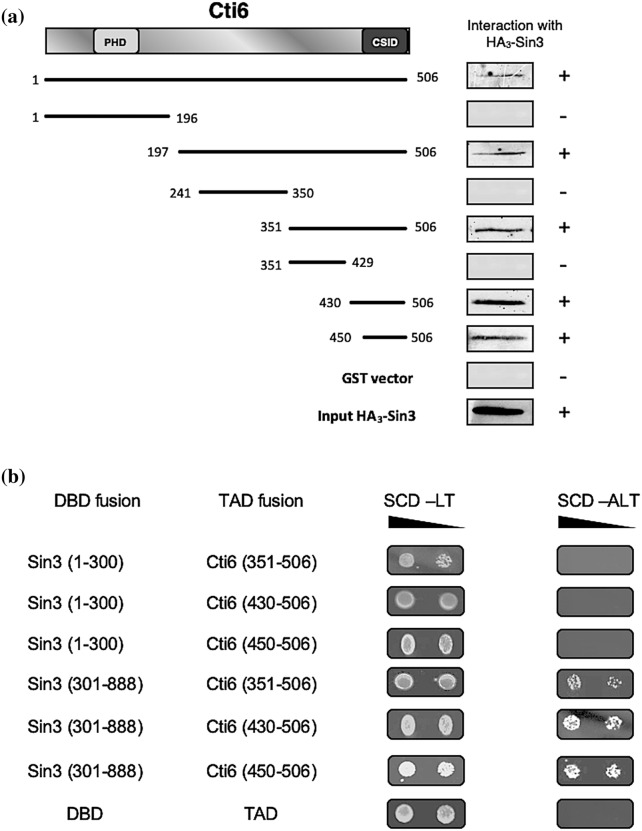
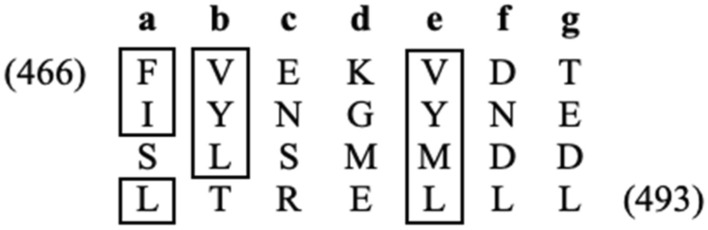
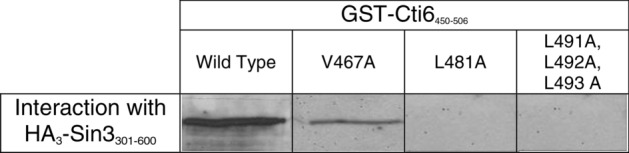
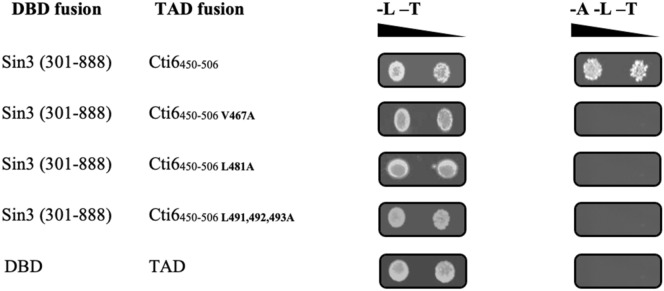
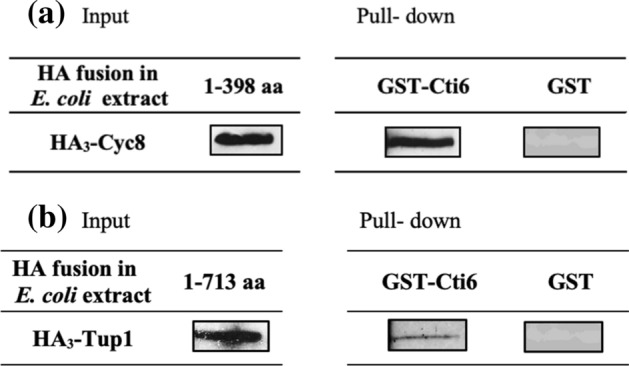
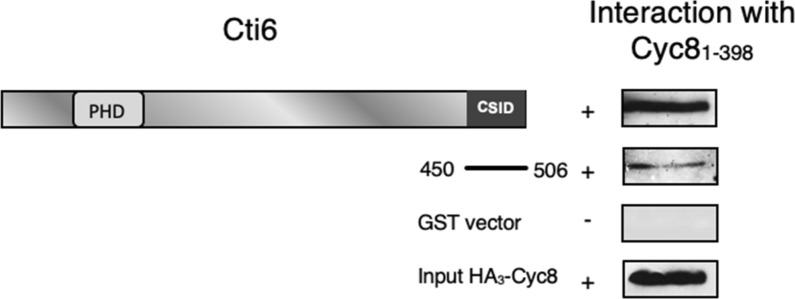
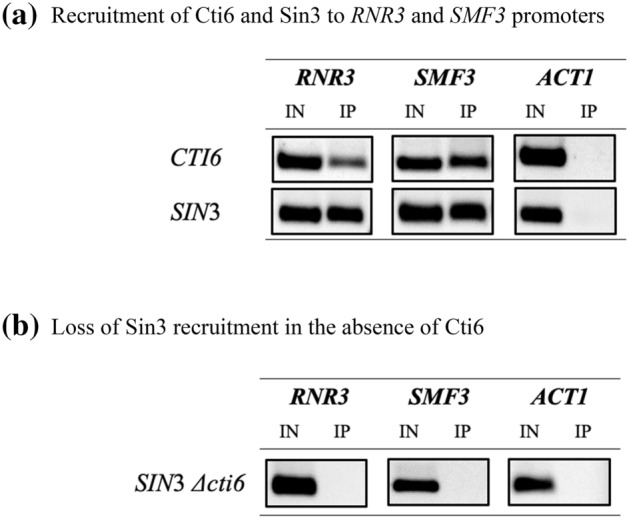
Mapping of effective protein domains is a demanding stride to disclose the functional relationship between regulatory complexes. Domain analysis of protein interactions is requisite for understanding the pleiotropic responses of the respective partners. Cti6 is a multifunctional regulator for which we could show recruitment of co-repressors Sin3, Cyc8 and Tup1. However, the responsible core domain tethering Cti6 to these co-repressors is poorly understood. Here, we report the pivotal domain of Cti6 that is indispensable for co-repressor recruitment. We substantiated that amino acids 450-506 of Cti6 bind PAH2 of Sin3. To analyse this Cti6-Sin3 Interaction Domain (CSID) in more detail, selected amino acids within CSID were replaced by alanine. It is revealed that hydrophobic amino acids V467, L481 and L491 L492 L493 are important for Cti6-Sin3 binding. In addition to PAH2 of Sin3, CSID also binds to tetratricopeptide repeats (TPR) of Cyc8. Indeed, we could demonstrate Cti6 recruitment to promoters of genes, such as RNR3 and SMF3, containing iron-responsive elements (IRE). Importantly, Sin3 is also recruited to these promoters but only in the presence of functional Cti6. Our findings provide novel insights toward the critical interaction domain in the co-regulator Cti6, which is a component of regulatory complexes that are closely related to chromatin architecture and the epigenetic status of genes that are regulated by pleiotropic co-repressors.
有效蛋白质结构域的定位是揭示调控复合物之间功能关系的重要步骤。蛋白质相互作用的结构域分析对于理解各自伙伴的多效响应是必要的。Cti6 是一种多功能调节剂,我们已经证明它可以招募共抑制因子 Sin3、Cyc8 和 Tup1。然而,将 Cti6 与这些共抑制因子结合的负责核心结构域仍知之甚少。在这里,我们报告了 Cti6 的关键结构域,该结构域对于共抑制因子的招募是必不可少的。我们证实 Cti6 的 450-506 个氨基酸与 Sin3 的 PAH2 结合。为了更详细地分析这个 Cti6-Sin3 相互作用结构域(CSID),我们用丙氨酸取代了 CSID 内的选定氨基酸。结果表明,疏水氨基酸 V467、L481 和 L491、L492 和 L493 对于 Cti6-Sin3 结合是重要的。除了 Sin3 的 PAH2 之外,CSID 还与 Cyc8 的四肽重复(TPR)结合。事实上,我们已经证明 Cti6 可以招募到含有铁反应元件(IRE)的基因的启动子,如 RNR3 和 SMF3。重要的是,Sin3 也可以被招募到这些启动子上,但只有在功能性 Cti6 的存在下。我们的研究结果为共调节剂 Cti6 的关键相互作用结构域提供了新的见解,Cti6 是与染色质结构和受多效共抑制因子调控的基因的表观遗传状态密切相关的调控复合物的组成部分。