Michigan Bone and Mineral Clinic, P.C., Detroit, Michigan.
Division of Metabolism, Endocrinology and Diabetes, University of Michigan, Ann Arbor, Michigan.
J Clin Endocrinol Metab. 2018 Aug 1;103(8):2949-2957. doi: 10.1210/jc.2018-00163.
In women with postmenopausal osteoporosis, we investigated the effects of 24 months of treatment with alendronate (ALN) following 18 months of treatment with abaloparatide (ABL) or placebo (PBO).
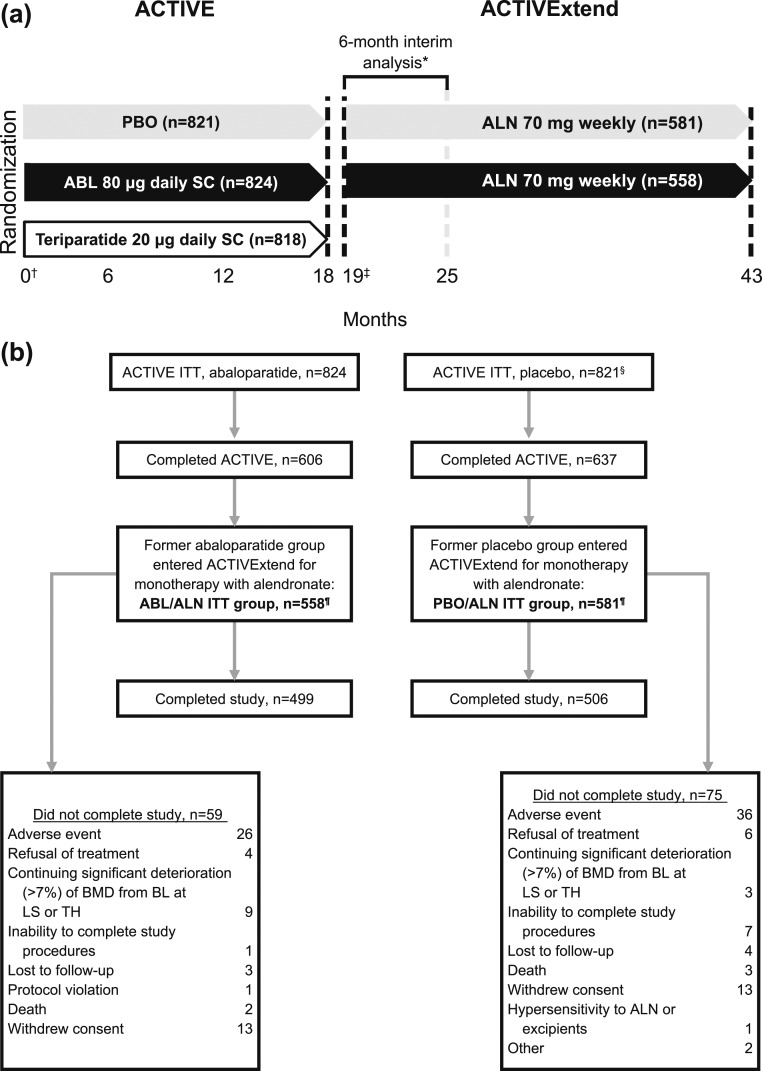
Women who completed ABL or PBO treatment in ACTIVE were eligible to receive up to 24 months of ALN. We evaluated the incidence of vertebral and nonvertebral fractures and changes in bone mineral density (BMD) during the entire 43-month period from ACTIVE baseline to the end of ACTIVExtend and for the 24-month extension only.
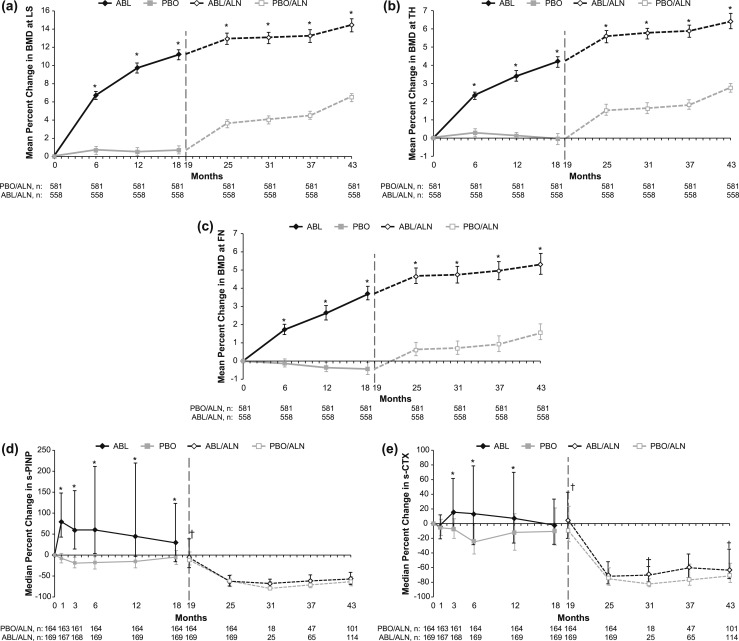
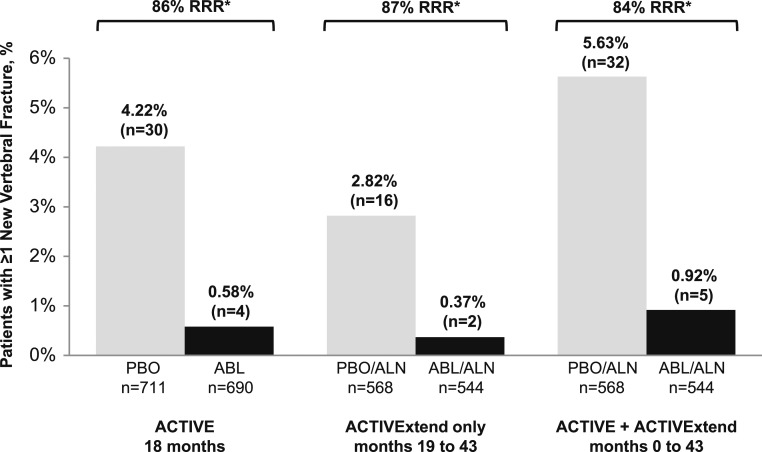
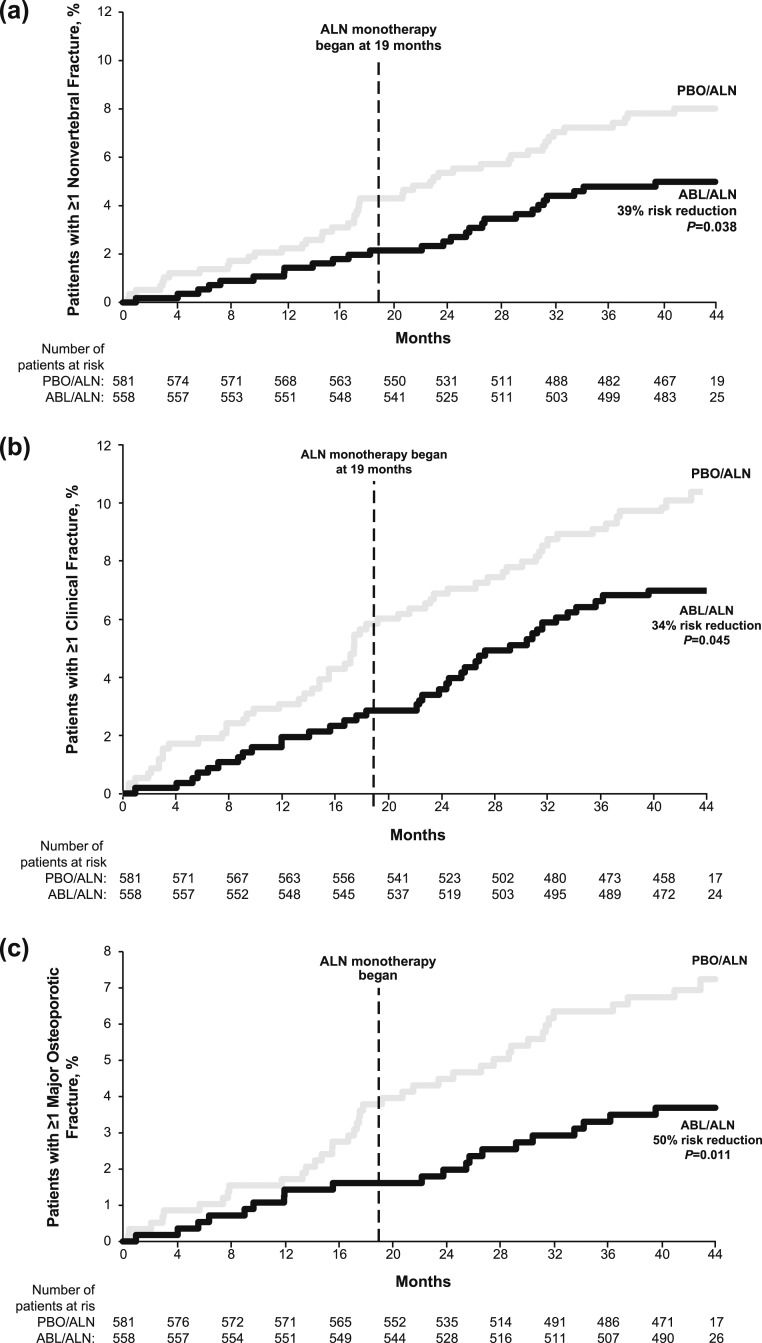
Five hundred fifty-eight women from ACTIVE's ABL group and 581 from its PBO group (92% of ABL and PBO completers) were enrolled. During the full 43-month treatment period, 0.9% of evaluable women in the ABL/ALN group experienced a new radiographic vertebral fracture vs 5.6% of women in the PBO/ALN group, an 84% relative risk reduction (RRR, P < 0.001). Kaplan-Meier incidence rates for other reported fracture types were significantly lower for ABL/ALN vs PBO/ALN (all P < 0.05). Gains in BMD achieved during ACTIVE were further increased during ACTIVExtend. For ACTIVExtend only, RRR for vertebral fractures was 87% with ABL/ALN vs PBO/ALN (P = 0.001). Adverse events were similar between groups. A supplemental analysis for regulatory authorities found no hip fractures in the ABL/ALN group vs five in the PBO/ALN group.
Eighteen months of ABL followed by 24 months of ALN reduced the risk of vertebral, nonvertebral, clinical, and major osteoporotic fractures and increased BMD. Sequential ABL followed by ALN appears to be an effective treatment option for postmenopausal women at risk for osteoporosis-related fractures.
在绝经后骨质疏松症女性中,我们研究了阿仑膦酸钠(ALN)治疗 24 个月对阿巴洛肽(ABL)或安慰剂(PBO)治疗 18 个月的后续影响。
完成 ACTIVE 中 ABL 或 PBO 治疗的女性有资格接受长达 24 个月的 ALN 治疗。我们评估了整个 43 个月的期间(从 ACTIVE 基线到 ACTIVExtend 结束)和仅 24 个月延长期间的椎体和非椎体骨折发生率以及骨密度(BMD)变化。
来自 ACTIVE 的 ABL 组的 558 名女性和来自其 PBO 组的 581 名女性(ABL 和 PBO 完成者的 92%)被纳入研究。在整个 43 个月的治疗期间,ABL/ALN 组中可评估女性中有 0.9%发生新的放射性椎体骨折,而 PBO/ALN 组中有 5.6%,相对风险降低 84%(RRR,P<0.001)。ABL/ALN 与 PBO/ALN 相比,其他报告的骨折类型的 Kaplan-Meier 发生率显著较低(所有 P<0.05)。在 ACTIVExtend 期间,在 ACTIVE 期间获得的 BMD 增加进一步增加。仅对于 ACTIVExtend,ABL/ALN 与 PBO/ALN 相比,椎体骨折的 RRR 为 87%(P=0.001)。两组的不良事件相似。为监管机构进行的补充分析发现,ABL/ALN 组无髋部骨折,而 PBO/ALN 组有 5 例。
18 个月的 ABL 后再进行 24 个月的 ALN 治疗可降低椎体、非椎体、临床和主要骨质疏松性骨折的风险并增加 BMD。ABL 序贯 ALN 似乎是一种有效的治疗选择,适用于有骨质疏松性骨折风险的绝经后女性。