Centro de Investigaciones Biológicas, CSIC, Ramiro de Maeztu 9, E-28040, Madrid, Spain.
Barcelona Supercomputing Center, Jordi Girona 31, E-08034, Barcelona, Spain.
Sci Rep. 2018 May 25;8(1):8121. doi: 10.1038/s41598-018-26445-x.
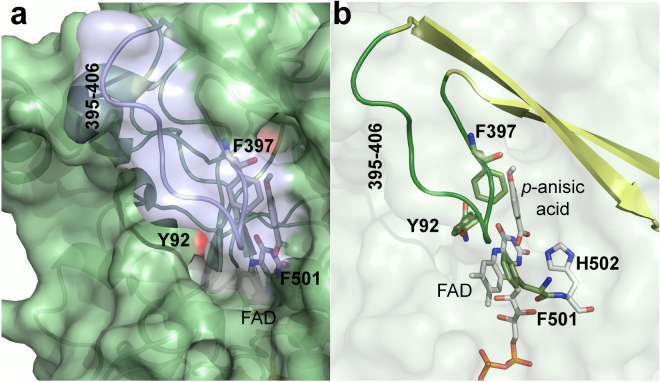
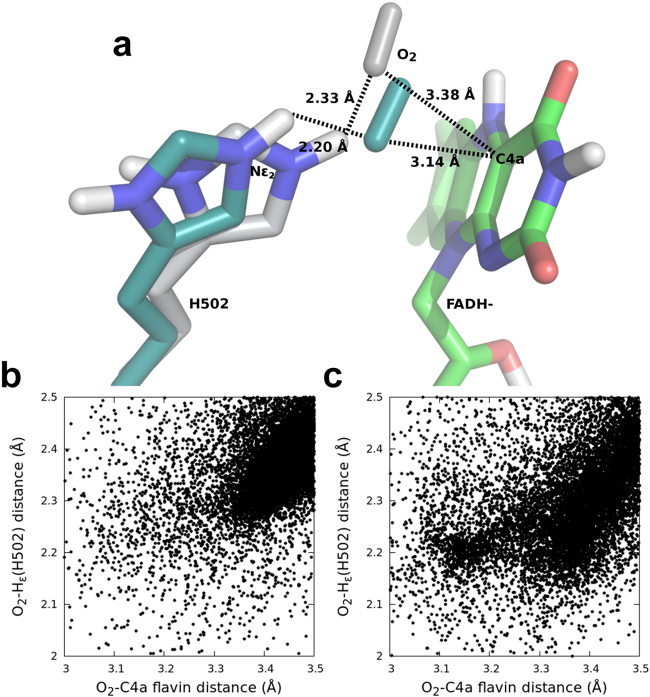
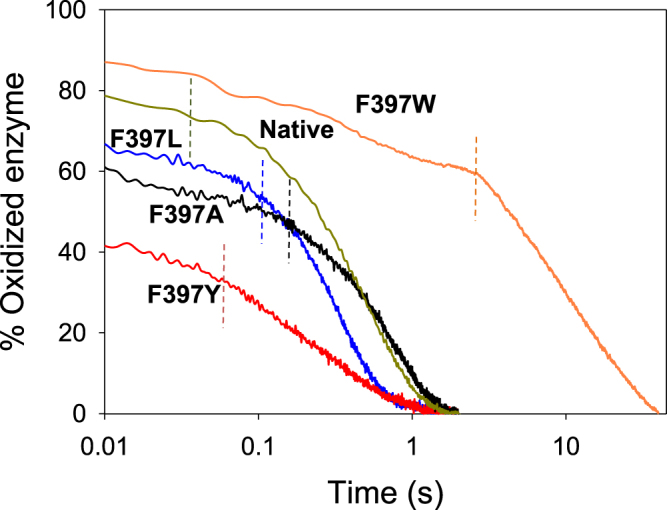
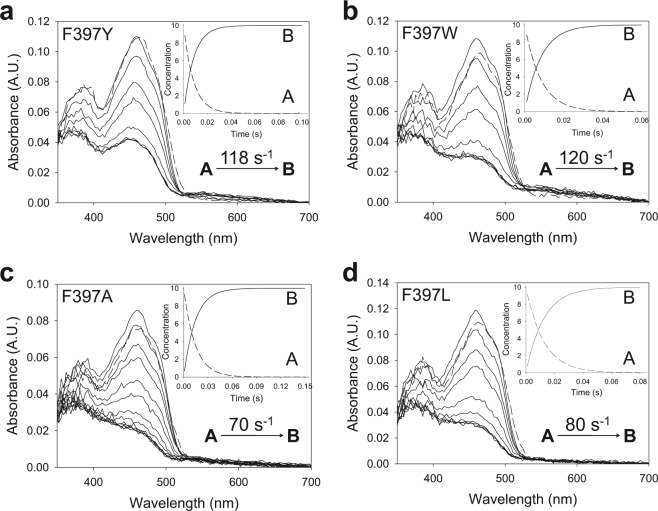
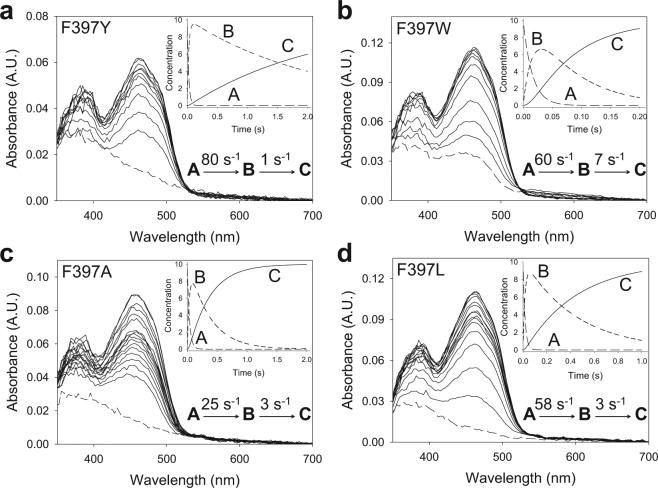
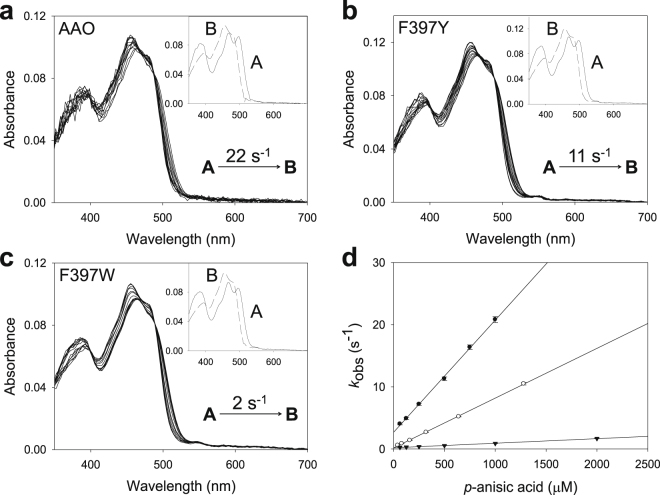
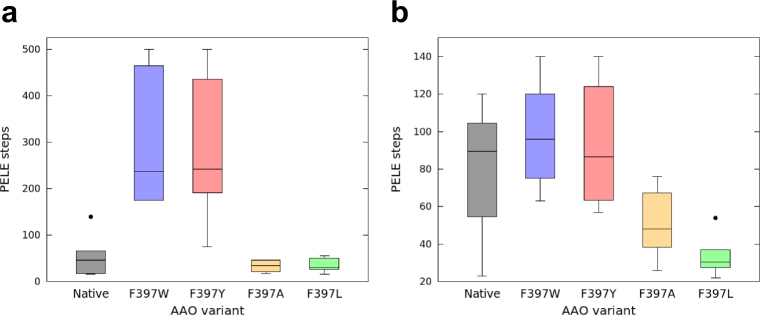
Aryl-alcohol oxidase (AAO) has demonstrated to be an enzyme with a bright future ahead due to its biotechnological potential in deracemisation of chiral compounds, production of bioplastic precursors and other reactions of interest. Expanding our understanding on the AAO reaction mechanisms, through the investigation of its structure-function relationships, is crucial for its exploitation as an industrial biocatalyst. In this regard, previous computational studies suggested an active role for AAO Phe397 at the active-site entrance. This residue is located in a loop that partially covers the access to the cofactor forming a bottleneck together with two other aromatic residues. Kinetic and affinity spectroscopic studies, complemented with computational simulations using the recently developed adaptive-PELE technology, reveal that the Phe397 residue is important for product release and to help the substrates attain a catalytically relevant position within the active-site cavity. Moreover, removal of aromaticity at the 397 position impairs the oxygen-reduction activity of the enzyme. Experimental and computational findings agree very well in the timing of product release from AAO, and the simulations help to understand the experimental results. This highlights the potential of adaptive-PELE to provide answers to the questions raised by the empirical results in the study of enzyme mechanisms.
芳醇氧化酶(AAO)因其在手性化合物的外消旋化、生物塑料前体的生产和其他感兴趣的反应中的生物技术潜力,被证明是一种具有广阔前景的酶。通过研究其结构-功能关系,扩展我们对 AAO 反应机制的理解,对于将其作为工业生物催化剂的开发至关重要。在这方面,先前的计算研究表明 AAO Phe397 在活性位点入口处具有积极作用。该残基位于部分覆盖辅因子形成瓶颈的环中,与另外两个芳香族残基一起形成瓶颈。通过使用最近开发的自适应 PELE 技术进行的动力学和亲和光谱研究以及计算模拟,揭示了 Phe397 残基对于产物释放和帮助底物在活性位点腔体内达到催化相关位置非常重要。此外,去除 397 位的芳构性会损害酶的氧还原活性。实验和计算结果在 AAO 产物释放的时间上非常吻合,模拟有助于理解实验结果。这突出了自适应 PELE 提供答案的潜力,以解决研究酶机制时经验结果提出的问题。