Division of Animal Sciences, University of Missouri, Columbia, MO, 65211-5300, USA.
Laboratory of Reproductive Biology, Institute of Biotechnology, Czech Academy of Sciences, v.v.i., 25242, Vestec, Czech Republic.
Nat Commun. 2018 May 25;9(1):2061. doi: 10.1038/s41467-018-04523-y.
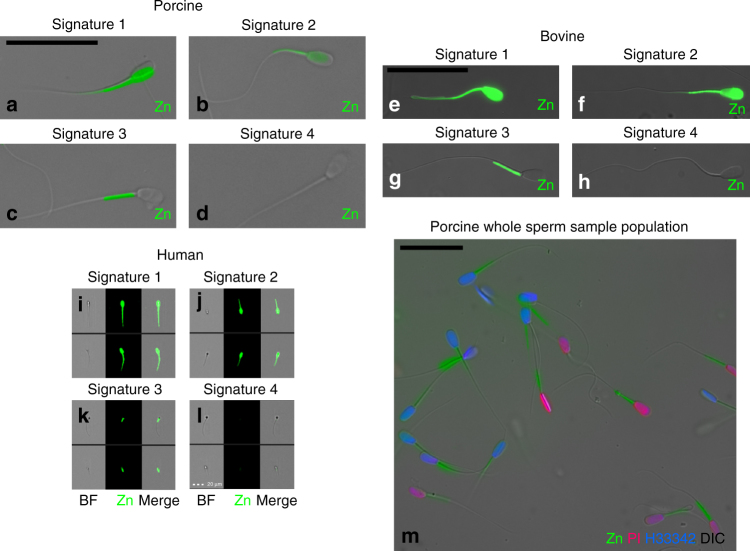
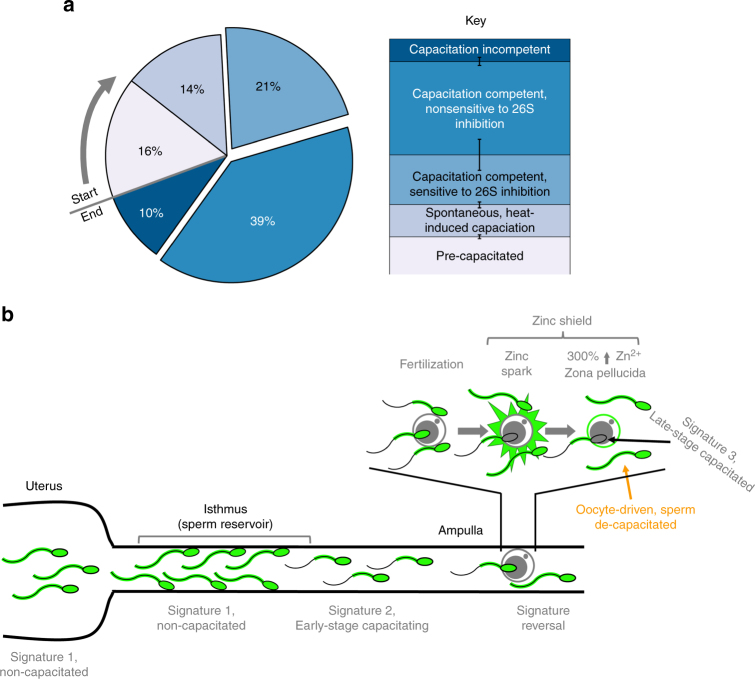
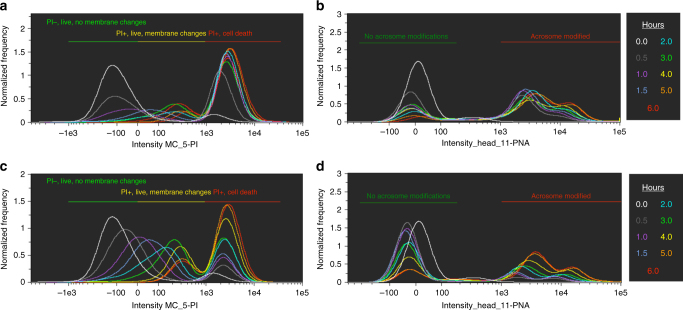
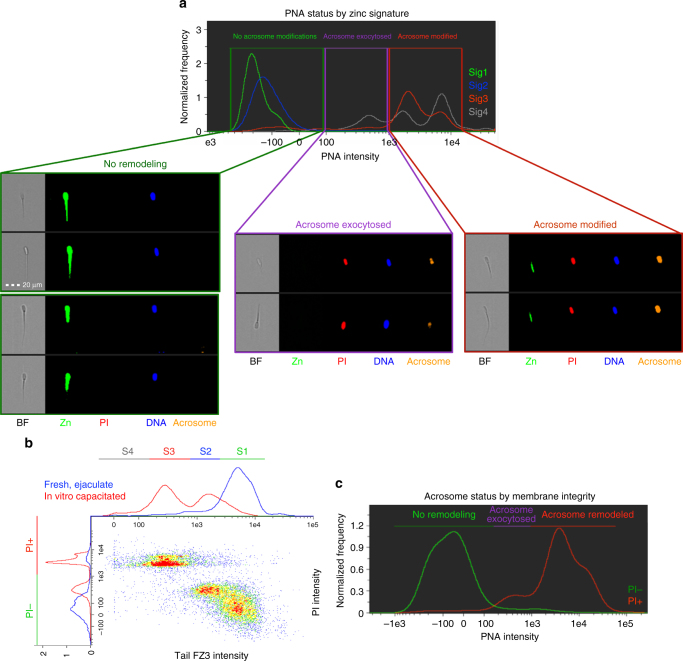
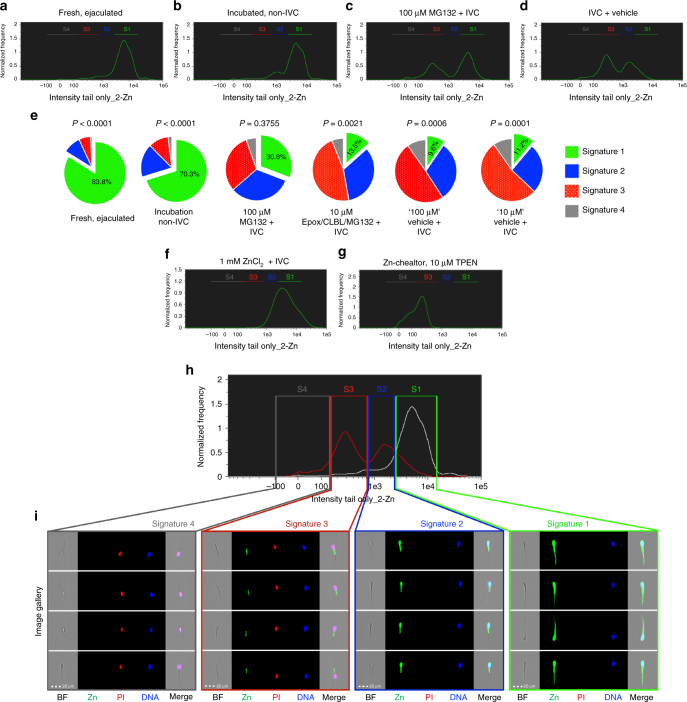
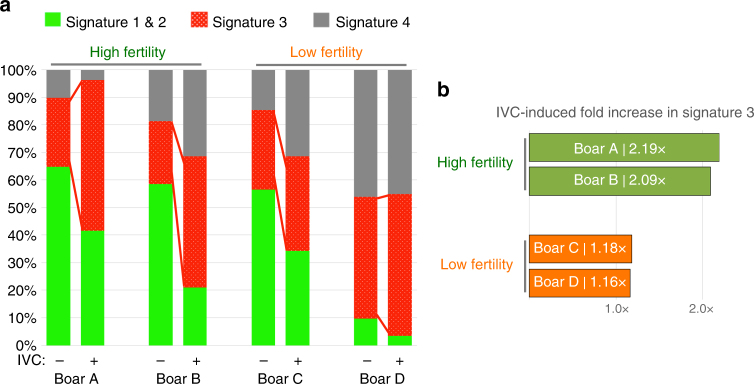
Sperm capacitation, the ultimate maturation event preparing mammalian spermatozoa for fertilization, was first described in 1951, yet its regulatory mechanisms remain poorly understood. The capacitation process encompasses an influx of bicarbonate and calcium ions, removal of decapacitating factors, changes of pH and sperm proteasomal activities, and the increased protein tyrosine phosphorylation. Here, we document a novel biological phenomenon of a unique zinc (Zn) ion redistribution associated with mammalian sperm in vitro capacitation (IVC). Using image-based flow cytometry (IBFC), we identified four distinct types of sperm zinc ion distribution patterns (further zinc signature) and their changes during IVC. The zinc signature was altered after sperm capacitation, reduced by proteasomal inhibitors, removed by zinc chelators, and maintained with addition of external ZnCl. These findings represent a fundamental shift in the understanding of mammalian fertilization, paving the way for improved semen analysis, in vitro fertilization (IVF), and artificial insemination (AI).
精子获能,即哺乳动物精子为受精做准备的最终成熟事件,于 1951 年首次被描述,但它的调控机制仍知之甚少。获能过程包括碳酸氢根和钙离子内流、去屏蔽因子去除、pH 值和精子蛋白酶体活性的变化,以及蛋白质酪氨酸磷酸化的增加。在这里,我们记录了一种与哺乳动物体外获能(IVC)相关的独特锌(Zn)离子重新分布的新生物学现象。使用基于图像的流式细胞术(IBFC),我们确定了 IVC 过程中精子锌离子分布模式(进一步的锌特征)的四种不同类型及其变化。锌特征在精子获能后发生改变,被蛋白酶体抑制剂减少,被锌螯合剂去除,并用外部 ZnCl 维持。这些发现代表了对哺乳动物受精的理解的根本性转变,为改进精液分析、体外受精(IVF)和人工授精(AI)铺平了道路。