Department of Bioengineering, University of Pittsburgh, Pittsburgh, Pa; McGowan Institute for Regenerative Medicine, University of Pittsburgh, Pittsburgh, Pa; Artificial Heart Program, University of Pittsburgh Medical Center, Pittsburgh, Pa.
Department of Bioengineering, University of Pittsburgh, Pittsburgh, Pa; McGowan Institute for Regenerative Medicine, University of Pittsburgh, Pittsburgh, Pa; Children's Hospital of Pittsburgh, University of Pittsburgh Medical Center, Pittsburgh, Pa; Department of Cardiothoracic Surgery, University of Pittsburgh, Pittsburgh, Pa.
J Thorac Cardiovasc Surg. 2018 Oct;156(4):1643-1651.e7. doi: 10.1016/j.jtcvs.2018.04.062. Epub 2018 Apr 21.
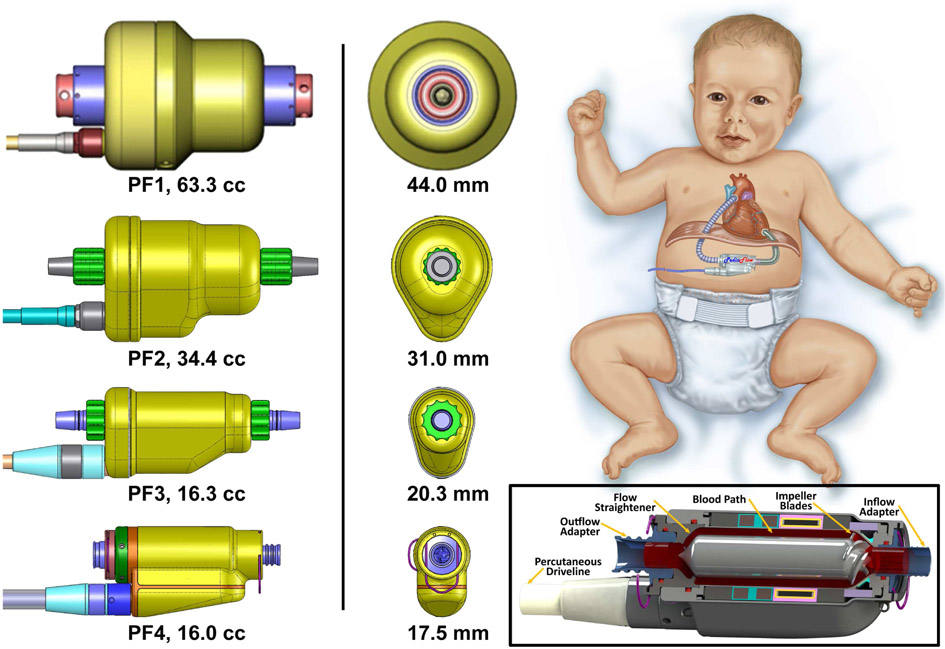
The PediaFlow (HeartWare International, Inc, Framingham, Mass) is a miniature, implantable, rotodynamic, fully magnetically levitated, continuous-flow pediatric ventricular assist device. The fourth-generation PediaFlow was evaluated in vitro and in vivo to characterize performance and biocompatibility.
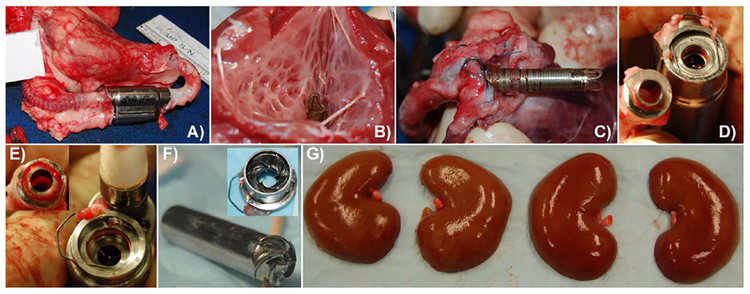
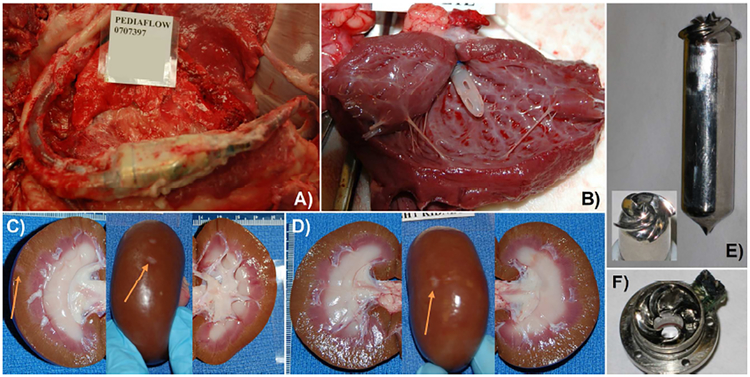
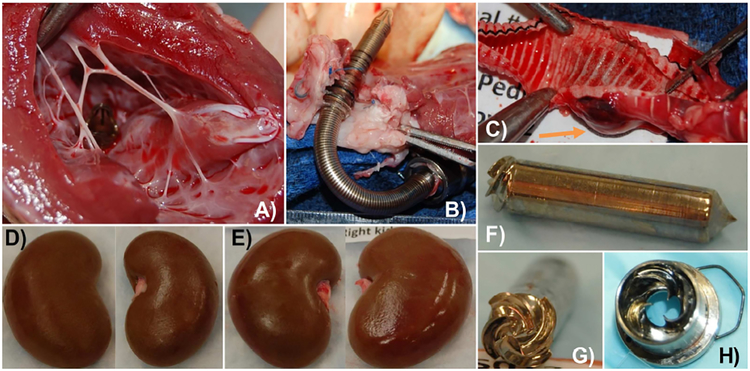
Supported by 2 National Heart, Lung, and Blood Institute contract initiatives to address the limited options available for pediatric patients with congenital or acquired cardiac disease, the PediaFlow was developed with the intent to provide chronic cardiac support for infants as small as 3 kg. The University of Pittsburgh-led Consortium evaluated fourth-generation PediaFlow prototypes both in vitro and within a preclinical ovine model (n = 11). The latter experiments led to multiple redesigns of the inflow cannula and outflow graft, resulting in the implantable design represented in the most recent implants (n = 2).
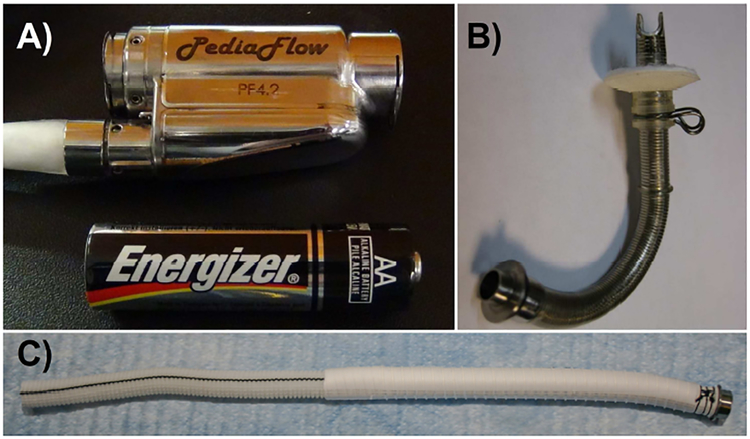
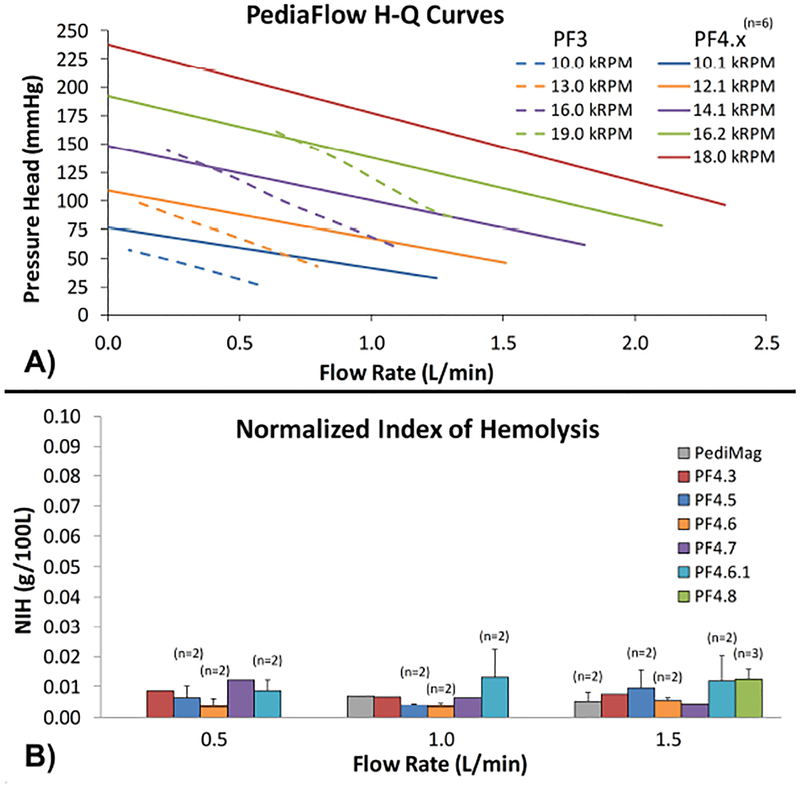
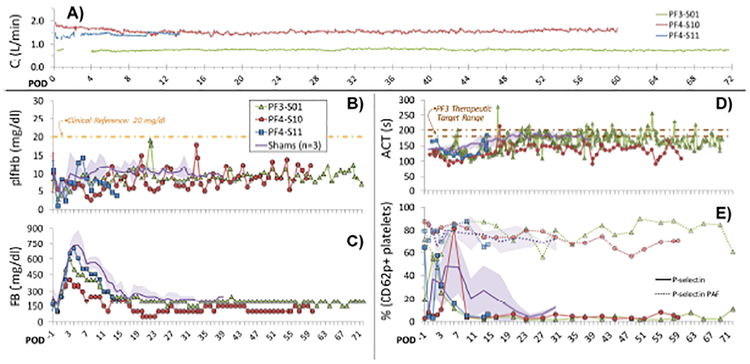
With more than a decade of extensive computational and experimental efforts spanning 4 device iterations, the AA battery-sized fourth-generation PediaFlow has an operating range of 0.5 to 1.5 L/min with minimal hemolysis in vitro and excellent hemocompatibility (eg, minimal hemolysis and platelet activation) in vivo. The pump and finalized accompanying implantable components demonstrated preclinical hemodynamics suitable for the intended pediatric application for up to 60 days.
Designated a Humanitarian Use Device for "mechanical circulatory support in neonates, infants, and toddlers weighing up to 20 kg as a bridge to transplant, a bridge to other therapeutic intervention such as surgery, or as a bridge to recovery" by the Food and Drug Administration, these initial results document the biocompatibility and potential of the fourth-generation PediaFlow design to provide chronic pediatric cardiac support.
PediaFlow(HeartWare International,Inc,Framingham,Mass)是一种微型、可植入、旋转动力、全磁悬浮、连续血流的儿科心室辅助装置。第四代 PediaFlow 在体外和体内进行了评估,以表征其性能和生物相容性。
在国家心脏、肺和血液研究所的两项合同倡议的支持下,为了解决患有先天性或后天性心脏病的儿科患者可用选择有限的问题,开发了 PediaFlow,旨在为体重低至 3 公斤的婴儿提供慢性心脏支持。匹兹堡大学领导的联盟在体外和在一个临床前绵羊模型中评估了第四代 PediaFlow 原型(n=11)。后者的实验导致了流入管和流出移植物的多次重新设计,导致了最近植入物中代表的可植入设计(n=2)。
经过十多年的广泛计算和实验努力,跨越 4 个设备迭代,AA 电池大小的第四代 PediaFlow 的工作范围为 0.5 至 1.5 L/min,体外溶血最小,体内血液相容性极佳(例如,溶血和血小板激活最小)。该泵和最终配套的可植入组件在长达 60 天的时间内展示了适合预期儿科应用的临床前血液动力学。
美国食品和药物管理局指定第四代 PediaFlow 为“用于体重不超过 20 公斤的新生儿、婴儿和幼儿的机械循环支持,作为移植的桥梁,作为其他治疗干预(如手术)的桥梁,或作为恢复的桥梁”的人道主义使用设备,这些初步结果证明了第四代 PediaFlow 设计的生物相容性和为慢性儿科心脏支持提供的潜力。