Montalvo E A, Parmley R T, Grose C
J Virol. 1985 Mar;53(3):761-70. doi: 10.1128/JVI.53.3.761-770.1985.
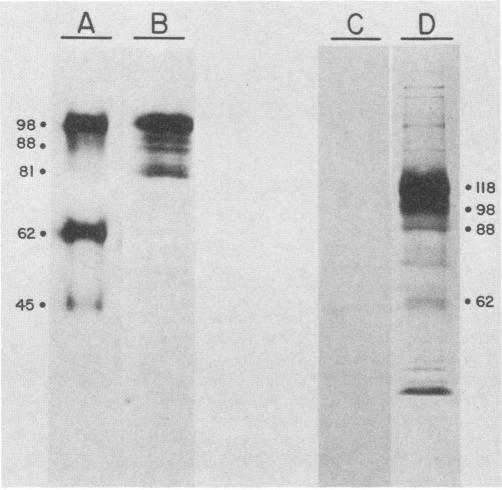
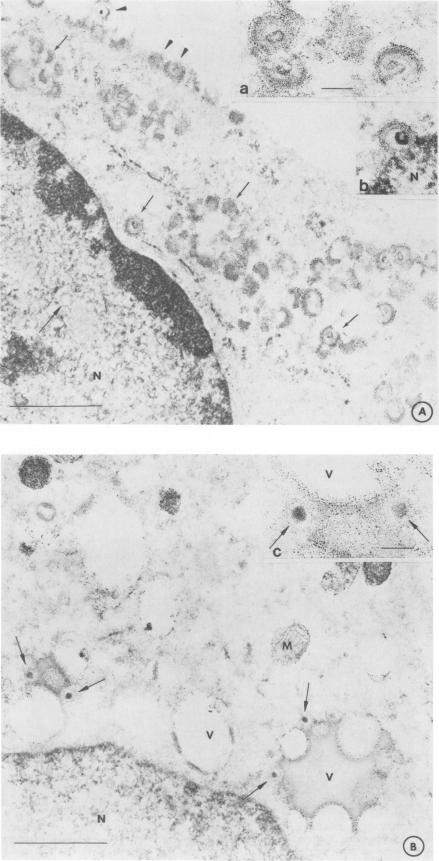
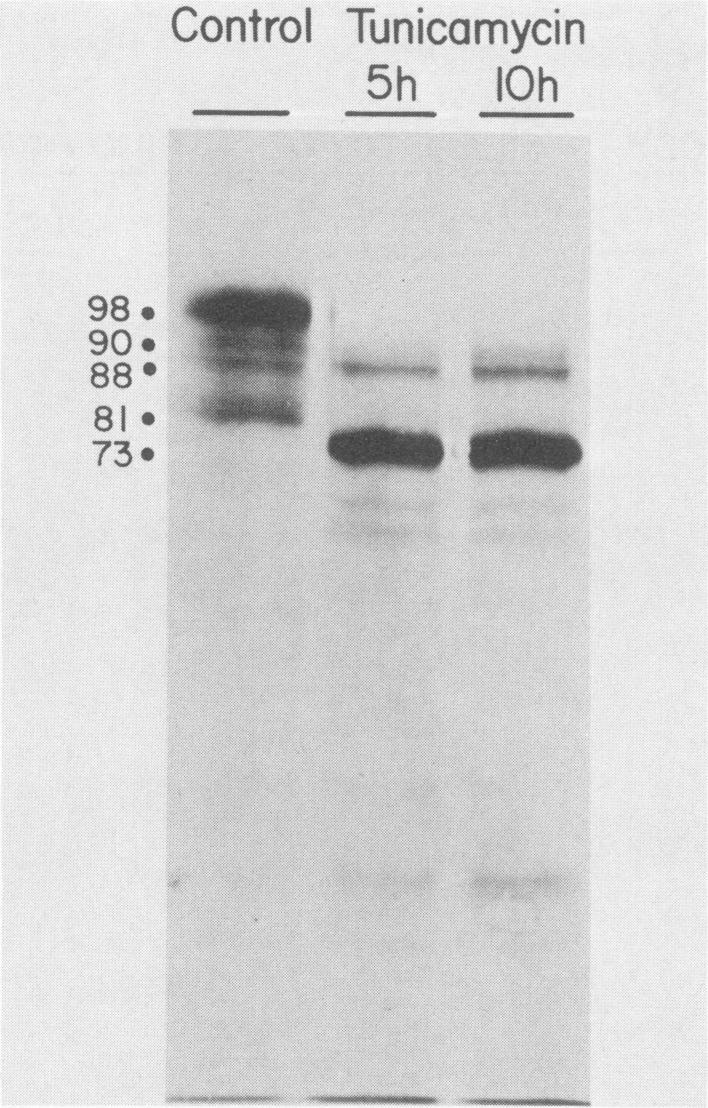
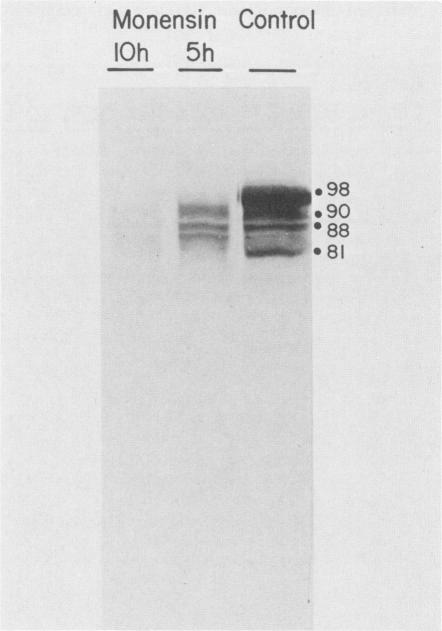
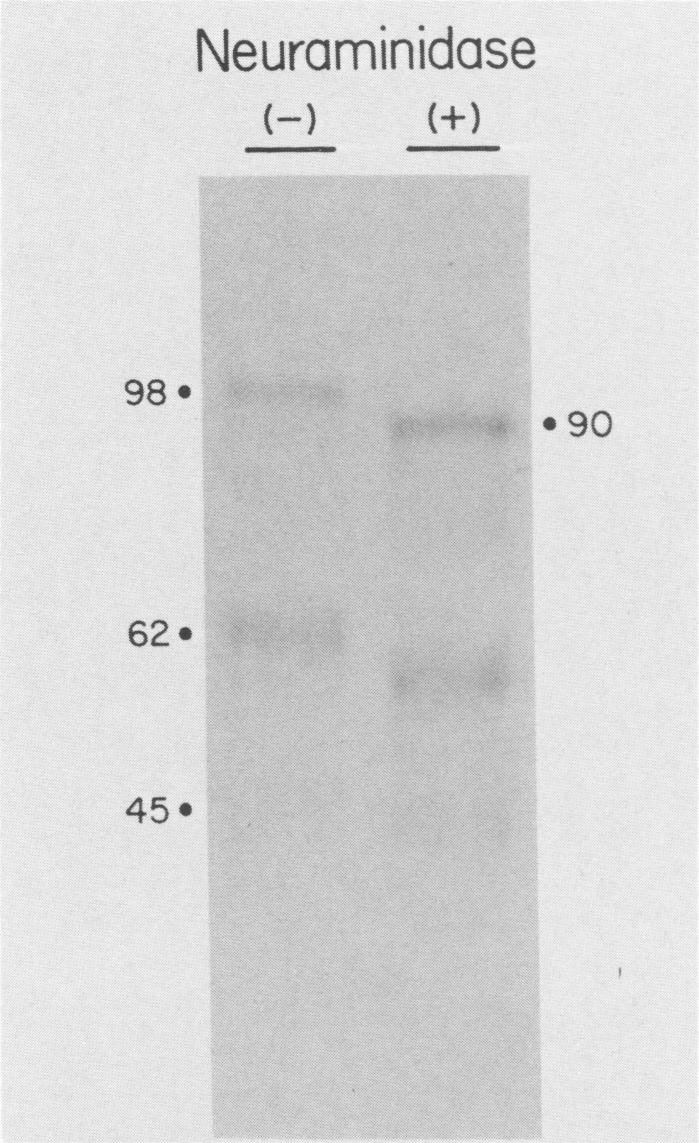
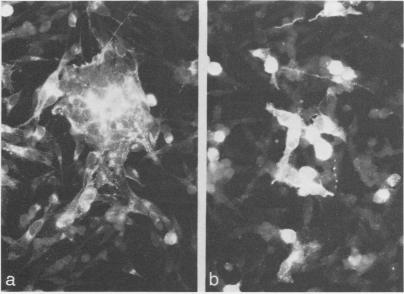
Varicella-zoster virus specifies the formation of several glycoproteins, including the preponderant gp98-gp62 glycoprotein complex in the outer membranes of virus-infected cells. These viral glycoproteins are recognized and precipitated by a previously described monoclonal antibody designated monoclone 3B3. When an immunoblot analysis was performed, only gp98 was reactive with monoclone 3B3 antibody; likewise, titration in the presence of increased concentrations of sodium dodecyl sulfate during antigen-antibody incubations caused selective precipitation of gp98 but not gp62. Further structural analyses of gp98 were performed by using the glycosidases endo-beta-N-acetylglucosaminidase H (endoglycosidase H) and neuraminidase and two inhibitors of glycosylation (tunicamycin and monensin). In addition to gp98, antibody 3B3 reacted with several intermediate products, including gp90, gp88, gp81, and a nonglycosylated polypeptide, p73. Since gp98 was completely resistant to digestion with endoglycosidase H, it contained only complex carbohydrate moieties; conversely, gp81 contained mainly high-mannose residues. Polypeptide p73 was immunodetected in the presence of tunicamycin and designated as a nascent recipient of N-linked sugars, whereas gp88 was considered to contain O-linked oligosaccharides because its synthesis was not affected by tunicamycin. The ionophore monensin inhibited production of mature gp98, but other intermediate forms, including gp90, were detected. Since the latter product was similar in molecular weight to the desialated form of gp98, one effect of monensin treatment of varicella-zoster virus-infected cells was to block the addition of N-acetylneuraminic acid. Monensin also blocked insertion of gp98 into the plasma membrane and, as determined by electron microscopy, inhibited envelopment of the nucleocapsid and its transport within the cytoplasm. On the basis of this study, we reached the following conclusions: the primary antibody 3B3-binding epitope is located on gp98, gp98 is a mature product of viral glycoprotein processing, gp98 contains both N-linked and O-linked oligosaccharide side chains, gp90 is the desialated penultimate form of gp98, gp88 is an O-linked intermediate of gp98, gp81 is the high-mannose intermediate of gp98, and p73 is the unglycosylated precursor of gp98.
水痘带状疱疹病毒可促使多种糖蛋白的形成,包括病毒感染细胞外膜中占主导地位的gp98-gp62糖蛋白复合物。这些病毒糖蛋白可被一种先前描述的名为单克隆抗体3B3的单克隆抗体识别并沉淀。进行免疫印迹分析时,只有gp98与单克隆3B3抗体发生反应;同样,在抗原-抗体孵育过程中增加十二烷基硫酸钠浓度进行滴定,会导致gp98选择性沉淀,而gp62不会沉淀。通过使用糖苷酶内切β-N-乙酰氨基葡萄糖苷酶H(内切糖苷酶H)、神经氨酸酶以及两种糖基化抑制剂(衣霉素和莫能菌素)对gp98进行了进一步的结构分析。除了gp98,抗体3B3还与几种中间产物发生反应,包括gp90、gp88、gp81和一种非糖基化多肽p73。由于gp98对内切糖苷酶H的消化完全具有抗性,它仅含有复合碳水化合物部分;相反,gp81主要含有高甘露糖残基。多肽p73在衣霉素存在的情况下被免疫检测到,并被指定为N-连接糖的新生受体,而gp88被认为含有O-连接寡糖,因为其合成不受衣霉素影响。离子载体莫能菌素抑制成熟gp98的产生,但可检测到其他中间形式,包括gp90。由于后者产物的分子量与gp98的去唾液酸化形式相似,莫能菌素处理水痘带状疱疹病毒感染细胞的一个作用是阻断N-乙酰神经氨酸的添加。莫能菌素还阻断gp98插入质膜,并且通过电子显微镜确定,它抑制核衣壳的包膜形成及其在细胞质中的运输。基于这项研究,我们得出以下结论:主要抗体3B3结合表位位于gp98上,gp98是病毒糖蛋白加工的成熟产物,gp98同时含有N-连接和O-连接寡糖侧链,gp90是gp98的去唾液酸化倒数第二种形式,gp88是gp98的O-连接中间体,gp81是gp98的高甘露糖中间体,p73是gp98的未糖基化前体。