Institute of Dairy Science, College of Animal Sciences, Zhejiang University, Hang Zhou, 310058, People's Republic of China.
Laboratory of Lactation and Metabolic Physiology, Department of Animal and Veterinary Sciences, University of Vermont, Burlington, VT, 05405, USA.
BMC Genomics. 2018 May 29;19(1):403. doi: 10.1186/s12864-018-4808-5.
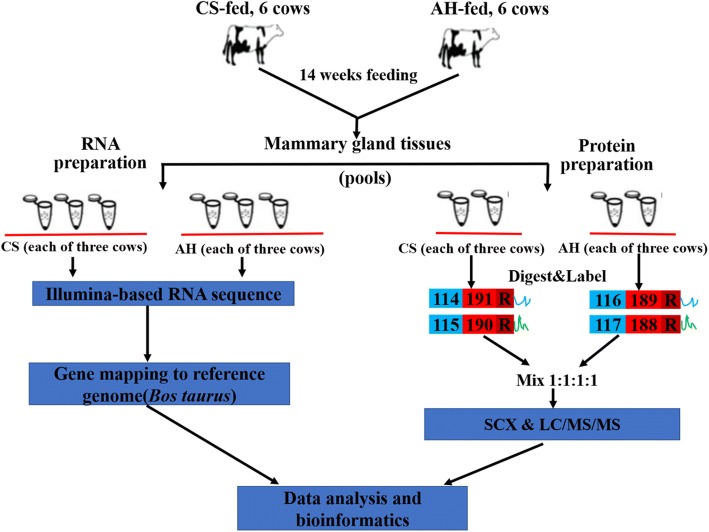
Bovine milk is an important nutrient source for humans. Forage plays a vital role in dairy husbandry via affecting milk quality and quantity. However, the differences in mammary metabolism of dairy cows fed different forages remain elucidated. In this study, we utilized transcriptomic RNA-seq and iTRAQ proteomic techniques to investigate and integrate the differences of molecular pathways and biological processes in the mammary tissues collected from 12 lactating cows fed corn stover (CS, low-quality, n = 6) and alfalfa hay (AH, high-quality, n = 6).
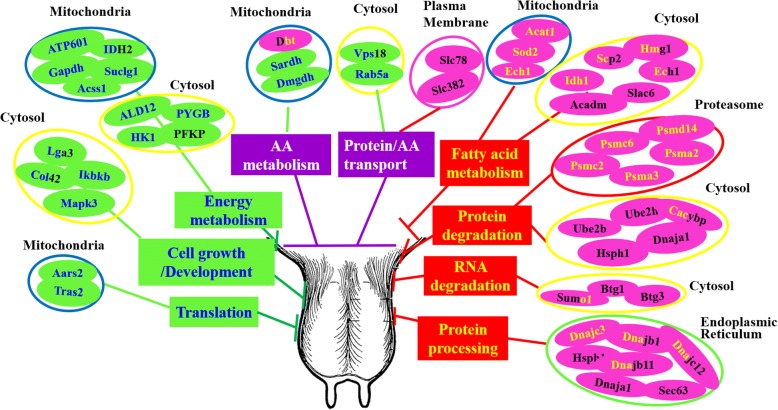
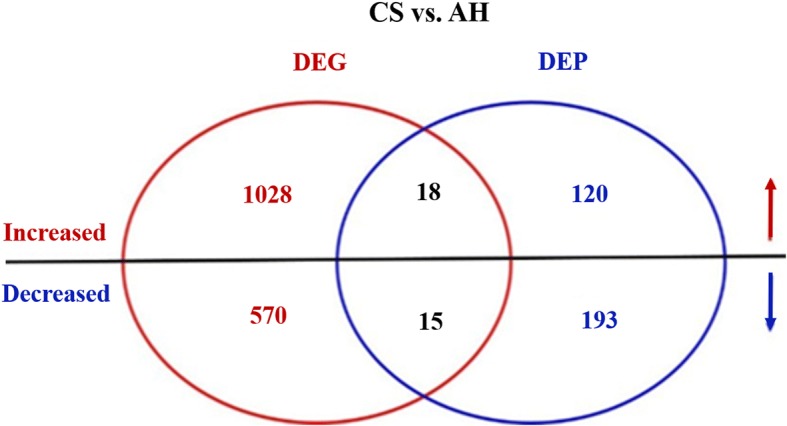
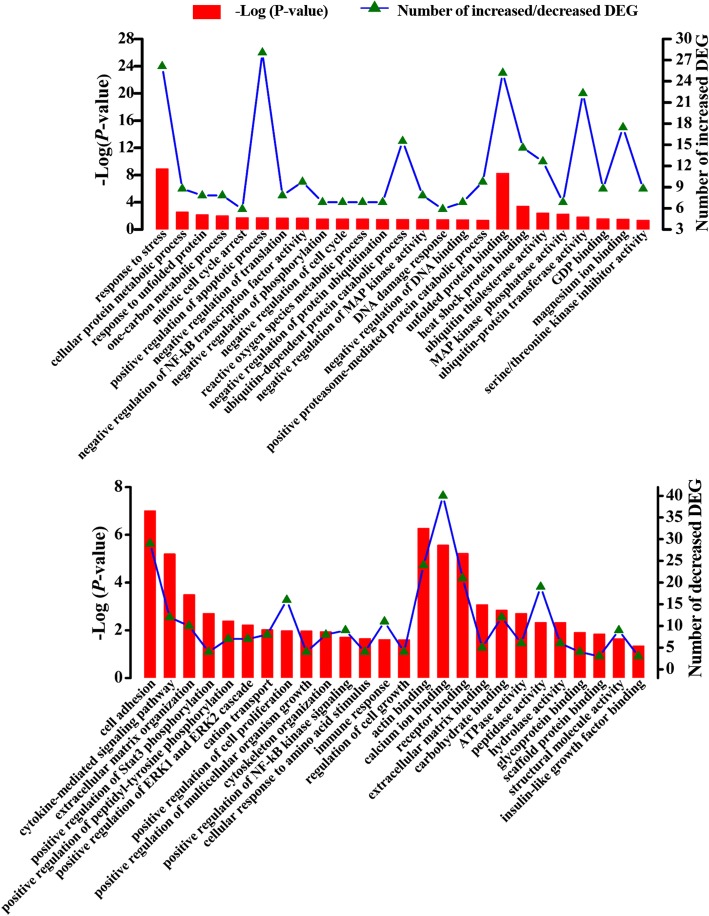
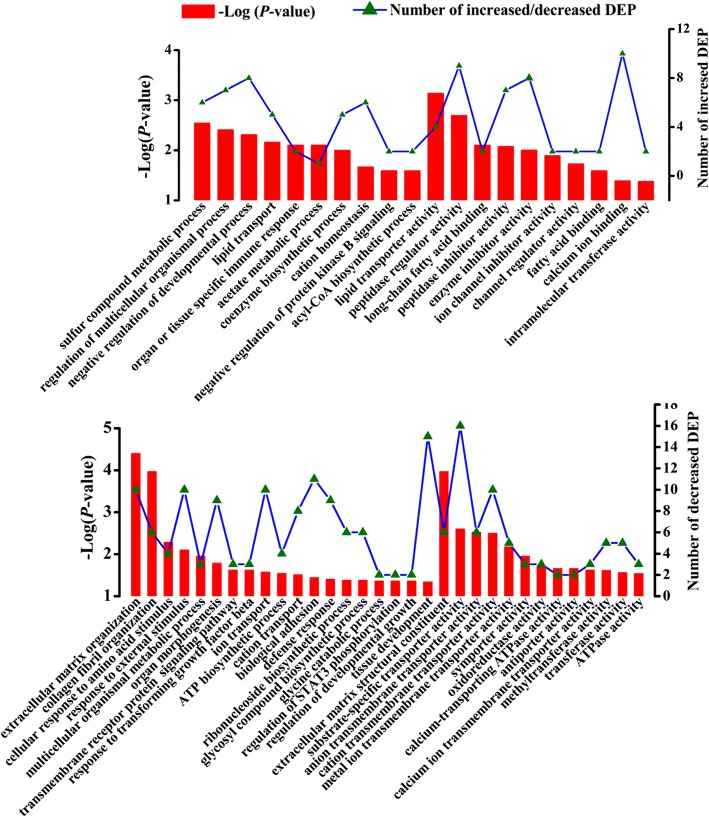
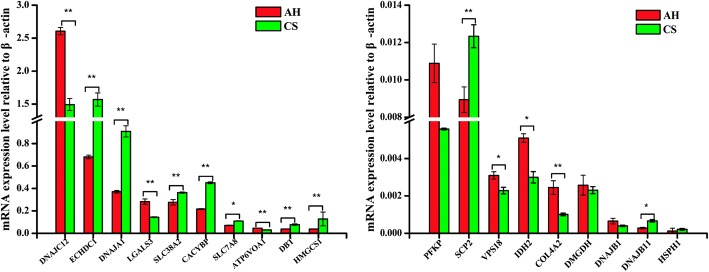
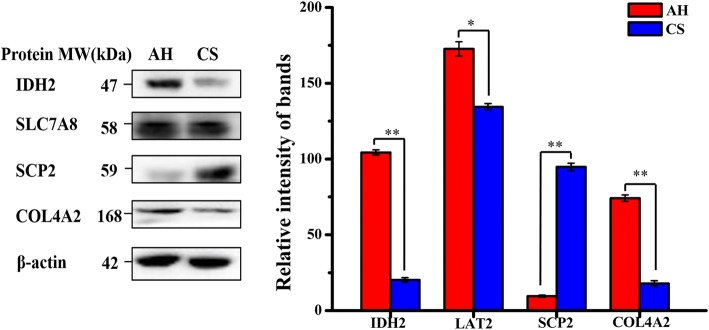
A total of 1631 differentially expressed genes (DEGs; 1046 up-regulated and 585 down-regulated) and 346 differentially expressed proteins (DEPs; 138 increased and 208 decreased) were detected in the mammary glands between the CS- and AH-fed animals. Expression patterns of 33 DEPs (18 increased and 15 decreased) were consistent with the expression of their mRNAs. Compared with the mammary gland of AH-fed cows, the marked expression changes found in the mammary gland of CS group were for genes involved in reduced mammary growth/development (COL4A2, MAPK3, IKBKB, LGALS3), less oxidative phosphorylation (ATPsynGL, ATP6VOA1, ATP5H, ATP6VOD1, NDUFC1), enhanced lipid uptake/metabolism (SLC27A6, FABP4, SOD2, ACADM, ACAT1, IDH1, SCP2, ECHDC1), more active fatty acid beta-oxidation (HMGCS1), less amino acid/protein transport (SLC38A2, SLC7A8, RAB5a, VPS18), reduced protein translation (RPS6, RPS12, RPS16, RPS19, RPS20, RPS27), more proteasome- (PSMC2, PSMC6, PSMD14, PSMA2, PSMA3) and ubiquitin-mediated protein degradation (UBE2B, UBE2H, KLHL9, HSPH1, DNAJA1 and CACYBP), and more protein disassembly-related enzymes (SEC63, DNAJC3, DNAJB1, DNAJB11 and DNAJC12).
Our results indicate that the lower milk production in the CS-fed dairy cows compared with the AH-fed cows was associated with a network of mammary gene expression changes, importantly, the prime factors include decreased energy metabolism, attenuated protein synthesis, enhanced protein degradation, and the lower mammary cell growth. The present study provides insights into the effects of the varying quality of forages on mammary metabolisms, which can help the improvement of strategies in feeding dairy cows with CS-based diet.
牛奶是人类重要的营养来源。饲草通过影响牛奶的质量和数量在奶牛养殖中起着至关重要的作用。然而,不同饲草喂养奶牛的乳腺代谢差异仍有待阐明。在这项研究中,我们利用转录组 RNA-seq 和 iTRAQ 蛋白质组学技术,研究并整合了 12 头泌乳奶牛乳腺组织中分子途径和生物学过程的差异,这些奶牛分别喂食玉米秸秆(CS,低质量,n=6)和苜蓿干草(AH,高质量,n=6)。
在 CS 和 AH 喂养的动物的乳腺组织中,共检测到 1631 个差异表达基因(DEGs;1046 个上调和 585 个下调)和 346 个差异表达蛋白(DEPs;138 个增加和 208 个减少)。33 个 DEP(18 个上调和 15 个下调)的表达模式与它们的 mRNA 表达一致。与 AH 喂养奶牛的乳腺相比,CS 组乳腺中明显的表达变化与涉及乳腺生长/发育减少的基因有关(COL4A2、MAPK3、IKBKB、LGALS3),氧化磷酸化减少(ATPsynGL、ATP6VOA1、ATP5H、ATP6VOD1、NDUFC1),脂质摄取/代谢增强(SLC27A6、FABP4、SOD2、ACADM、ACAT1、IDH1、SCP2、ECHDC1),脂肪酸β-氧化更活跃(HMGCS1),氨基酸/蛋白质转运减少(SLC38A2、SLC7A8、RAB5a、VPS18),蛋白质翻译减少(RPS6、RPS12、RPS16、RPS19、RPS20、RPS27),蛋白酶体-(PSMC2、PSMC6、PSMD14、PSMA2、PSMA3)和泛素介导的蛋白质降解(UBE2B、UBE2H、KLHL9、HSPH1、DNAJA1 和 CACYBP)增加,以及更多的蛋白质解体相关酶(SEC63、DNAJC3、DNAJB1、DNAJB11 和 DNAJC12)。
我们的研究结果表明,与 AH 喂养奶牛相比,CS 喂养奶牛的产奶量较低与乳腺基因表达变化网络有关,重要的是,主要因素包括能量代谢降低、蛋白质合成减弱、蛋白质降解增强以及乳腺细胞生长减少。本研究为饲草质量对乳腺代谢的影响提供了新的认识,有助于改进基于 CS 的奶牛饲养策略。