Department of Chemistry and Physics, Roger Williams University, Bristol, RI, United States of America.
Department of Biology, Marine Biology and Environmental Science, Roger Williams University, Bristol, RI, United States of America.
PLoS One. 2018 May 30;13(5):e0196841. doi: 10.1371/journal.pone.0196841. eCollection 2018.
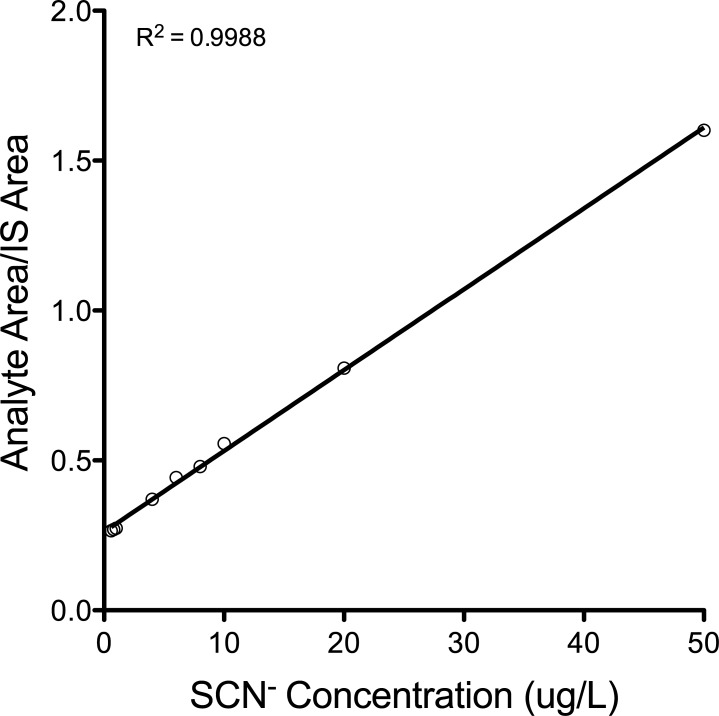
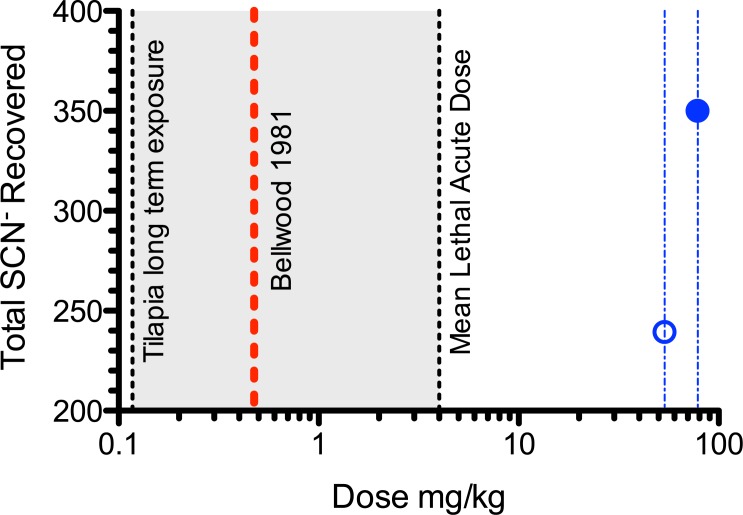
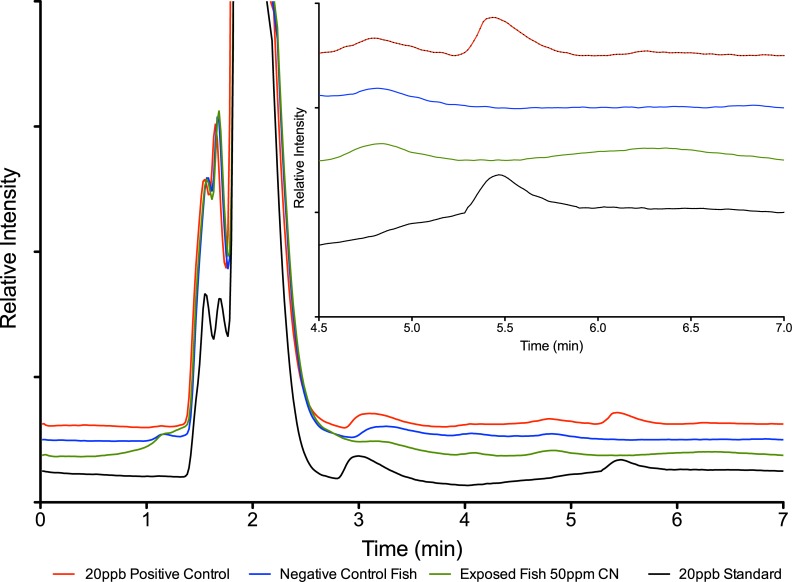
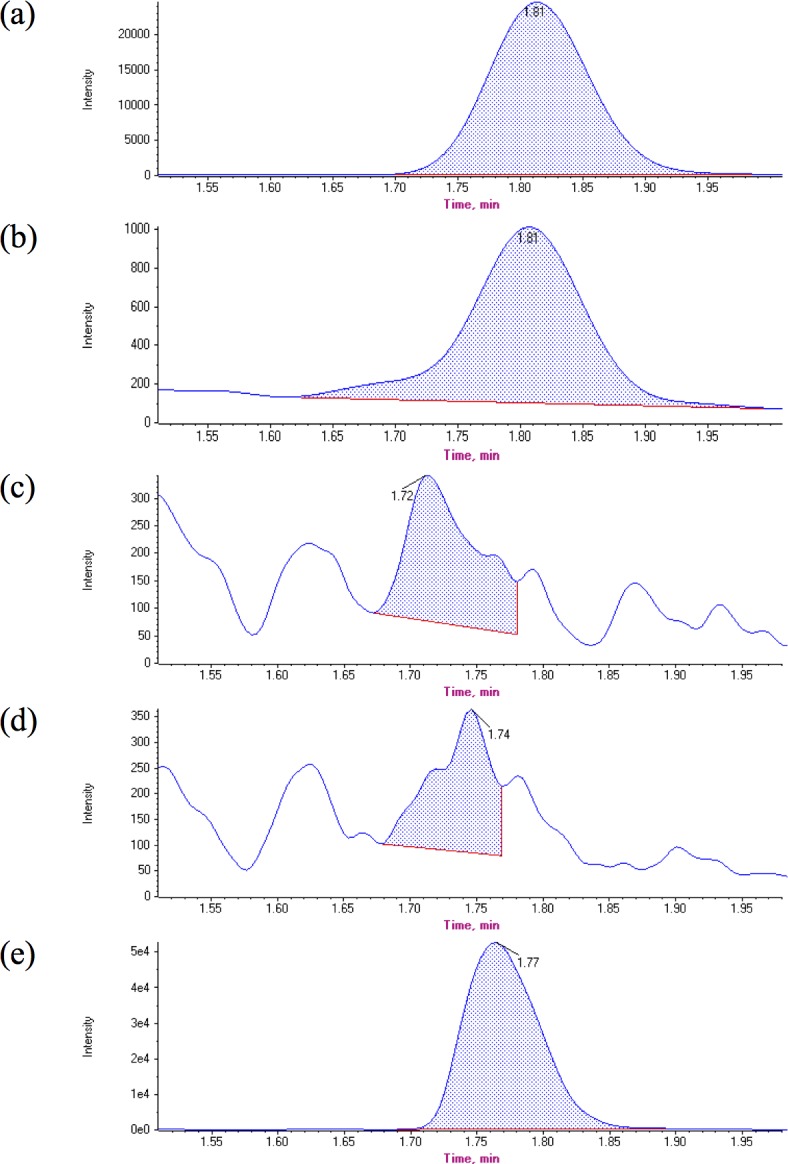
Cyanide fishing, where a solution of sodium or potassium cyanide is used to stun reef fish for easy capture for the marine aquarium and live fish food trades, continues to be pervasive despite being illegal in many countries and destructive to coral reef ecosystems. Currently, there is no easy, reliable and universally accepted method to detect if a fish has been exposed to cyanide during the capture process. A promising non-invasive technique for detecting thiocyanate ions, the metabolic byproduct excreted by exposed fish, has been reported in the literature. In an effort to validate this method, four cyanide exposure studies on Amphiprion ocellaris (common clownfish) were carried out over three years. Fish were either exposed to the same (25 ppm) or twice the concentration (50 ppm) as the previsouly published method. Over 100 water samples of fish exposed to cyanide were analyzed by reverse phase HPLC with a C30 column treated with polyethylene glycol and UV detector operating at 220 nm. No thiocyanate was detected beyond the analytical standards and positive controls prepared in seawater. As an alternate means of detecting thiocyanate, water samples and thiocyanate standards from these exposures were derivatized with monobromobimane (MBB) for LC-MS/MS analysis. Thiocyanate was detected in standards with concentrations as low as 0.6 μg/L and quantified to 1 μg/L, but thiocyanate could not be detected in any of the water samples from fish exposed to cyanide with this method either, confirming the HPLC results. Further, we calculated both the mass balance of thiocyanate and the resultant plausible dosage of cyanide from the data reported in the previously published method. These calculations, along with the known lethal dosage of cyanide, further suggests that the detection of thiocyanate in aquarium water is not a viable method for assessing fish exposure to cyanide.
氰化物捕鱼,即将氰化钠或氰化钾溶液用于使珊瑚礁鱼类昏迷,以便轻松捕获并供应给海洋水族馆和活鱼饲料贸易,尽管在许多国家是非法的且对珊瑚礁生态系统具有破坏性,但这种做法仍普遍存在。目前,尚无简便、可靠且被普遍接受的方法来检测鱼类在捕捞过程中是否接触过氰化物。文献中报道了一种有前途的非侵入性技术,用于检测硫氰酸盐离子,这是暴露鱼类排泄的代谢副产物。为了验证该方法,在三年内对 Amphiprion ocellaris(普通小丑鱼)进行了四项氰化物暴露研究。鱼要么暴露在与之前发表的方法相同(25 ppm)或两倍浓度(50 ppm)的氰化物中。对暴露于氰化物的 100 多个水样进行了反相 HPLC 分析,使用 C30 柱,柱上涂有聚乙二醇,UV 检测器在 220nm 处运行。在海水中制备的分析标准品和阳性对照品之外,没有检测到硫氰酸盐。作为检测硫氰酸盐的替代方法,这些暴露的水样和硫氰酸盐标准品用单溴化乙锭(MBB)衍生化,用于 LC-MS/MS 分析。在浓度低至 0.6μg/L 的标准品中检测到硫氰酸盐,并将其定量至 1μg/L,但用该方法也无法在暴露于氰化物的任何鱼水样中检测到硫氰酸盐,这与 HPLC 结果一致。此外,我们根据之前发表的方法中报告的数据计算了硫氰酸盐的质量平衡和氰化物的可能剂量。这些计算结果以及已知的氰化物致死剂量进一步表明,在水族馆水中检测硫氰酸盐不是评估鱼类接触氰化物的可行方法。