Department of Cellular & Molecular Anatomy, Hamamatsu University School of Medicine, 1-20-1 Handayama, Hamamatsu, Shizuoka, 431-3192, Japan.
Department of Liberal Arts and Sciences, Kanagawa University of Human Services, 1-10-1 Heisei-cho, Yokosuka, Kanagawa, 238-8522, Japan.
Sci Rep. 2018 May 30;8(1):8392. doi: 10.1038/s41598-018-26694-w.
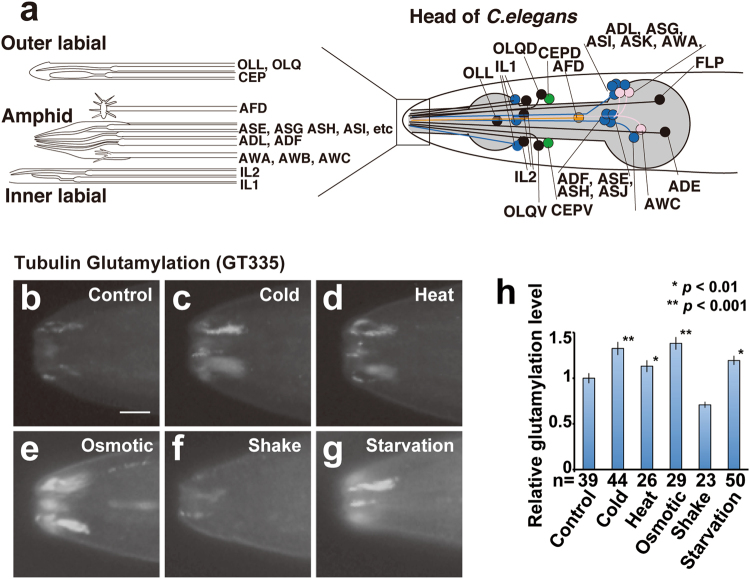
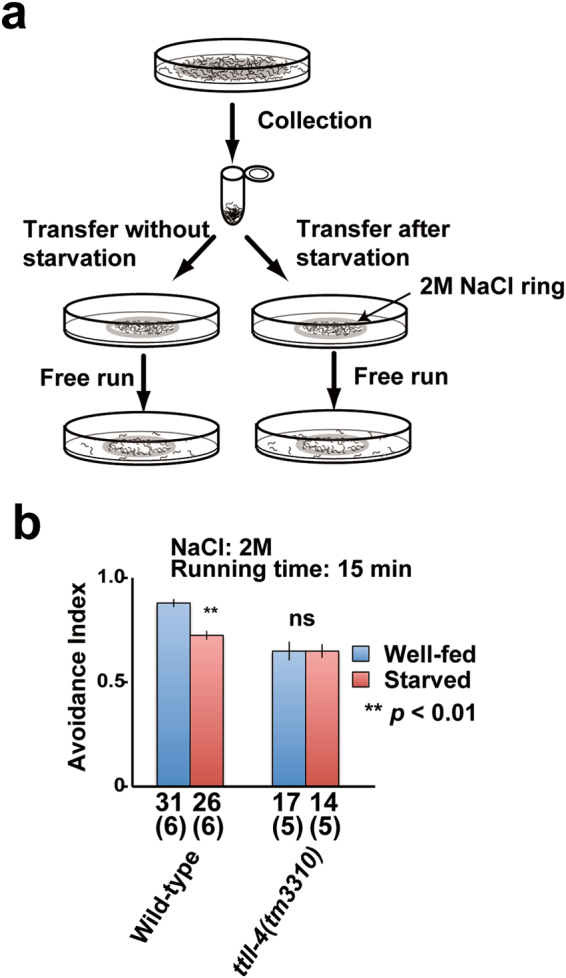
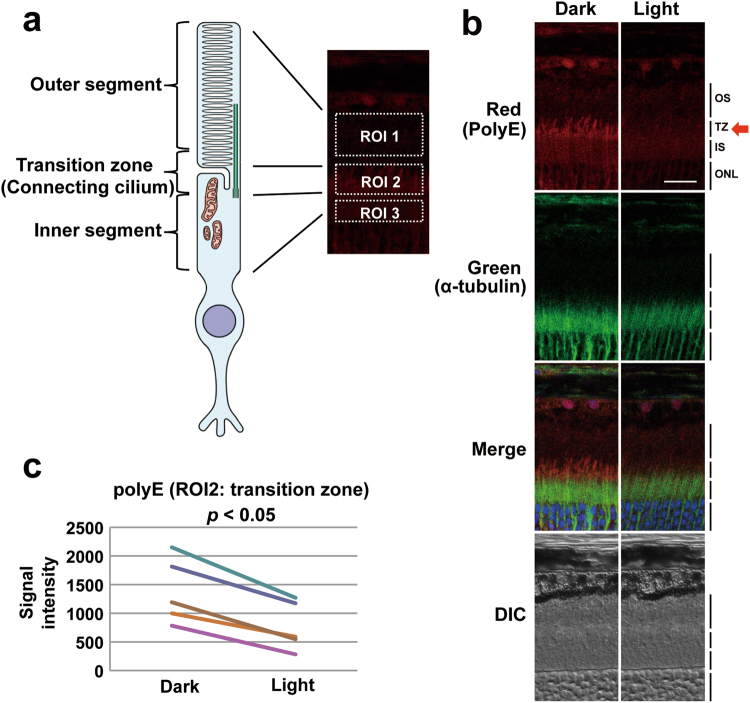
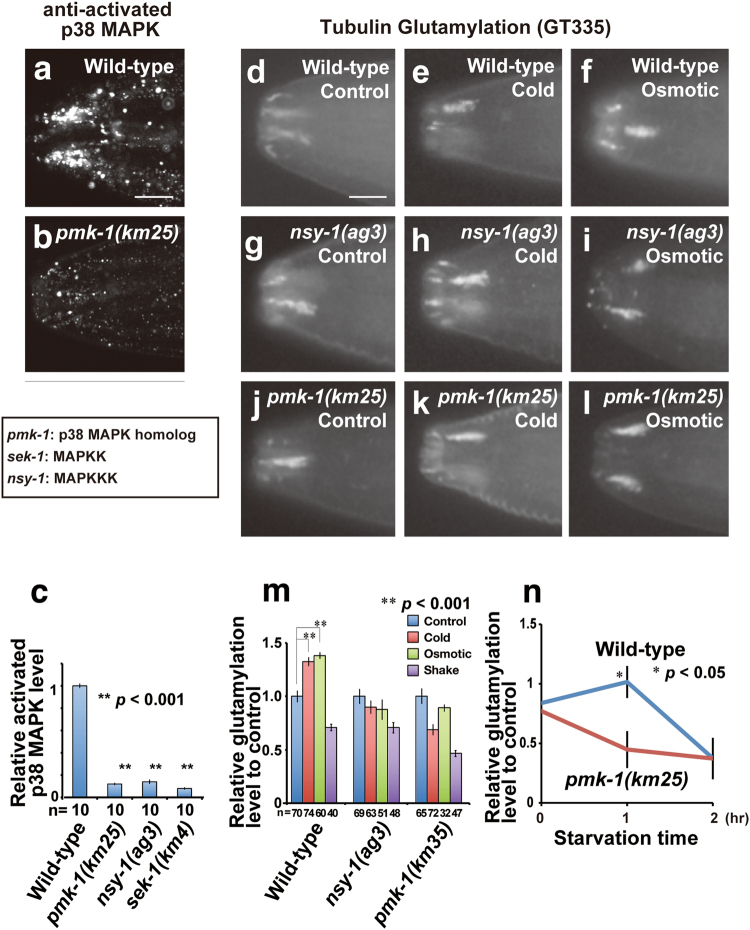
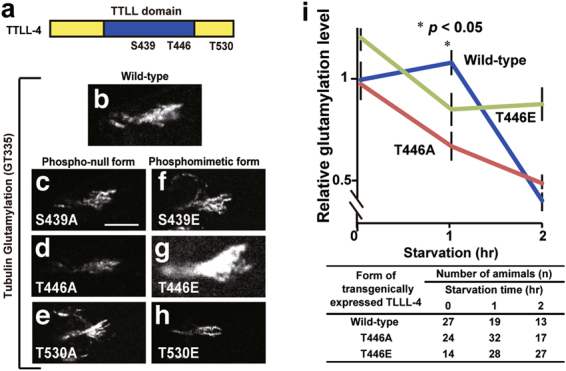
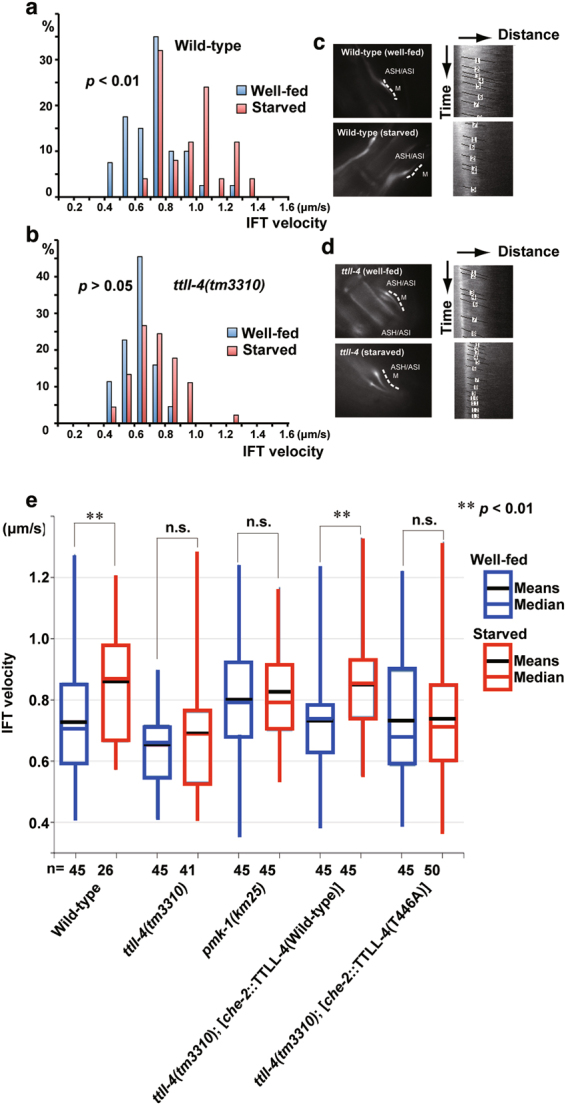
Glutamylation is a post-translational modification found on tubulin that can alter the interaction between microtubules (MTs) and associated proteins. The molecular mechanisms regulating tubulin glutamylation in response to the environment are not well understood. Here, we show that in the sensory cilia of Caenorhabditis elegans, tubulin glutamylation is upregulated in response to various signals such as temperature, osmolality, and dietary conditions. Similarly, tubulin glutamylation is modified in mammalian photoreceptor cells following light adaptation. A tubulin glutamate ligase gene ttll-4, which is essential for tubulin glutamylation of axonemal MTs in sensory cilia, is activated by p38 MAPK. Amino acid substitution of TTLL-4 has revealed that a Thr residue (a putative MAPK-phosphorylation site) is required for enhancement of tubulin glutamylation. Intraflagellar transport (IFT), a bidirectional trafficking system specifically observed along axonemal MTs, is required for the formation, maintenance, and function of sensory cilia. Measurement of the velocity of IFT particles revealed that starvation accelerates IFT, which was also dependent on the Thr residue of TTLL-4. Similarly, starvation-induced attenuation of avoidance behaviour from high osmolality conditions was also dependent on ttll-4. Our data suggest that a novel evolutionarily conserved regulatory system exists for tubulin glutamylation in sensory cilia in response to the environment.
谷氨酸化是一种在微管上发现的翻译后修饰,可以改变微管(MTs)与相关蛋白之间的相互作用。调节微管谷氨酸化以响应环境的分子机制尚不清楚。在这里,我们表明,在秀丽隐杆线虫的感觉纤毛中,微管谷氨酸化会在各种信号的刺激下上调,例如温度、渗透压和饮食条件。类似地,哺乳动物光感受器细胞中的微管谷氨酸化在光适应后会发生改变。tubulin glutamate ligase 基因 ttll-4 在感觉纤毛的轴突微管的微管谷氨酸化中是必需的,它被 p38 MAPK 激活。TTLL-4 的氨基酸取代揭示了 Thr 残基(一个假定的 MAPK 磷酸化位点)对于增强微管谷氨酸化是必需的。内纤毛运输(IFT)是一种沿着轴突微管特异性观察到的双向运输系统,对于感觉纤毛的形成、维持和功能是必需的。IFT 颗粒速度的测量表明,饥饿会加速 IFT,这也依赖于 TTLL-4 的 Thr 残基。同样,饥饿诱导的避免高渗透压条件的回避行为的衰减也依赖于 ttll-4。我们的数据表明,在感觉纤毛中存在一种新的进化保守的微管谷氨酸化调节系统,以响应环境。