Department of Breast Oncology, Sun Yat-sen University Cancer Center, State Key Laboratory of Oncology in South China, Collaborative Innovation Center for Cancer Medicine, 651 East Dongfeng Road, Guangzhou, 510060, China.
Dis Markers. 2018 May 2;2018:9863092. doi: 10.1155/2018/9863092. eCollection 2018.
The prognostic role of serum cancer antigen 15-3 (CA15-3) and carcinoembryonic antigen (CEA) in breast cancer remains controversial. In this study, we conducted a meta-analysis to investigate the prognostic value of these two markers in breast cancer patients.
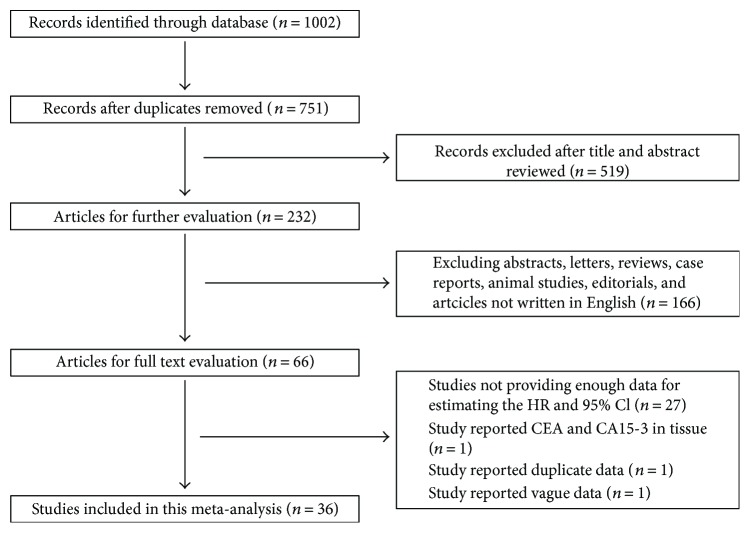
After electronic databases were searched, 36 studies (31 including information regarding CA15-3 and 23 including information regarding CEA) with 12,993 subjects were included. Based on the data directly or indirectly from the available studies, the hazard ratios (HRs) and odds ratios (ORs) and their 95% confidence intervals (CIs) were pooled according to higher or lower marker levels.
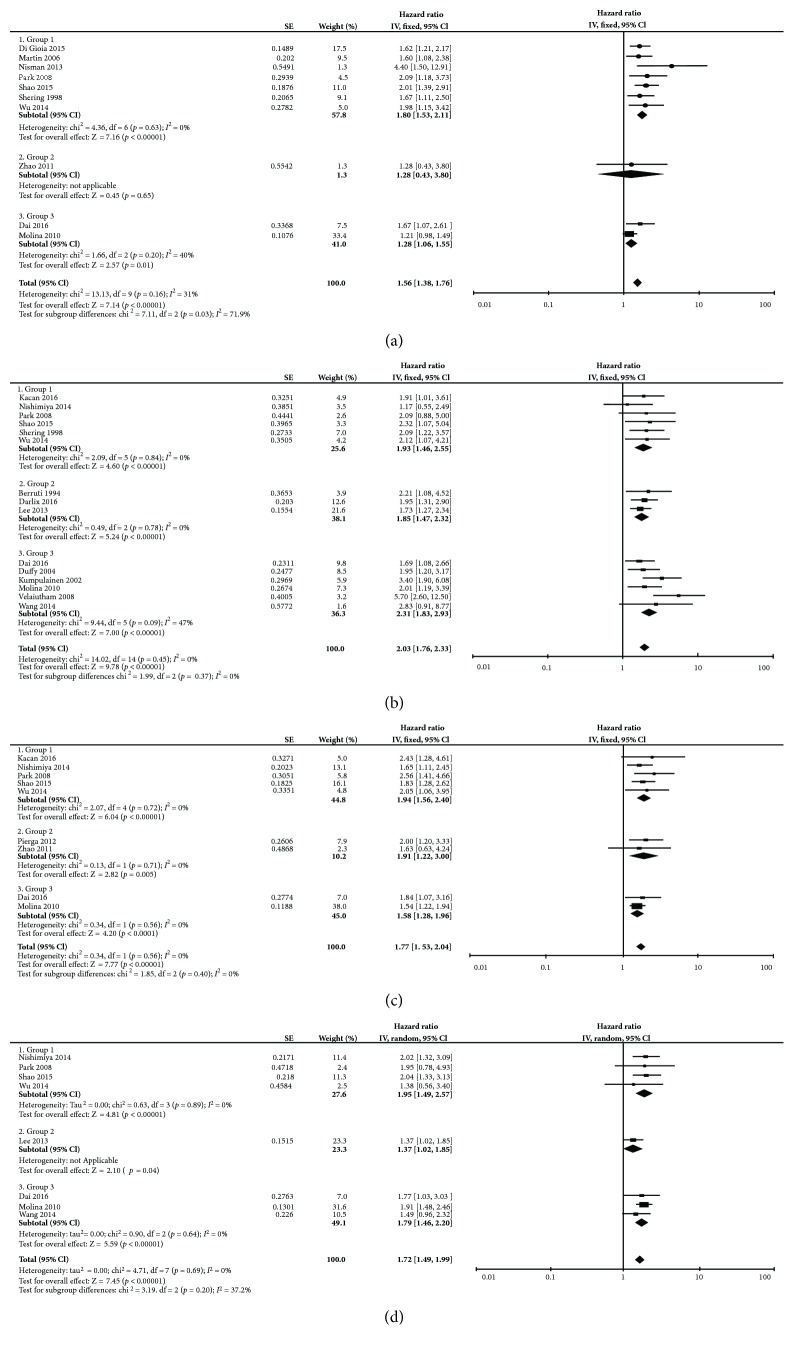
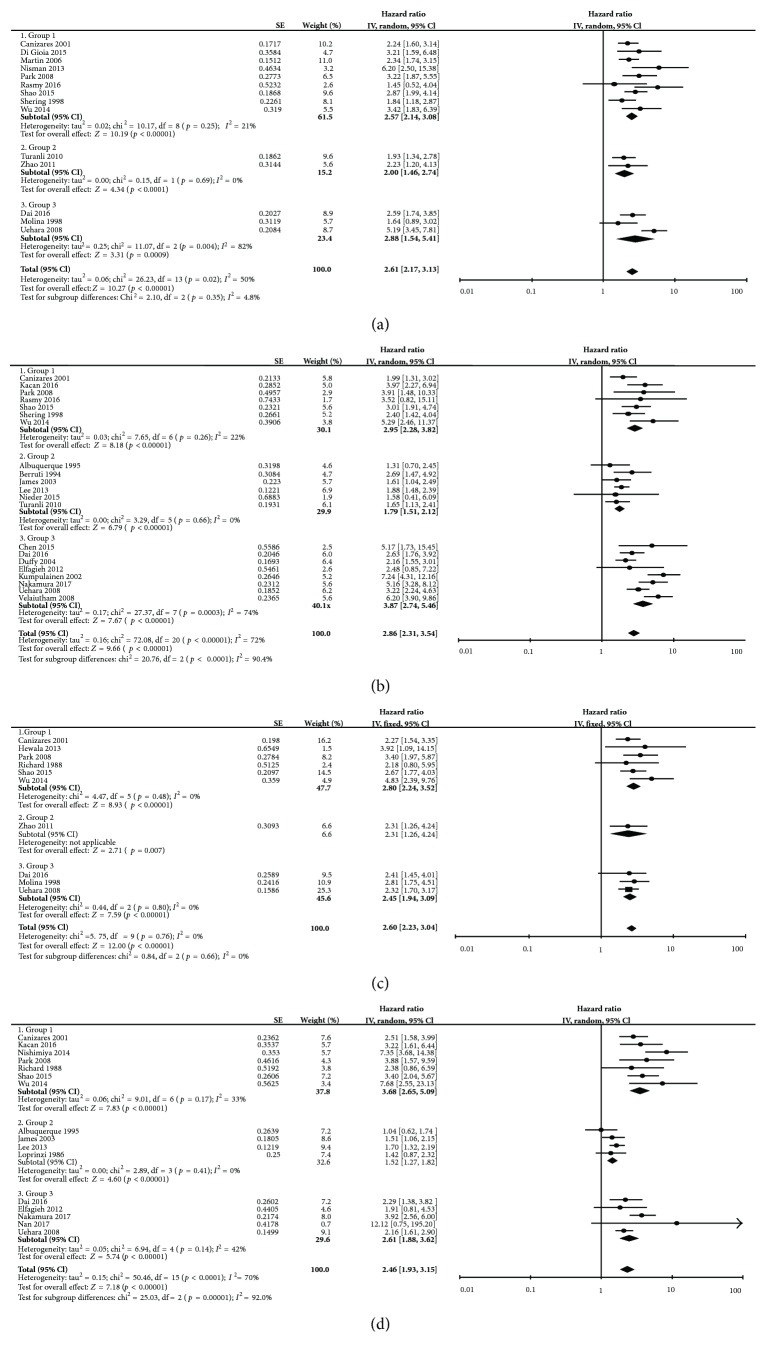
Elevated CA15-3 or CEA was statistically significant with poorer DFS and OS in breast cancer (multivariate analysis of OS: HR = 2.03, 95% CI 1.76-2.33 for CA15-3; HR = 1.79, 95% CI 1.46-2.20 for CEA; multivariate analysis of DFS: HR = 1.56, 95% CI 1.06-1.55 for CA15-3; HR = 1.77, 95% CI 1.53-2.04 for CEA). Subgroup analysis showed that CA15-3 or CEA had significant predictive values in primary or metastasis types and different cut-offs and included sample sizes and even the study publication year. Furthermore, elevated CA15-3 was associated with advanced histological grade and younger age, while elevated CEA was related to the non-triple-negative tumor type and older age. These two elevated markers were all associated with a higher tumor burden.
This meta-analysis showed that elevated serum CA15-3 or CEA was associated with poor DFS and OS in patients with breast cancer, and they should be tested anytime if possible.
血清癌抗原 15-3(CA15-3)和癌胚抗原(CEA)在乳腺癌中的预后作用仍存在争议。本研究通过荟萃分析来探讨这两种标志物在乳腺癌患者中的预后价值。
通过电子数据库检索后,纳入了 36 项研究(31 项研究包含 CA15-3 信息,23 项研究包含 CEA 信息),共纳入 12993 例患者。根据来自可用研究的直接或间接数据,根据较高或较低的标志物水平,合并了风险比(HR)和比值比(OR)及其 95%置信区间(CI)。
CA15-3 或 CEA 升高与乳腺癌的 DFS 和 OS 较差具有统计学意义(OS 的多变量分析:CA15-3 的 HR=2.03,95%CI 为 1.76-2.33;CEA 的 HR=1.79,95%CI 为 1.46-2.20;DFS 的多变量分析:CA15-3 的 HR=1.56,95%CI 为 1.06-1.55;CEA 的 HR=1.77,95%CI 为 1.53-2.04)。亚组分析显示,CA15-3 或 CEA 在原发或转移类型以及不同的截断值、纳入的样本量甚至研究发表年份中均具有显著的预测价值。此外,CA15-3 升高与组织学分级较高和年龄较轻相关,而 CEA 升高与非三阴性肿瘤类型和年龄较大相关。这两种升高的标志物均与更高的肿瘤负荷相关。
本荟萃分析表明,血清 CA15-3 或 CEA 升高与乳腺癌患者的 DFS 和 OS 较差相关,如果可能的话,应随时进行检测。