Eye Center, Second Affiliated Hospital, School of Medicine, Zhejiang University, Hangzhou, Zhejiang, China.
Oxid Med Cell Longev. 2018 May 2;2018:4582130. doi: 10.1155/2018/4582130. eCollection 2018.
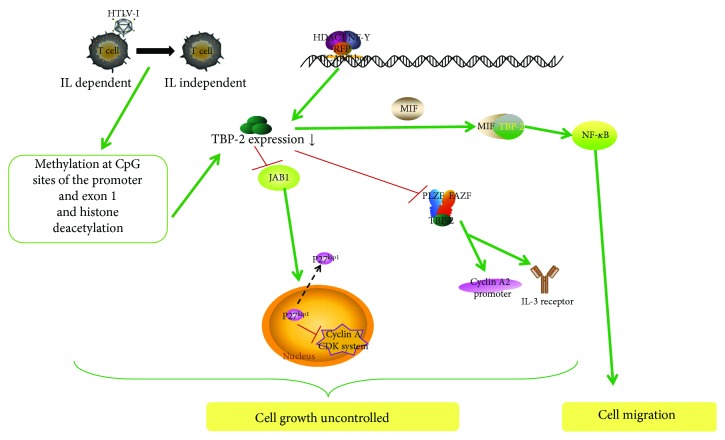
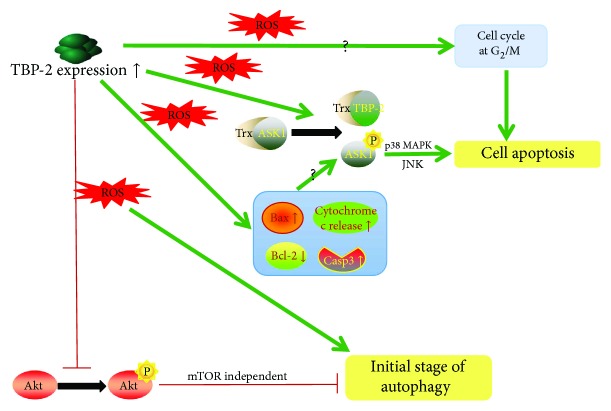
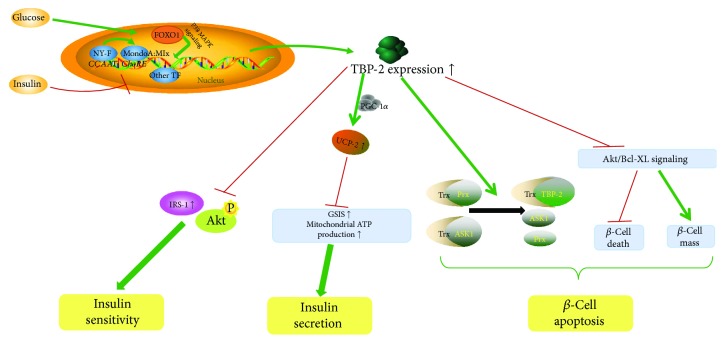
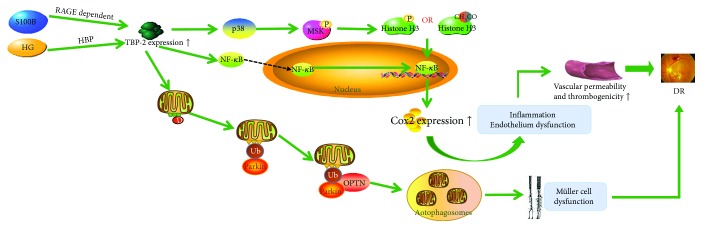
Thioredoxin-binding protein-2 (TBP-2) has an important role in the redox system, but it plays a different role in many different diseases (e.g., various cancers, diabetes mellitus (DM), cardiovascular disease, and cataracts) by influencing cell proliferation, differentiation, apoptosis, autophagy, and metabolism. Distinct transcription factors (TFs) stimulated by different factors combine with binding sites or proteins to upregulate or downregulate TBP-2 expression, in order to respond to the change in the internal environment. Most research disclosed that the main function of TBP-2 is associating with thioredoxin (Trx) to inhibit the antioxidant capacity of Trx. Furthermore, the TBP-2 located in tissues, whether normal or abnormal, has the ability to cause the dysfunctioning of cells and even death through different pathways, such as shortening the cell cycle and inducing apoptosis or autophagy. Through these studies, we found that TBP-2 promoted the development of diseases which are involved in inflammatory and oxidative damage. To a certain extent, we believe that there is some hidden connection between the biological functions which TBP-2 participates in and some distinct diseases. This review presents only a summary of the roles that TBP-2 plays in cancer, DM, cataracts, and so on, as well as its universal mechanisms. Further investigations are needed for the cell signaling pathways of the effects caused by TBP-2. A greater understanding of the mechanisms of TBP-2 could produce potential new targets for the treatment of diseases, including cancer and diabetes, cardiovascular disease, and cataracts.
硫氧还蛋白结合蛋白-2(TBP-2)在氧化还原系统中具有重要作用,但它通过影响细胞增殖、分化、凋亡、自噬和代谢,在许多不同的疾病(如各种癌症、糖尿病、心血管疾病和白内障)中发挥不同的作用。不同的转录因子(TFs)被不同的因素刺激,与结合位点或蛋白结合,上调或下调 TBP-2 的表达,以响应内部环境的变化。大多数研究表明,TBP-2 的主要功能是与硫氧还蛋白(Trx)结合,抑制 Trx 的抗氧化能力。此外,位于组织中的 TBP-2,无论是正常组织还是异常组织,都具有通过不同途径导致细胞功能障碍甚至死亡的能力,例如缩短细胞周期和诱导细胞凋亡或自噬。通过这些研究,我们发现 TBP-2 促进了涉及炎症和氧化损伤的疾病的发展。在一定程度上,我们认为 TBP-2 参与的生物学功能与某些特定疾病之间存在一定的隐藏联系。本综述仅总结了 TBP-2 在癌症、糖尿病、白内障等疾病中的作用及其普遍机制。还需要进一步研究 TBP-2 对细胞信号通路的影响。更深入地了解 TBP-2 的机制可能为包括癌症和糖尿病、心血管疾病和白内障在内的疾病的治疗提供潜在的新靶点。