Department of Rehabilitation Medicine, Changhai Hospital, Second Military Medical University, Shanghai 200433, China.
Department of Urological Surgery, The 161th Hospital of PLA, Wuhan, Hubei Province 430012, China.
J Immunol Res. 2018 May 3;2018:5038172. doi: 10.1155/2018/5038172. eCollection 2018.
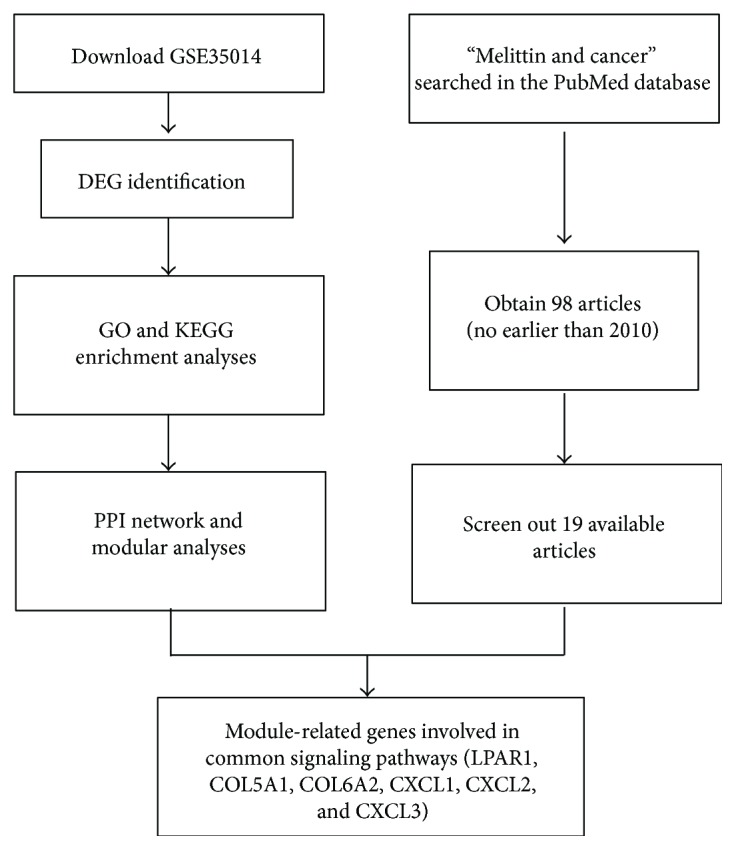
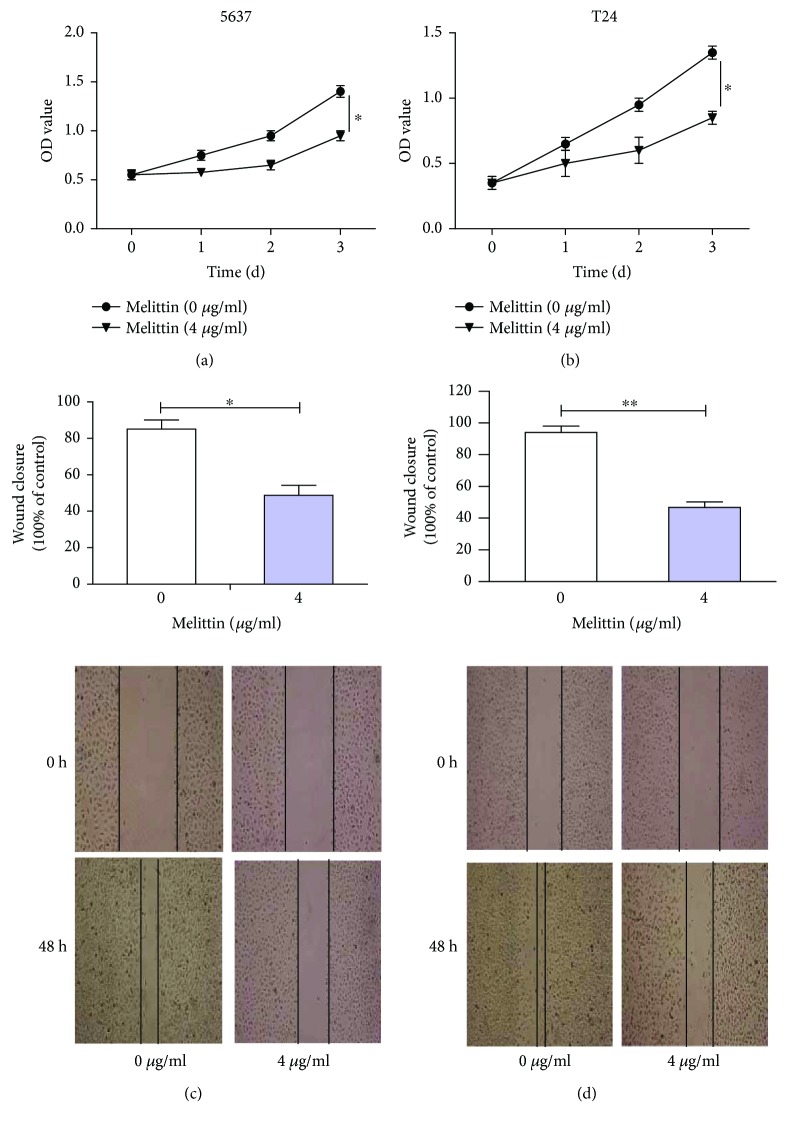
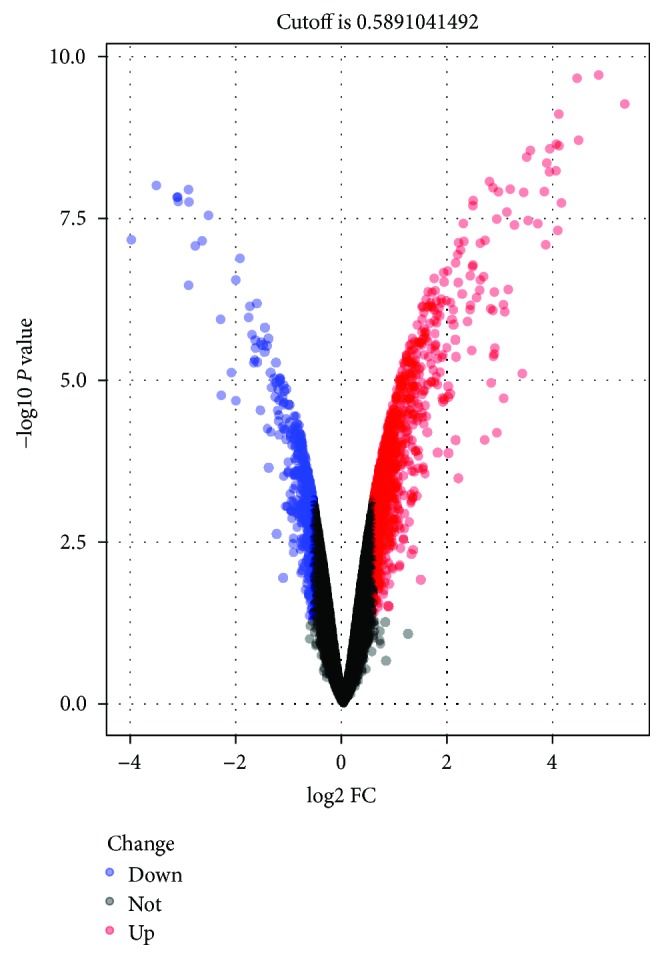
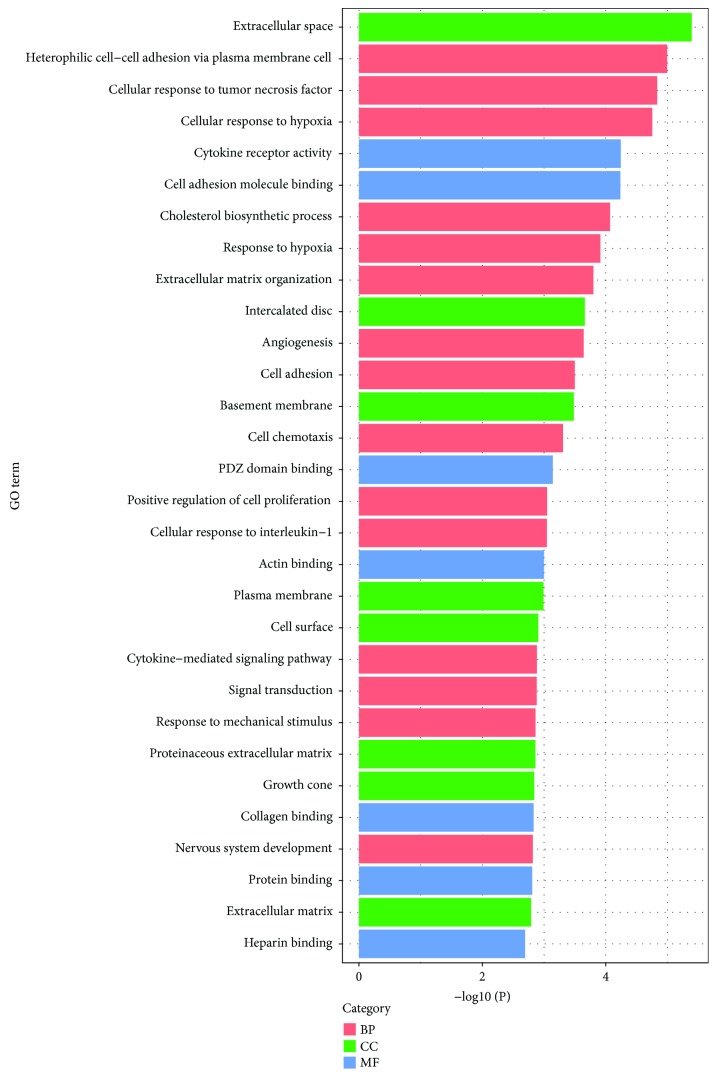
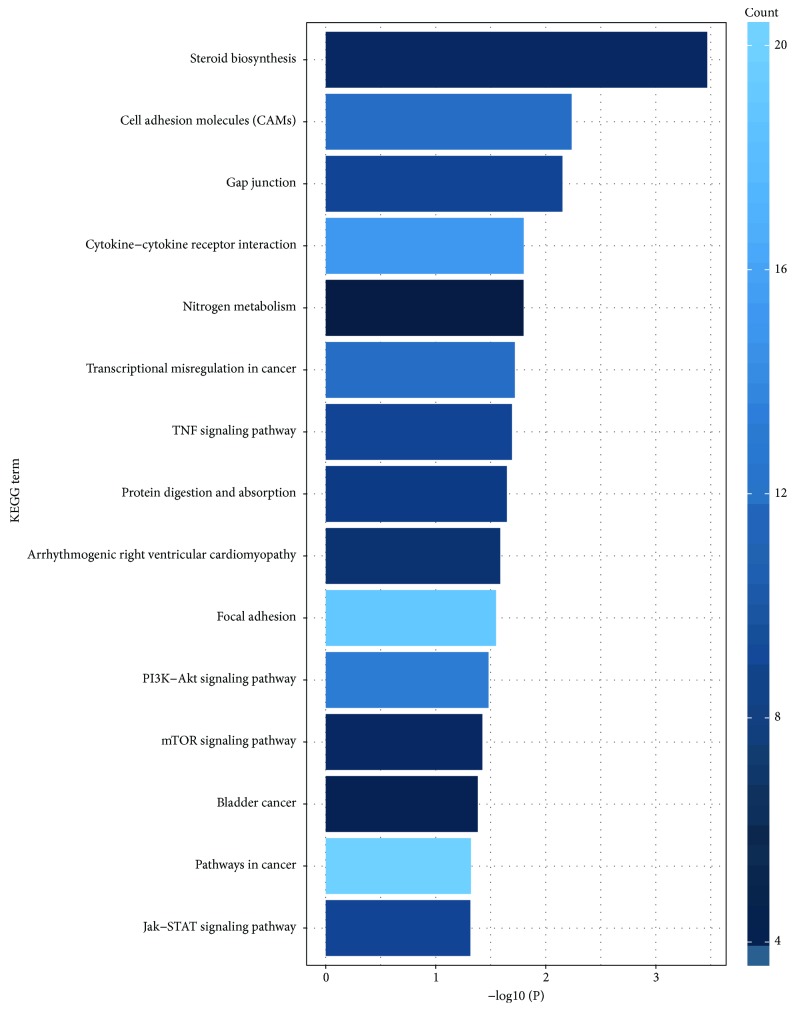
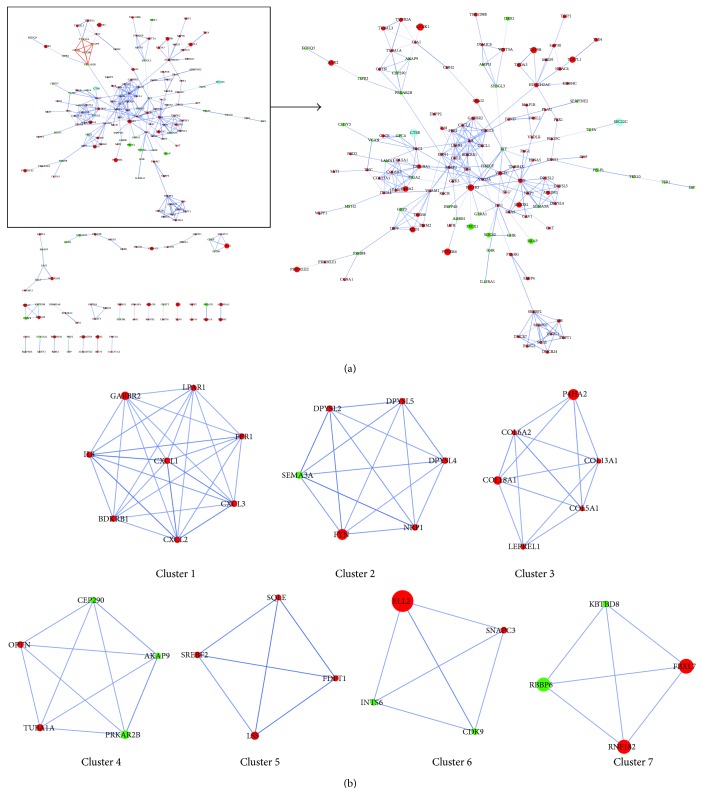
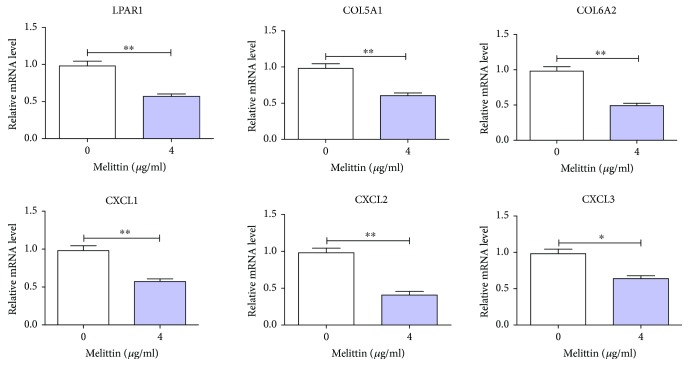
This work is aimed at investigating the effect of melittin on identified key genes in bladder cancer (BC) and further providing a theoretical basis for BC treatment. GSE35014 downloaded from the Gene Expression Omnibus (GEO) database was used to screen differentially expressed genes (DEGs) in BC cells and control. Results showed that a total of 389 upregulated and 169 downregulated genes were identified. Subsequently, GO analysis, KEGG pathway enrichment analysis, and PPI network analysis were employed to disclose the crucial genes and signaling pathways involved in BC. Fifteen module-related DEGs and their associated signaling pathways were obtained according to the PPI network and modular analyses. Based on the analysis of articles retrieved in the PubMed database, we found that melittin could induce apoptosis and constrain the progression of tumor cells as a result of regulating critical cancer-related signaling pathways, such as PI3K-Akt and TNF signaling pathways. Furthermore, PI3K-Akt and TNF signaling pathways were also found to be associated with module-related DEGs according to biological analyses. At last, qRT-PCR analysis demonstrated that melittin could constrain the expression of module-related DEGs (LPAR1, COL5A1, COL6A2, CXCL1, CXCL2, and CXCL3) associated with PI3K-Akt and TNF signaling pathways in BC cells. Functional assays revealed that melittin could constrain the proliferative and migrated abilities of BC cells. Conjointly, these findings provide a theoretical basis for these six genes as drug-sensitive markers of melittin in BC treatment.
这项工作旨在研究蜂毒素对膀胱癌(BC)中关键基因的影响,并为 BC 的治疗提供理论基础。从基因表达综合数据库(GEO)中下载 GSE35014 用于筛选 BC 细胞和对照的差异表达基因(DEGs)。结果表明,共鉴定出 389 个上调基因和 169 个下调基因。随后,进行了 GO 分析、KEGG 通路富集分析和 PPI 网络分析,以揭示 BC 中涉及的关键基因和信号通路。根据 PPI 网络和模块分析,获得了 15 个与模块相关的 DEG 及其相关信号通路。通过对 PubMed 数据库中检索到的文章进行分析,发现蜂毒素可以通过调节关键的癌症相关信号通路,如 PI3K-Akt 和 TNF 信号通路,诱导细胞凋亡并抑制肿瘤细胞的进展。此外,根据生物分析,PI3K-Akt 和 TNF 信号通路也与模块相关的 DEG 相关。最后,qRT-PCR 分析表明,蜂毒素可以抑制与 PI3K-Akt 和 TNF 信号通路相关的模块相关 DEG(LPAR1、COL5A1、COL6A2、CXCL1、CXCL2 和 CXCL3)在 BC 细胞中的表达。功能测定表明,蜂毒素可以抑制 BC 细胞的增殖和迁移能力。综上所述,这些发现为这六个基因作为蜂毒素治疗 BC 的药物敏感标志物提供了理论依据。