Hôpital Côte de Nacre, CHU Caen, Caen, France.
Hôpital Saint Joseph, Marseille, France.
J Clin Immunol. 2018 May;38(4):503-512. doi: 10.1007/s10875-018-0507-x. Epub 2018 May 31.
Subcutaneous immunoglobulin replacement therapy (IgRT) may be administered once a week with a pump or every other day with a syringe (rapid push). The objective of the study was to compare the impact of pump and rapid push infusions on patient's life quality index (LQI).
This study was a randomized, crossover, multicenter, non-inferiority trial conducted in adults with primary immunodeficiency (PID) accustomed to weekly infusions at home by pump. Patients used pump or rapid push for 3 months each according to the randomized sequence. Main criterion was PID-LQI factor I (treatment interference). Non-inferiority ratio was set at 90%.
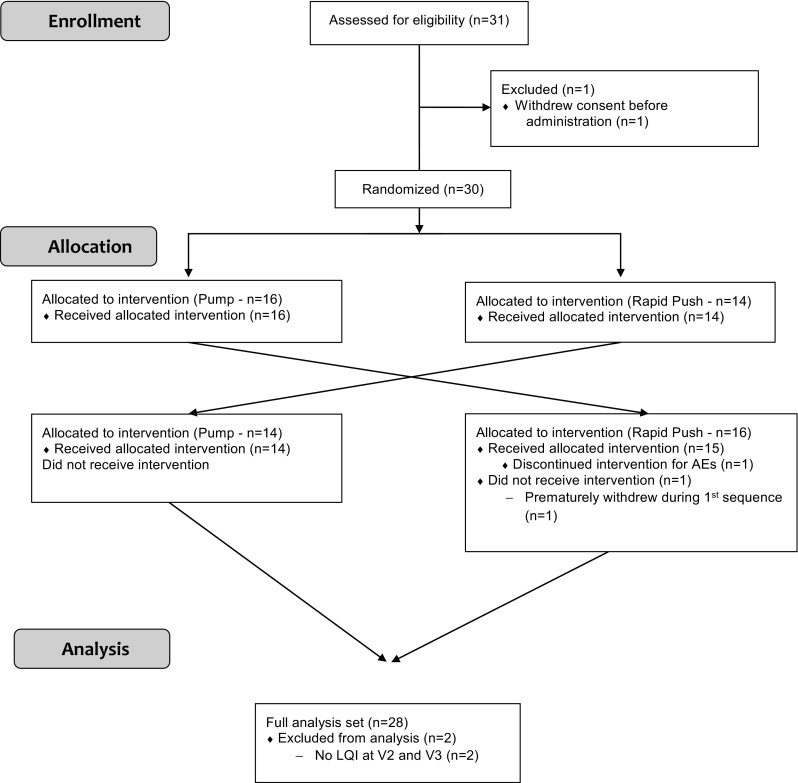
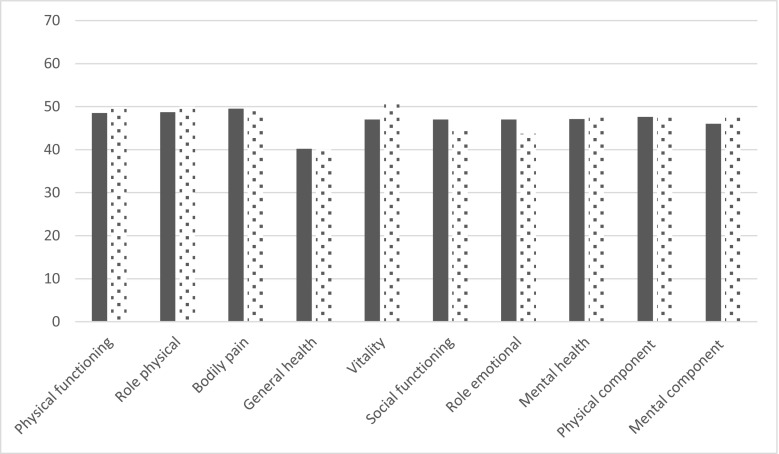
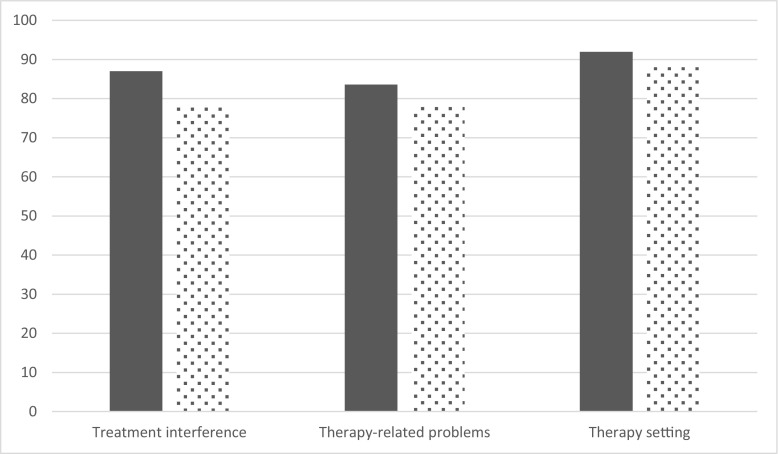
Thirty patients entered the study; 28 completed the two periods. IgRT exposure was similar during each period. At the end of each period, mean LQI factor 1 was 87.0 (IC95% [80.3; 94.3]) and 77.80 (IC95% [71.5; 84.7]) for pump and rapid push, respectively. There was a slightly larger effect of rapid push on treatment interference than with pump so that the primary endpoint could not be met. No difference was found on other LQI components, satisfaction (TSQM), or quality of life (SF36v2). Eight patients declared to prefer rapid push while 19 others preferred pump. Of rapid push infusions, 67.2% led to local reactions vs 71.8% of pump infusions (p = 0.11) illustrating its good tolerance. Rapid push and pump infusions achieved similar trough IgG levels with similar incidence of infections. Rapid push saved 70% of administration cost when compared to pump.
Since IgRT is a lifelong treatment in PID patients, individualization of treatment is of paramount importance. Rapid push is a new administration method in the physician's armamentarium which is preferred by some patients and is cost-effective. CLINICALTRIALS.
NCT02180763 CLINICAL IMPLICATIONS: Self-administration of small volumes of immunoglobulins at home, every other day, using a syringe (rapid push) is a cost-effective alternative to administration of larger volumes by pump once a week. This study compared subcutaneous infusions of immunoglobulins either weekly via a pump or every other day via a syringe (rapid push). Rapid push is preferred by some patients and is cost-effective, therefore completing a physician's armamentarium.
皮下免疫球蛋白替代疗法(IgRT)可以通过泵每周给药一次,或通过注射器(快速推注)每两天给药一次。本研究的目的是比较泵和快速推注输注对患者生活质量指数(LQI)的影响。
这是一项随机、交叉、多中心、非劣效性试验,纳入了习惯于在家中通过泵每周接受静脉输注的原发性免疫缺陷(PID)成人患者。根据随机顺序,患者每 3 个月分别使用泵或快速推注。主要标准是 PID-LQI 因子 I(治疗干扰)。设定非劣效性比值为 90%。
30 名患者进入研究;28 名患者完成了两个阶段。每个阶段的 IgRT 暴露情况相似。在每个阶段结束时,泵和快速推注的平均 LQI 因子 1 分别为 87.0(IC95% [80.3;94.3])和 77.80(IC95% [71.5;84.7])。快速推注对治疗干扰的影响略大于泵,因此主要终点无法达到。其他 LQI 成分、满意度(TSQM)或生活质量(SF36v2)均无差异。8 名患者表示更喜欢快速推注,而 19 名患者更喜欢泵。在快速推注中,67.2%导致局部反应,而在泵输注中为 71.8%(p=0.11),表明其具有良好的耐受性。快速推注和泵输注可达到相似的 IgG 谷浓度,感染发生率相似。与泵相比,快速推注可节省 70%的治疗费用。
由于 IgRT 是 PID 患者的终身治疗,因此治疗的个体化至关重要。快速推注是医生治疗手段中的一种新方法,一些患者更喜欢这种方法,且具有成本效益。临床试验。
NCT02180763
在家中每隔一天使用注射器(快速推注)自我皮下输注小体积免疫球蛋白,每两周一次,是每周通过泵输注较大体积的替代方法,具有成本效益。本研究比较了每周通过泵或每隔一天通过注射器(快速推注)皮下输注免疫球蛋白。一些患者更喜欢快速推注,且具有成本效益,因此是医生治疗手段的一种补充。